Jason Bailey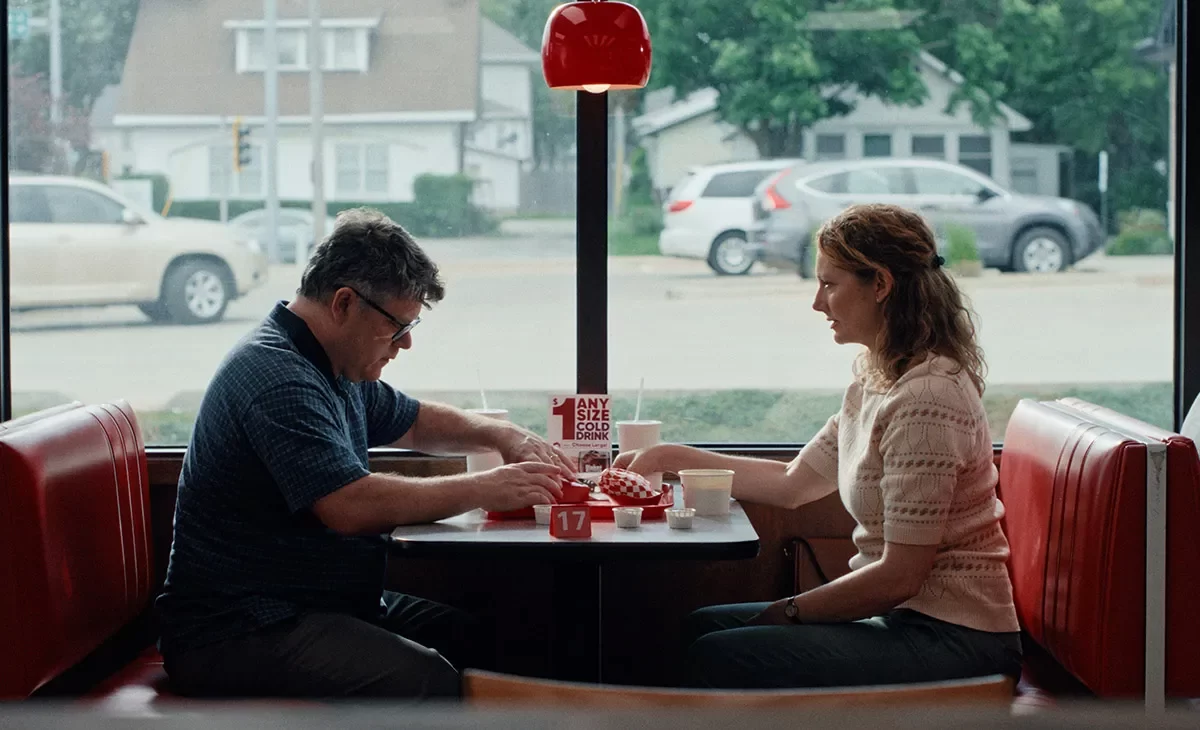
AUSTIN, TX: For reasons too dull (and too personal) to dive into, your correspondent had to skip SXSW entirely last year — a crime, since it’s my personal favorite of all film festivals. That designation is less about what they’re showing (I typically see more no-doubt-about-it great movies at Sundance, TIFF, and NYFF) than the impeccable vibes of the festival, the way the warm Austin sun feels hitting your face while you’re tearing into a breakfast taco or a plate of ribs. (It’s currently 42 degrees here, however, so I’d like the powers-that-be to get that taken care of for next year.)
But there are still plenty of things worth seeing. The buzz about Chili Finger around SXSW has been, essentially, “Coen brothers cosplay” (I even overheard someone refer to it as “like a midwestern Coen brothers,” which makes me wonder where they think the Coens are from), and I get it; like the Fargo TV adaptation, it feels, at times, like Coen fan fiction, what with the Midwestern setting, Raising Arizona-style yodeling score, colorful supporting characters, and even a juicy role for John Goodman.
Comparisons like that are invitations for failure, of course; like Tarantino, the Coens’ entire thing is so sui generis that watching someone else take a stab at it only underscores how well they do it. But Chili Finger moves at a good clip, packs in some inspired narrative twists, and showcases a cast full of people who seem to be having a good time — chief among them Judy Greer in a rare leading role as a sullen empty-nester who gets in way over her head. It’s perfect casting, since Greer inherently garners sympathy even when she’s fully out of pocket, and her final scene with Goodman is like a master class in sly underplaying.
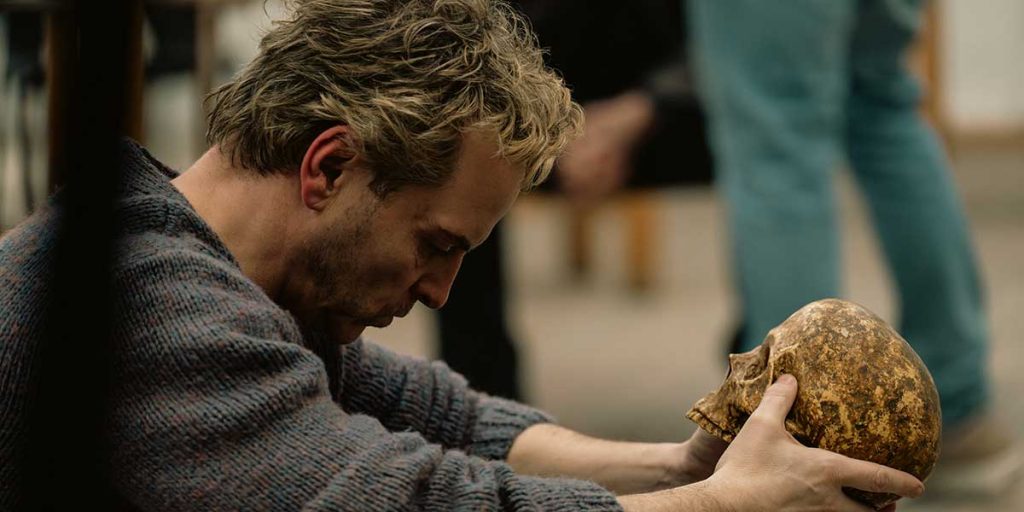
The Duplass family made Their Town as a group project: indie stalwart Mark Duplass wrote the script, his wife (and a prolific director and actor herself) Katie Aselton directed, and their daughter Ora Duplass stars. The result is a little Polaroid picture of a movie, not a home video by any means but not not that either. It’s an odd series of contradictions: earnest yet cringey, authentic yet contrived, over-written yet montage-reliant. It’s such a nice movie, so eager to please, that it’s difficult to say much of anything mean about — though there are things to say.
The younger Duplass stars as Abby, a high school actress whose boyfriend has quit the school production of Our Town (if a reason was given for his departure, I missed it); Abby was co-starring, and the curtain goes up in a week. Their director selects, nearly at random, a shy guy from the set crew (Chosen Jacobs) to fill in, so he and Abby spend a long evening wandering around town, running lines, and getting to know each other. The subtleties and specifics of their dynamic, the ebbs and flows of connection and retreat, are nicely modulated, and Duplass and Jacobs are charismatic actors with easy chemistry. And its closing scene is so good, it almost feels like the movie was reverse-engineered from it. What’s perhaps most striking about Their Town is Mark Duplass’s credit; it feels like it was written not by a middle-aged filmmaker but by an actual teenager, in ways both good (its candor and kindness) and bad (the end-of-the-world intensity of every single conflict).
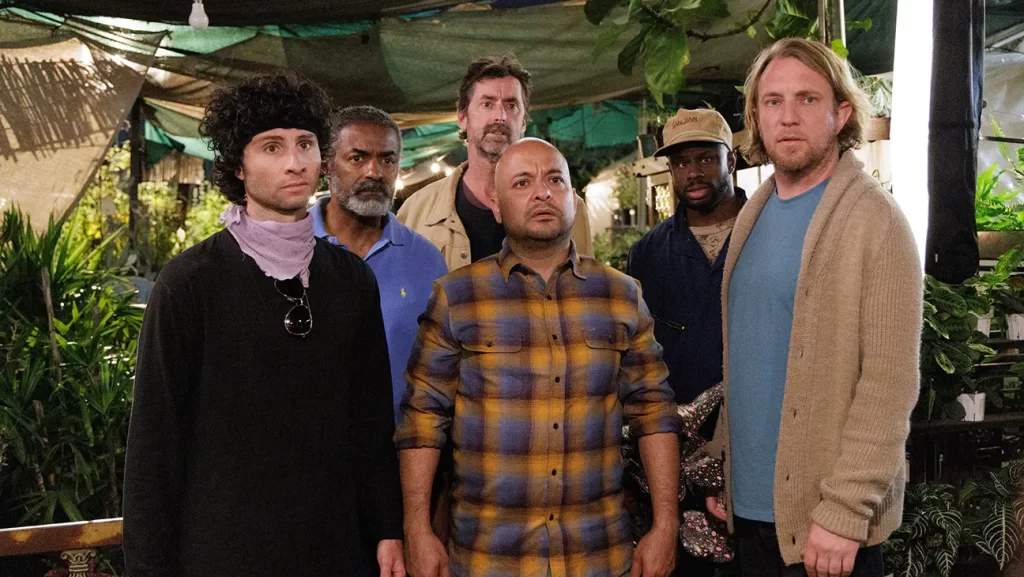
Plantman & Blondie: A Dress Up Gang Film does not start promisingly. The opening scene features a “water sommelier” doing a YouTube tasting, which illustrates the kind of cutesy, quirky, isn’t-our-current-world stupid angle of far too many independent comedies. The good news is that director Robb Boardman and his co-writers Cory Loykasek, Donny Divanian, and Frankie Quinones, who are also the movie’s stars, find their footing soon thereafter, telling the strange but ultimately sweet story of a work-from-home drone (Loykasek) who has a peculiar encounter with a green thumb weirdo (Divanian) who makes it his mission to steal and save dying plants from negligent owners.
What keeps it from spinning into the land of twee is Boardman and his crew’s sure touch with characterization; funny little group dynamics develop, between both “Plantman” and his gang and the group of victims who take to Nextdoor to stop him, and the picture’s evolution into a heist movie is genuinely inspired. (Kirk Fox steals the show as Loykasek’s ex-con bestie, who’s prone to saying cinematic but insane things like “This is what we trained for.”) It’s strange, how touching it becomes; Plantman & Blondie starts out as a movie about itself, but slowly but surely becomes a movie about community and kindness.
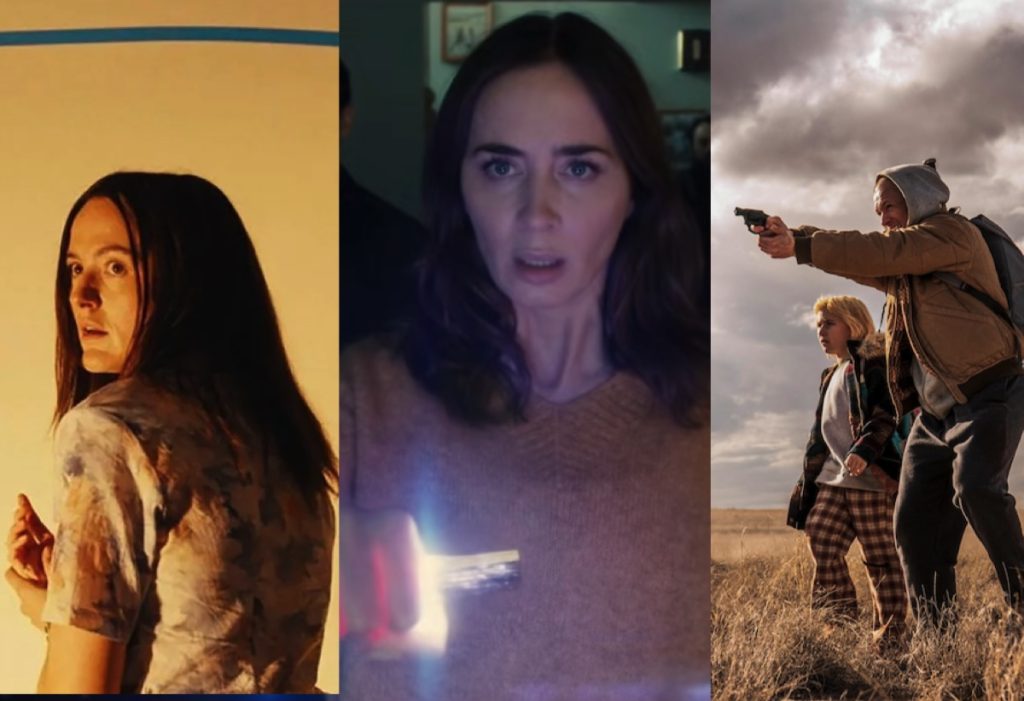
Emily Robinson is the writer, director, and star of Ugly Cry, and if nothing else, it serves as a fine announcement of a promising new talent. She plays a struggling young actress — write what you know! — and the most compelling material concerns the simple logistics of a young working actor, circa 2026: the endless classes, the self-taping, the Zoom auditions, and who has their cameras on and off for them. And it’s all the more stressful for Robinson’s Delaney because she’s been made aware that she has an “ugly cry,” and she has to fix it.
This leads, about halfway through, to a turn into psychological thriller territory, with splashes of supernaturalism and surrealism thrown in — she swan-dives into a spiral of self-loathing, delusion, and Botox, turning Ugly Cry into something akin to Repulsion for Actors. Robinson has an excellent presence (she’s so charismatic that you continue to like her when she’s going absolutely insane) and a good directorial eye, though she doesn’t quite stick the script’s landing; she confuses a cool ending image with a cool ending. But she’s one to watch, in any of these capacities.
Roger Patterson’s minute-long piece of 16m film, shot in 1967 in the forests of Northern California, is the sacred text of the Bigfoot movement, seeming to capture a tall, female Sasquatch in its natural habitat. The documentary Capturing Bigfoot tells the twisty story of that footage, and its legacy: how Patterson became a famed “Bigfoot hunter,” how he turned that footage into a small fortune, how it haunted his family and friends (one calls it “a curse”), and the ongoing question of if it was faked — and if so, how.
That last question is the one that will get this documentary most of its ink, and it is answered definitively (and thrillingly), complete with the discovery of additional footage stored in a safe for 60 years. But what makes Capturing Bigfoot such a treat is how deeply immersed it is in this particular subculture, in the weirdos, eccentrics, and all-around peculiar characters who keep bubbling up on its periphery; it’s easy to laugh at these folks, but their passion and never-say-die sense of belief is, in its own way, both poignant and recognizable.
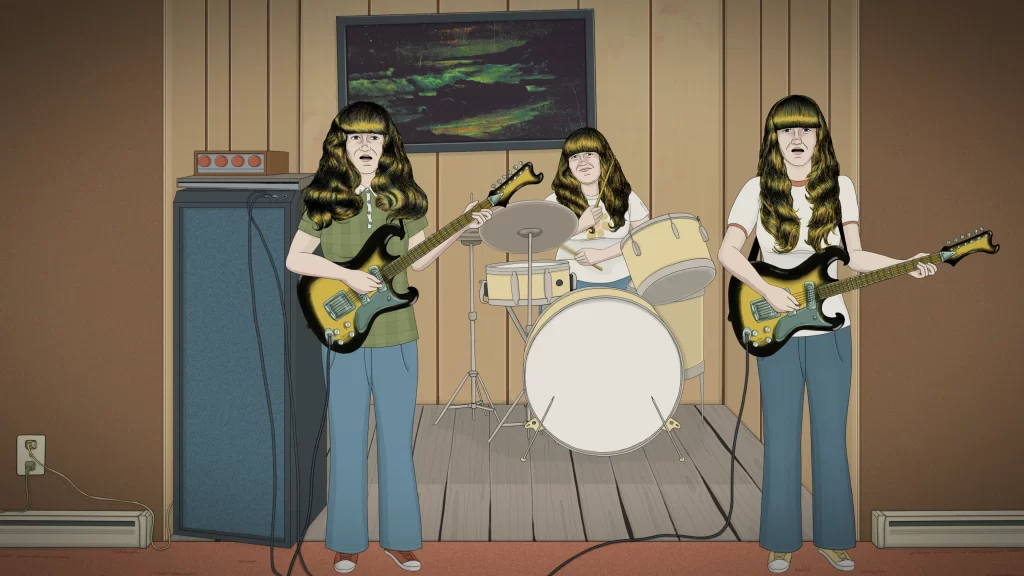
Ken Kwapis’s We Are the Shaggs opens with a series of people listening to the music of the titular group for the first time — first intrigued, then confused, then laughing in either ridicule, disbelief, or admiration. It’s an experience recognizable to anyone who’s ever heard those odd, atonal, arhythmic, impossible recordings of the late ‘60s, three-sister band from rural New Hampshire, “the most head-scratching music ever committed to vinyl” per one of Kwapis’s many experts, but recognized and even celebrated in recent years as the precursor to punk rock, riot grrrls, grunge, and other forms of musical outsider art.
Whether they were bad or brilliant, their story is fascinating, and Kwapis strikes the right combination of bemusement and admiration. He populates it with smart people, musicologists and record producers and artists, who ask pointed and sometimes provocative questions; he deep-dives where necessary (the story of how they got recorded and distributed at all is a whopper) and diverges occasionally and successfully (I’d watch a whole documentary about Fleetwood Studios, where they cut their album). We Are the Shaggs is a hoot.
#skyking also begins with several people putting on headphones, but these are not random listeners — they’re the people who knew and loved Richard “Beebo” Russell, who clocked in for his shift as a Horizon Air ground service agent at the Seattle airport one day in 2018, stole a plane, and took it for a joyride. The air traffic recordings from that day are riveting, both for the offhanded YOLO vibes he initially projects (“This is going to be crazy”) and the deeply troubled psyche that eventually surfaces.
Director Patricia E. Gillespie’s sense of construction is masterful — she has multiple narratives unfolding at once, tick-tocking through that day while studying the people around him, and since he keeps revealing more, each revelation reconfigures the situation. In the aftermath of the event, various observers, analysts and bad actors reframed it through their particular lens, rooting through his comments and actions for their own takeaways, but the virtue of Gillespie’s documentary is its refusal to simplify; this is a sad, knotty story with no easy lessons to learn.