Jason Bailey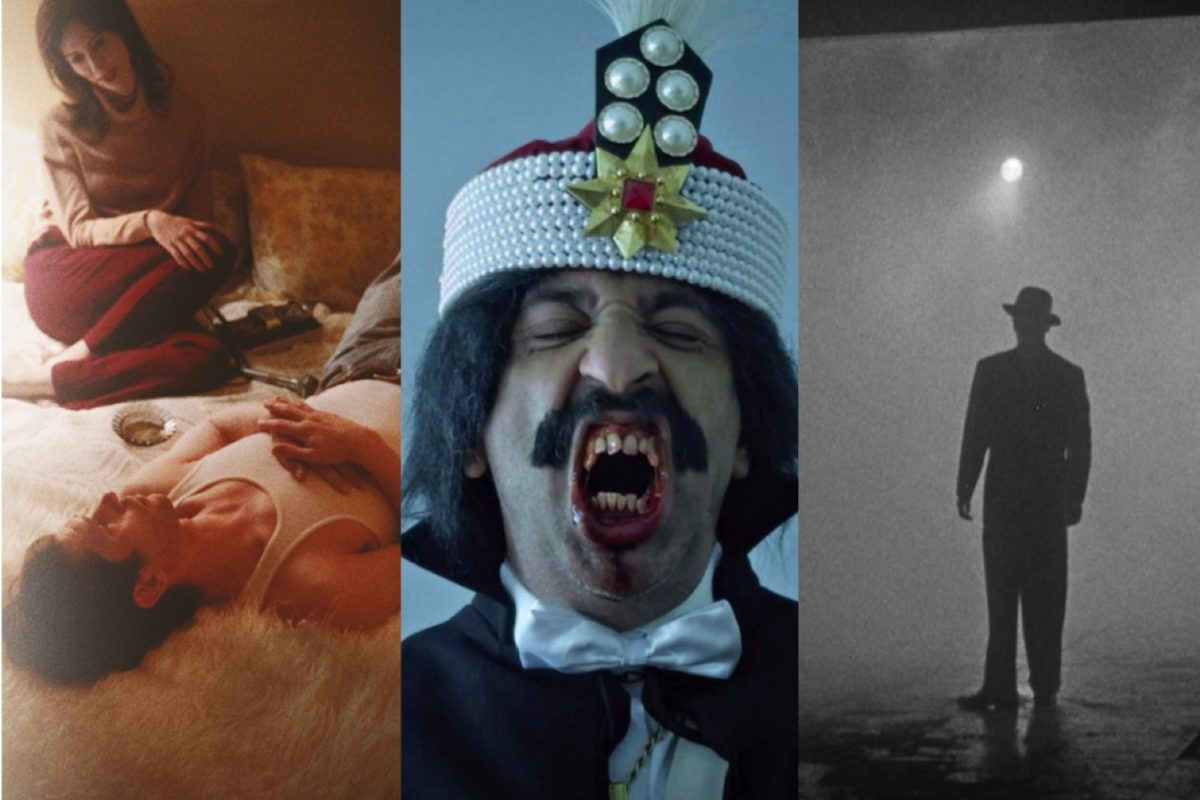
Every Tuesday, discriminating viewers are confronted with a flurry of choices: new releases on disc and on demand, vintage and original movies on any number of streaming platforms, catalogue titles making a splash on Blu-ray or 4K. This twice-monthly column sifts through all of those choices to pluck out the movies most worth your time, no matter how you’re watching.
PICK OF THE WEEK:
The Big Combo: Ignite Films and Eagle Rock Pictures give the full 4K UHD treatment to this riveting 1955 film nor-style police procedural from the great Joseph H. Lewis (Gun Crazy, Terror in a Texas Town). The story, adapted by Phillip Yordan from his short story “The Hoodlum,” is pretty standard noir stuff: there’s a boxer who has to take a dive, a torn-up moll, a good cop obsessed with slapping the bracelets on a big bad, and so on. What makes it special is the look of the picture — it was shot by John Alton, the quintessential noir cinematographer whose paintings of light and shadow make you want to freeze the screen and slap a frame around it — and the performers. The best of the bunch is Richard Conte as the truly chilling villain; his delivery is cold and rapid-fire, and he doesn’t raise his voice, keenly aware that by draining the easy indicators of emotion, he raises the narrative stakes to high heavens. The restoration is a real knockout, and the copious extras are marvelous. (Includes audio commentary, interview, video essays, bonus feature The Crooked Way, and essays by Eddie Muller, Ben Sachs, Alonso Duralde, Katie Stebbins, Scout Tafoya, and Garrett Clayton.)
ON BLU-RAY / DVD / VOD:
Peter Hujar’s Day: The latest from director Ira Sachs (Passages, Love is Strange) is so modest it could evaporate: a 76-minute reenactment of a 1974 conversation between writer Linda Rosenkrantz (Rebecca Hall) and photographer Peter Hujar (Ben Whitshaw). They don’t even leave Hujar’s apartment, and the primary topic of conversation is, per the title, his description of how he spent the past 24 hours. But within those simple confines, Sachs crafts a poignant portrait of a kind of bohemian artist’s life that no longer exists, and of the New York City where it’s no longer possible. Whitshaw is tremendous as Hujar — you believe him from the first frame — and Hall matches him beautifully. (Includes interview, featurette, trailer, and notes by Michael Koresky.)
Dracula: In films like Bad Luck Banging, Do Not Expect Too Much From the End of the World, and this 2025 missive, Romanian director Radu Jude has established himself as the creator of vaudeville shows for the iPhone generation — blackout sketches of cynicism, vulgarity, and gallows humor. His latest is a full-frontal assault on AI brainrot, using the idea of yet another adaptation of Bram Stoker’s classic as a moving framework of meta-textual commentary and self-reflection; there are cabaret sketches, ugly AI characters, a pretentious onscreen director pitching his vision (“I want it to be the bomb — but with some deeper, philosophical stuff too”), and comic deep-dives that alternate between utterly goofy and proudly amateurish. No one’s quite doing what Jude is these days, and thankfully (especially for this particular subject) he’s not pulling his punches. (Includes interview, film festival intro, trailer, and essay by Maxwell Paparella.)
ON 4K UHD:
Stray Dog: Akira Kurosawa’s 1949 classic gets the 4K treatment, though it’s not one of the master’s prettier pictures — instead of dazzling you with its beauty, it impresses you with its immersion. This is a movie that feels absolutely at home in both the police culture that Detective Murakami (Toshiro Mifune) dwells in and the petty criminal underworld that he attempts to penetrate in search of his stolen handgun. It all happens during a summer heatwave, the visceral heat onscreen contributing to the slow but steady accumulation of dread and guilt that drives Murakami. It’s much more than a police procedural, thanks to all of the broken people involved (including the cops themselves), and what’s surprising is how much of it is mere conversation, particularly as Murakami and his superior Detective Satō (Takashi Shimura) speculate, philosophize, and discusses the causes and outcome of crime. This is a hard, dirty, unglamorous picture — one of Kurosawa’s best. (Includes audio commentary, featurette, and essay by Terrence Rafferty.)
George Stevens: A Filmmaker’s Journey: This bio-documentary portrait of the famed filmmaker begins not with his birth, but with his breakthrough film Alice Adams, and that’s an appropriate approach for a man whose life was always secondary to his work. The writer, producer, and director is the filmmaker’s son, George Stevens Jr. (no slouch himself — he founded the AFI), who somehow achieves a perfect balance of reverence and facts-first objectivity. The picture is bolstered immeasurably by footage from the family archives, including the director’s own behind-the-scenes footage and film he shot during his fabled time in WWII; in retrospect, it also holds tremendous value for the sheer volume of screen legends (including Katharine Hepburn, Frank Capra, Hal Roach, John Huston, and Fred Astaire) that Stevens Jr. interviewed late in their lives. A first-rate primer to a quintessential movie-maker, and a fine snapshot of the studio system in general. (Includes new testimonials by Guillermo del Toro, Christopher Nolan, and Martin Scorsese.)
Hold That Ghost: Everyone knows that Abbott & Costello Meet Frankenstein (which hit 4K, along with a handful of their later monster mash-ups, last November) was a turning point not only in the development of horror-comedy, but for the waning popularity of the comedy team. Yet it wasn’t their first time mixing screwball with spooky; Hold That Ghost was only their third starring vehicle, one of four (!) released in 1941, in the midst of their first flush of fame. So there’s wacky wordplay, killer slapstick (mainly via Lou’s uproarious dance scene with a game Joan Davis), and the unforgettable “candle” sequence. (And, as with the rest of their 1941 releases, there’s too much of the Andrews Sisters.) A scream for end to end — in both senses of the word. (Includes audio commentaries and trailer.)
Throw Momma from the Train: Danny DeVito migrated from actor to actor-director with this 1987 black comedy inspired by Hitchcock’s Strangers on a Train — and that’s not an indirect inspiration, since DeVito’s character literally visits the Vista Theater and watches Strangers to hatch his big plot. To wit: he hates his domineering mother (the late, great Anne Ramsey), and his writing instructor (Billy Crystal) has indicated (a bit too loudly) his desire to see his ex-wife dead, so they should swap murders. Complications ensue, even more than in the source material, particularly as the agreement is so wildly misunderstood. Stu Silver’s script is mighty thin, but it comes to life via Crystal and DeVito’s potent chemistry and DeVito’s inspired direction, which gets a big lift from Barry Sonenfeld’s inventive cinematography — the main reason this one warrants KL’s 4K boost. (Includes audio commentary, interview, deleted scenes, featurette, and trailer.)
10 to Midnight: An absolute ball of sleaze from star Charles Bronson and his frequent director J. Lee Thompson (Death Wish 4, Kinjite: Forbidden Subjects) is, essentially, morally reprehensible copaganda — but it’s well-executed copaganda, mounted with real tension and filmmaking acumen by Thompson, and brought to vivid life by a top-notch cast that includes Bronson (who wasn’t quite phoning it in yet), future VHS erotic thriller king Andrew Stevens, Beverly Hills Cop co-star Lisa Eilbacher, and character actor royalty Wilford Brimley and Geoffrey Lewis. It amounts to Canon Films attempting to fuse a Bronson thriller with the then-inescapable slasher horror genre, and Gene Davis is somewhat less than subtle as the crazed killer at its center. The script by Thompson and William Roberts makes some questionable choices (including a climax that’s basically a reenactment of the Richard Speck murders), but it goes down smoothly, and KL’s 4K restoration maximizes the deliciously pulpy images of cinematographer Adam Greenberg. (Includes audio commentaries, interviews, radio spots and trailer.)
Blue Thunder: John Badham’s 1983 action movie sits at a peculiar intersection of seemingly incompatible genres: ‘80s action, of course, but also ‘70s conspiracy thriller and leering ‘80s sex comedy (there are not a lot of helicopter carnage flicks with this many remnants of the unfortunate influence of Porky’s). The ensemble cast, however, is stellar enough to smooth out the incongruities: Roy Scheider as the veteran pilot still battling his Vietnam PTSD, Daniel Stern as his gee-whiz new partner, Candy Clark as his long-suffering girl, Malcolm McDowell as an old rival so villainous that he may as well have a mustache to twirl, and Warren Oates as the ne plus ultra of shouting, exasperated cop captains. The action is flawless, unsurprisingly (its Badham, after all), with some real carnage in its urban dogfight climax, and the screenplay by Dan O’Bannon and Don Jakoby is alarmingly prescient in its warnings of a surveillance state; this is one of those conspiracy thrillers that’s difficult to watch these days, as you watch its government villains kill people to keep secrets that our current people in power just tweet out. (Includes audio commentary, interviews, featurettes, extended scene, trailer, and essay by Dennis Capicik.)
ON BLU-RAY:
The Delta: Peter Hujar’s Day director Ira Sachs made his feature directorial debut with this very indie drama from 1996, a shot-on-16mm queer coming-of-age story set, as you might guess from the title, in Sachs’s hometown of Memphis. It has the lived-in authenticity that only a native can bring, which benefits the filmmaker’s observational style; this is a vivid portrait of youthful ennui and listlessness, as its characters hang out, get in fights, and get fucked up. The focus is on Lincoln (Shayne Gray) a closeted bisexual who seems to become entirely different people in his two lives: a straight guy who’s confident and boisterous, and a shy gay guy who’s still figuring out who he is and what he wants. The sensitivity with which Sachs details his brief fling with Vietnamese immigrant Minh Nguyen (Thang Chan) is admirable — he not only resists the urge to exoticize the character, but he shifts the perspective, a move that’s both unexpected and kind of perfect. (Includes audio commentary, interview, Sachs short films, and essay by Michael Koresky.)
Private Benjamin: There’s much more to this 1980 comedy from underrated journeyman Howard Zieff than I (or likely, you) remember; most of our collective memory is fixated on the hour or so that Judy Benjamin (Goldie Hawn, perfection) spends at boot camp, shaking off her Jewish-American Princess demeanor and becoming something resembling a real soldier. It’s not hard to guess why: not only were those beats essentially duplicated and expanded by the following year’s Stripes, but they’re also far and away the best material in the picture, with Hawn executing a finely tuned character arc and a stellar bit of antagonistic supporting work by Eileen Brennan as her captain. (Both were nominated for Oscars.) But the prologue, with Albert Brooks as her short-lived second husband, is a hoot; the third act, less so (this may be the only movie that gets less interesting when Armand Assante shows up). But the cultural amnesia here ultimately makes sense; what works in Benjamin works so well, you kinda forgive and forget the rest. (Includes two episodes of the spin-off TV series and theatrical trailer.)
House Calls: Zieff again, coincidentally enough, this time helming a smart rom-com that does the whole “isn’t it wild how Walter Matthau was an action hero in the ‘70s” thing one better by asking, “isn’t it wild how Walter Mattahu was a romantic leading man in the ‘70s?” He stars as Charley, a recent widower and star surgeon who is surprised to find himself in high demand when he returns to the dating world. But he meets his match in Ann (Glenda Jackson) a firecracker of a former patient who stimulates his mind and his heart — but demands an exclusivity that he’s not quite sure he’s ready for. Matthau is at his hangdog best, and Jackson is on fire, delivering her rapid-fire dialogue with a screwball snap; their relationship recalls the best of the Hepburn and Tracy comedies, and it’s no surprise that they re-teamed a few years later for (the even better) Hopscotch. Bonus: Art Carney stealing every scene as senile chief of staff Dr. Willoughby, a character that has to have inspired Dr. Kelso on Scrubs. (Includes audio commentary and trailer.)
Bend of the River: The second of the genre-shifting collaborations between director Anthony Mann and actor James Stewart is an intimate epic, its gorgeous color cinematography (vivid in a new restoration by KL Studio Classics) nevertheless secondary to its complex characterizations. Chief among them is Stewart, in stern, no-nonsense mode as a guide leading a wagon train of settlers to Oregon who saves a horse thief (Arthur Kennedy) who becomes a big mover and shaker in Portland. But their relationship is complicated considerably by various shifting loyalties and betrayals, and Mann patiently builds a slow wind-up to a tough, tense third act. Stewart and Kennedy’s byplay is rich and textured, while Rock Hudson brings his considerable charisma to what could’ve been a throwaway supporting role. (Includes audio commentaries and trailer.)
A Kiss Before Dying: Writer/director James Dearden’s 1991 adaptation of Ira Levin’s 1953 novel is not among the best of the neo-noir/erotic thriller pictures that seemed so ubiquitous at the time; Sean Young is just too stiff to bring the right vibes to the leading role, and a scene in which she watches Vertigo on TV is one of those cases of calling the shot a bit too obviously. But Matt Dillon is having a great time as the story’s bad boy — it’s always fun to see him play an amoral slimeball — it’s got a sledgehammer opening, and Howard Shore’s score is a hoot (it sounds like the movie they, and you, wish they’d made). The climax is wildly implausible but totally satisfying, and by that point, Dearden’s baroque, go-for-broke style will likely win you over. (Includes audio commentaries and trailer.)
Soul to Soul: In March of 1971, a planeload of African-American entertainers flew over to Ghana for a cultural exchange concert, and blew the roof of the joint. Director Denis Sanders’s chronicle of the event — shot and cut in the mold of the recent “Woodstock” documentary — was barely released two years later and has been tricky to see ever since, so this new Blu-ray from Liberation Hall is a real treat; it looks great and sounds terrific, intermingling the performances to build up a toe-tapping head of steam rather than serving as a mere chronological record of the event. Highlights include Wilson Pickett’s blasting horn section, Carlos Santana absolutely shredding on “Black Magic Woman,” and Tina Turner singing “River Deep, Mountain High” with gobsmacking force. (Includes audio commentaries, outtake performance, trailer, and essay by Rob Bowman.)
There Are No More Closets: The Films and Videos of Wakefield Poole Vol. 1: Poole, the queer adult filmmaker behind the groundbreaking Boys in the Sand and Bijou, gets the auteur treatment via this collection of his late works from the fine folks at Mélusine and Muscle Distribution. It begins with 1974’s Moving, a super-8 title that Poole made when he moved from New York to San Francisco after the indifferent reception to his attempt to cross over with a straight, softcore feature based on Bible stories (yes, really). But the best of the box is Take One, a “docufantasy” that gave real men the opportunity to live out their confessed fantasies onscreen, a process that provocatively blurs the lines between fiction, reality, and filmmaking. The later, shot-on-video efforts get the job done, though they become something of a demonstration of the inherent aesthetic shift when the industry went from film to video (Poole was a pro, and even his work looks amateurish). Nevertheless, this is an important tribute to a pornographer who was also an honest-to-goodness artist. (Includes audio commentaries, introductions, alternate cut of Take One, outtakes, featurettes, and essays by Elizabeth Purchell and KJ Shepherd.)
Come Blow the Horn!: Like Poole, Joseph Sarno was an adult filmmaker who wasn’t “just” making movies to get off to; as seen in the excellent bio-doc A Life in Dirty Movies, he and filmmaking-and-life partner Peggy used the tropes (and selling points) of adult movies, first in the sexploitation realm and then into hardcore, to smuggle in their ongoing thematic preoccupations and genuine cinematic artistry. This 1978 effort (new on Blu from Cultpix and Super8) was one of several the Sarnos made in Sweden, back in the day when that particular regional imprint promised more extreme action than the domestic norm, and this one lives up to that promise. But it’s wrapped up in a goofily enjoyable story, about an old Viking horn that makes everyone in earshot unstoppably horny whenever it’s sounded. Sarno knows it’s a silly premise, and has a good time with it — which is about all you can ask of a movie like this. (Includes audio commentary, featurette, trailer, and “smut without smut” version.)
Gilmore Girls: The Series: We generally don’t include television in this particular column, but with apologies, I’m making an exception for one of the best shows of the 21st century. Amy Sherman-Palladino and husband Daniel created, over the course of six seasons (we don’t talk about the Palladino-less season seven, the show’s “gas leak year”), one of the most vivid and lived-in small towns in TV history, and Stars Hollow remains a delightful contradiction — it looks like Mayberry and it feels more like Twin Peaks. The show’s rat-tat-tat dialogue, prickly interpersonal relationships, and first-rate acting (Lauren Graham and Kelly Bishop are particularly delightful) make it a go-to comfort watch, and WB’s new Blu-ray set even includes the made-for-Netflix reunion miniseries, which doesn’t quite hit the heights of the O.G. (mostly due to the absences of Melissa McCarthy and the late Edward Hermann), but again, it’s better than season seven. (Includes deleted scenes and featurettes.)