Jason Bailey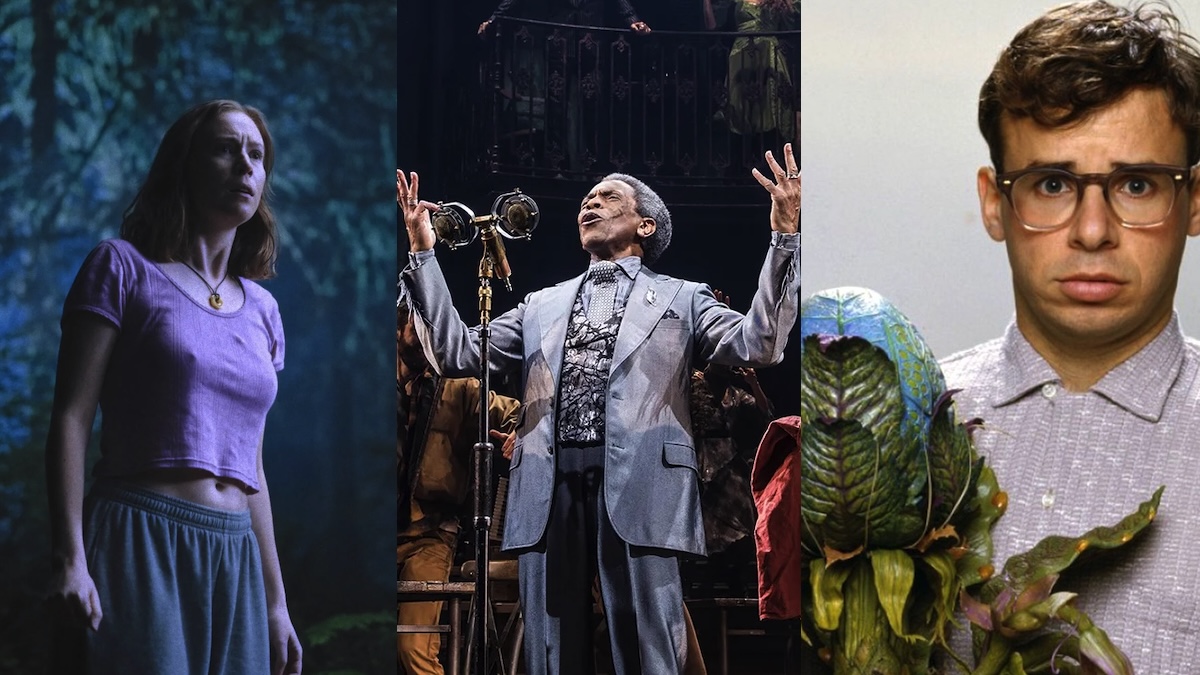
Every Tuesday, discriminating viewers are confronted with a flurry of choices: new releases on disc and on demand, vintage and original movies on any number of streaming platforms, catalogue titles making a splash on Blu-ray or 4K. This twice-monthly column sifts through all of those choices to pluck out the movies most worth your time, no matter how you’re watching.
PICK OF THE WEEK:
Little Shop of Horrors: The original Little Shop was one of Roger Corman’s “weekend specials,” shot in a compressed timeframe (often with multiple cameras in long takes with a general lighting wash), thrown together quickly to take advantage of a pre-existing set that was about to be torn down. That set became the film’s primary location, a Skid Row flower shop where nebbish Seymour pines for beautiful Audrey and develops a plant which he names after her—a plant which, come to find out, requires human blood to thrive. In the early 1980s, composer Alan Menken and book writer/lyricist Howard Ashman saw the film and adapted it into an off-beat musical comedy, which ran Off-Broadway in 1982 and then, in a nice bit of circularity, was adapted into Frank Oz’s feature film, making its 4K UHD debut from WB. The music is memorable (Ashman and Menken went on to write songs for The Little Mermaid and Beauty and the Beast, among others), the performances are terrific (Rick Moranis and Ellen Greene were never better), and the comic turns are uproarious (in addition to Steve Martin’s immortal turn as a sadomasochistic dentist, there are also quick and funny appearances by Bill Murray, John Candy, Jim Belushi, and Christopher Guest). The result is one of the best movie musicals of the 1980s — not an impossible bar to clear, but an achievement nevertheless. (Includes audio commentary, featurettes, outtakes and deleted scenes, and the notorious original ending with audio commentary.)
ON MUBI:
Teenage Sex and Death at Camp Miasma: I’ll confess to not being quite as taken by Jane Schoenbrun’s latest as some of my colleagues, and I’ll own that it’s a Me Problem; maybe my OCPD simply cannot get my head around a character threading up a print of an early-‘80s slasher movie, and then having it unspool looking like one from 2016. But there is much to enjoy and admire in this smash-up of cinematic nostalgia, media commentary, gender theory, and unapologetic eroticism — first and foremost, the jaw-dropping leading turns by Hannah Einbinder and Gillian Anderson, who both pull off the neat trick of creating characters who start as recognizable types, and then slowly reveal the nuances and complexities underneath, without shedding or even condescending to the tropes therein.
ON NETFLIX:
Lucky: “Those things are gonna kill you,” the diner owner tells Lucky as he lights up a cigarette, and the response is quick and reasonable: “If they could’ve, they would’ve.” Few actors could pull that line off with the grizzled grace of the late, great Harry Dean Stanton, whose final performance (and one of his few leads) comes in something of a Senior Slacker, a series of loose two-scenes with terrific partners. He hangs out and hashes out with Tom Skerritt as a fellow vet; he first tries to fight and then makes an unexpected connection with Ron Livingston and his perfectly realized mustache; he shares the grief of a lost pet with a dandyish David Lynch. Writer/director John Carroll Lynch – himself an accomplished, Stanton-style character actor – is deeply attuned to the rhythms of small-town bar chatter, all good-natured jabs and stories everyone’s already heard (but are willing to hear again). But it’s mostly a tribute to Stanton’s unique gifts: watch the way he says “fisticuffs,” or how he smokes mournfully to late-period Johnny Cash, or his lovely bit of business with the mariachi band. Most of all, watch his last scene, and the way he looks around the room, smiles a bit, and shares an answer attained over a lifetime of hard living. It’s a lovely send-off, that scene, and Lucky is a fitting tribute to a sui generis performer.
Rumours: Canada’s resident madman Guy Maddin co-directs (with Evan Johnson and Galen Johnson) this horror satire, which is sort of like Night of the Living Dead as directed by Armando Iannucci. The setting is the G7 summit, as the seven leaders of the democratic nations attempt to hammer out their draft statement of unity and purpose, an event inconveniently interrupted by something resembling an undead apocalypse. Maddin and his collaborators gamely kid the stereotypes of the nations in question (the United States president is perpetually dozing off), though they do humanize these characters, if primarily to make them look silly; all are essentially helpless, people who have learned how to seem smart, without actually being that. The performers are all having a blast—Cate Blanchett is especially funny as the German chancellor—and the imagery (including a literal zombie circle-jerk) is, well, memorable. Rumours doesn’t always land, but it hits more than it misses.
ON HBO MAX:
The Housemaid: In her immortal essay “Trash, Art, and the Movies,” Pauline Kael despaired that there was so little great trash (to be clear: its own, specific thing, in stark opposition to bad trash), and if the pickings were slim then, there’s a straight-up famine these days. My shared affection for great trash probably explains my affection for the latest entry in Spy and Bridesmaid director Paul Feig’s peculiar side gig of making fundamentally silly but undeniably entertaining adaptations of thriller novels centered on women. Sydney Sweeney stars as a parolee so desperate for a job that she stays on as a rich couple’s housemaid when the wife and mother (Amanda Seyfried) is clearly insane. Or… is she? You just kinda have to muddle through the inexplicable actions of nearly everyone in the first act, confident in the knowledge that their actual motivations will reveal themselves soon enough — and when they do, holy mackerel. Sweeney is kinda phoning it in, but she’s adequate; Seyfried, on the other hand, turns in a performance just as dialed-in and on-the-money as her work in The Testament of Ann Lee. In other words: it’s great trash.
ON BLU-RAY / DVD / VOD:
Hadestown: The Musical: One of the most surprising sleeper hits of the summer was this addition to the growing trend of live-capture stage-to-screen movie musicals, this one preserving the London revival of the Greek mythology-inspired Broadway musical (and featuring five of the original performers). This viewer came in totally blind, and was enraptured by the picture — not just its memorable songs or appropriately epic storytelling, but the sheer power and force of its performers. In the small but growing canon of “pro-shot” productions, Hadestown ranks with Passing Strange and Merrily We Roll Along as one of the finest.
ON 4K UHD:
Rollercoaster: It’s easy to write off the ‘70s disaster genre entirely — logical, even, as so many of its biggest hits (The Towering Inferno, the Airport movies, The Poseidon Adventure) were corny, poorly paced slogs filled with great actors half-assing it for easy paychecks. But be careful, because there’s fun to be had in the margins, in the lower-wattage, lower-prestige titles that had to work a little harder, and made their thrills a bit less reputable. Take, for example, this 1977 thriller from director James Gladstone, which opens with a jaw-dropping, multi-fatality rollercoaster collapse, and never looks back. George Segal is pitch-perfect as a perpetually irritated safety inspector who’s trying to guess the next move of a madman (Timothy Bottoms, having a ball) who’s targeting amusement parks; Henry Fonda looks slightly embarrassed as his boss. The special effects are impressive, the suspense sequences are taut and effective, and KL Studio Classics’ tip-top sound mix is the next best thing to the picture’s original “Sensurround.” (Includes unrated version, audio commentaries, featurette, and interview.)
Scary Movie: I’m as annoyed as anyone for what it wrought — a domino line of subpar sequels, unwatchable Wayans vehicles, and worst of all, the reign of terror from (sorta) co-writers Friedberg and Seltzer — but credit where due: the original 2000 Scary Movie, out in a new 4K Steelbook from Paramount, has a lot of laughs. Some of them haven’t aged well, but that’s comedy; many of them have, including the wickedly funny send-up of Scream’s beloved opening and the big payoff to central character Cindy’s virginity arc. Most importantly, it was the movie that introduced the world to Anna Faris and Regina Hall, and that can excuse a lot of subsequent sins. (Includes deleted scenes and featurettes.)
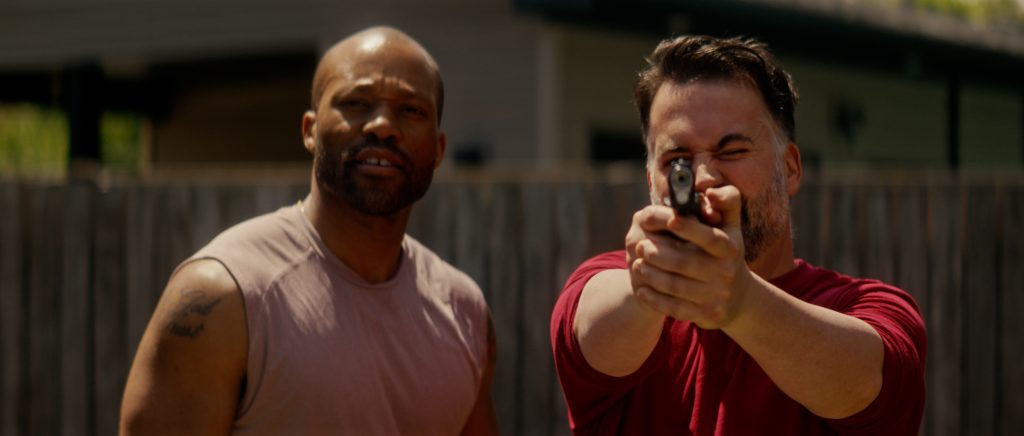
The Last Boy Scout: When Tony Scott’s film of Shane Black’s record-breaking spec screenplay was released in 1991, most critics dismissed it as an ugly, vulgar, ultra-violent exercise in style over substance. And what’s odd about this moment in mainstream moviemaking is that one can read all those critiques, nod vigorously, and snicker, “Yeah, ain’t it great?” — because at least it’s a big-budget movie with a sense of style, a point of view, and zero interest in appeasing a wide swatch of moviegoers. Bruce Willis stars as a busted-out private eye (is there any other kind?) investigating the death of an exotic dancer (Halle Berry) who knew too much about a scheme to save pro football with legalized gambling (imagine that); Damon Wayans is her ex-quafterback boyfriend, who has questions of his own. Willis and Wayans reportedly didn’t get along on the set, which just makes the opposites-attract buddy-comedy elements read as more authentic, and Scott lays on all of his directorial flourishes, to great effect. And last but certainly not least, the villains are top-notch, from stand-up comedian Taylor Negron’s menacing killer to Noble Willingham’s folksy franchise owner to James Gandolfini in an early, non-speaking, blink-and-you’ll-miss-it appearance as a hired thug. (Includes audio commentary, extended and alternate scenes, featurette, new and archival interviews, original screenplay, trailers, and essays by Jedidiah Ayres, Alexandra Heller-Nicholas, Justin LaLiberty, Andrew Male, and Priscilla Page.)
ON BLU-RAY:
Skyscraper Souls: Bravo to Warner Archive for digging up this little-known gem and giving it the HD treatment it deserves. Taking its cues from the real-life dick-measuring contest that was the New York City skyscraper race of the early 1930s, it stars Warren Williams as the visionary builder and owner of the 100-story Dwight Building, struggling mightily to maintain his power and public image now that the bill is coming due — and not just for that structure. Maureen O’Sullivan is the girl who catches his eye, and Verree Teasdale is the mistress on the way out (she gets most of the Pre-Code scenes, IYKYK). A snappy, fast-paced treat that movies like quicksilver, yet sustains the weight of its heavy closing scenes. (Includes shorts and cartoon.)
Pennies From Heaven: In retrospect, it’s sort of unbelievable that at one of their lowest points of commercial and cultural viability, somebody convinced MGM — renowned for their cheerful, Depression-era musicals — to make this deeply depressing meta-textual commentary on those very films. Based on Dennis Potter’s British limited series, it concerns an unhappily married and endlessly horny sheet music salesman (Steve Martin, providing his first hints of the deep reserves of acting skill lurking within his “wild and crazy guy” persona) who finds a nice girl on the road and ruins her, and, ultimately, himself. It’s all scored by hits of the era, played in their original recordings and lip-synced by the actors, a device that sounds like a gimmick but ultimately underscores the thematic exploration of escapist entertainment, and specifically the deep disconnect between the lives people were living in the 1930s, and how they wanted them reflected onscreen. Martin, Bernadette Peters, and Jessica Harper are all tremendous, but Christopher Walken steals the show with a tap dance number that still electrifies, even without the surprise element that made it so entrancing at the time. (Includes audio commentary, reunion featurette, and trailer.)