Guy Davis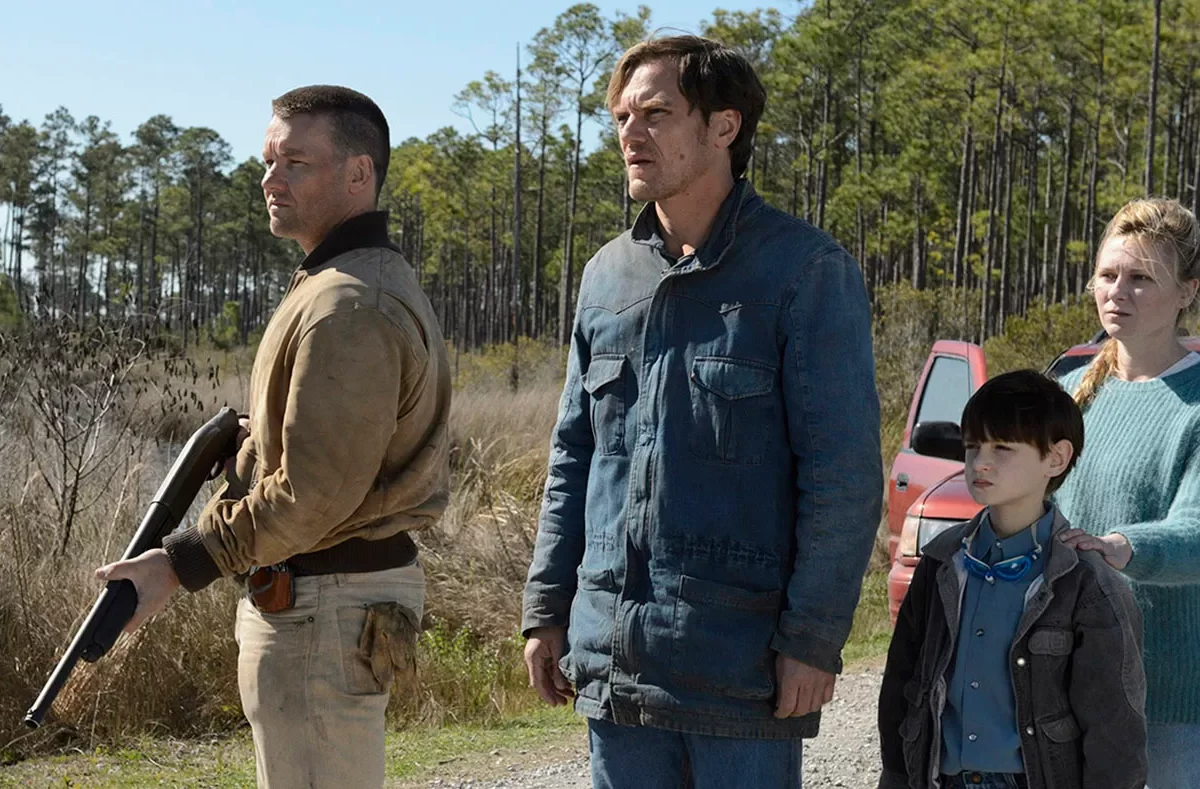
Even with all of its well-chosen pieces in place, there was perhaps an undue burden on the shoulders of Jeff Nichols’s fourth feature film Midnight Special upon its wide release in the U.S. a decade ago.
While the road movie/pursuit thriller/family drama with a sci-fi tinge (talk about high-concept!) wasn’t designed as a blockbuster, what with its $20 million budget and headline cast of recognizable, reputable names rather than marquee stars, it was seemingly positioned as a commercial breakthrough for Nichols, who’d enjoyed critical acclaim with his lo-fi tales of American life, some grounded in reality (the 2012 coming-of-age drama Mud), some more heightened in their ideas and approach (2011’s apocalyptic-or-is-it Take Shelter).
In addition to that, though, there was also the hope that Midnight Special could enjoy the kind of modest box-office success that many showbiz pundits and punters viewed as the traditional bedrock of the Hollywood economy – the mid-budget genre piece that didn’t necessarily strike gold but provided a reasonable return on investment.
Now let’s not be so naive to suggest that established IP hasn’t been a powerful force in the entertainment industry pretty much since its inception. But in 2016, it was obvious that franchises, legacy sequels, soft reboots and cinematic universes were wearing the crown. Still, there appeared to be a niche for intelligent, idea-driven original material that parlayed concept, execution and critical plaudits into black ink in the ledger – consider Alex Garland’s Ex Machina a year earlier, making close to $40 million worldwide against a $15 million budget.
For Nichols, making Midnight Special – a sci-fi story with nods to the esteemed (and popular) likes of Steven Spielberg’s E.T. the Extra-Terrestrial and Close Encounters of the Third Kind, and more explicitly John Carpenter’s Starman – under the auspices of Warner Brothers looked as if it could provide a similar shot at success, and according to the filmmaker himself, he considered keeping the film a relatively small-scale enterprise the smart play.
The studio didn’t see it the same way, according to Nichols. In a March 2016 interview with Film Comment, he said: “I thought I was very smart taking them a $20 million film. I thought it would be an easier sell. The reaction I got was: ‘We don’t do that. We make $100 million films so that we can make $400 million. We don’t make $20 million films so that we can maybe hope to eke out $50 million. It’s the same amount of work for us.’”
(Nichols wisely doesn’t bite the hand that feeds him, adding that “to their credit I think they really stood by it through the whole process. These are all very intelligent people.”)
Unfortunately, even eking out $50 million was beyond the grasp of Midnight Special, which after a delayed release (shifted from Thanksgiving 2015 to early 2016) limped to under $10 million worldwide. And in the decade since, it has yet to develop the kind of devout cult following that works up in-depth think pieces or fires off apoplectic ‘How dare you sleep on this one’ social media posts. Instead, Midnight Special’s advocates will occasionally raise their hand to remind the rest of us that, yes, the high-concept genre piece that’s also thoughtful, meaningful and moving isn’t extinct and is out there waiting to be rediscovered.
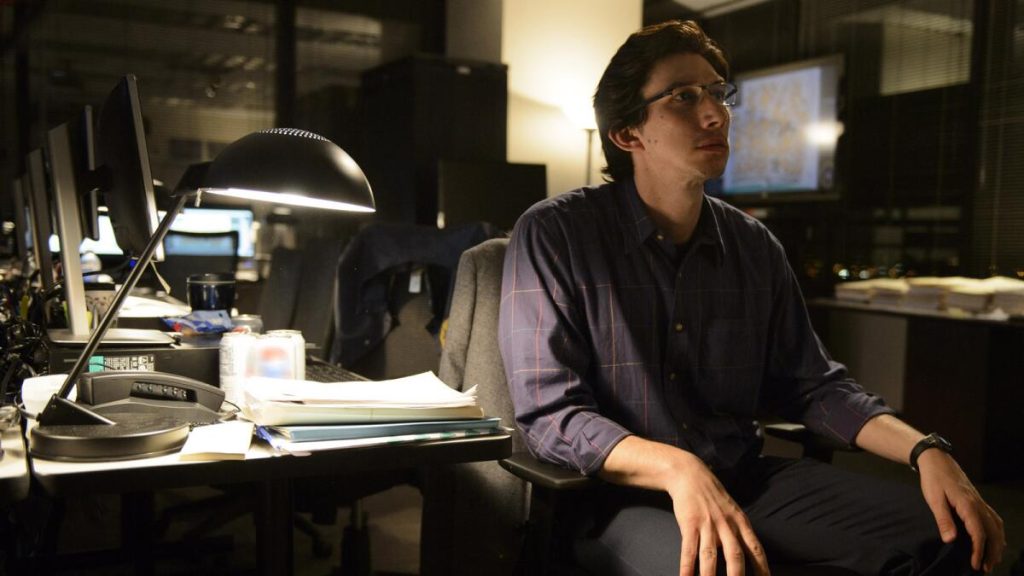
Having said that, it can be a tough sell. Strip Midnight Special down to its essence and it’s certainly compelling enough: Roy (Michael Shannon), with the help of his friend Lucas (Joel Edgerton), has taken his young son Alton (Jaeden Martell, then billed as Jaeden Lieberher) from the clutches of a religious cult that worships the boy’s mysterious gifts and, joined by Alton’s mother Sarah (Kirsten Dunst), try to evade both operatives dispatched by the cult and government agents seeking to harness Alton’s power for their own ends.
But while writer-director Nichols conceives and composes a number of sequences that make good on the central concept – violent confrontations, kinetic car chases and an impressive rain of destructive debris at a small-town gas station – the threads binding Midnight Special tight are curiosity more than captivation, and a quiet sense of awe more than an overwhelming feeling of amazement.
“I have a desire to want more out of the universe,” Nichols said in a February 2016 interview with RogerEbert.com. “But the older I get, the further I get from any specifics about that. It’s just a sense of how things work. For me, I’m always asking the question, and I’m sure that dusts off in the films.”
In Midnight Special’s case, Nichols, himself the father of a son, has said he was trying to understand and articulate the role of a parent. “It’s not actually to control the child, because you can’t. It’s to try and understand who they are and help them be who they are supposed to be. And so that’s what the movie ended up being about.”
So many great movies are about more than they’re ‘about’, and while this movie has its share of spectacle and wonder, the most resonant stems from Nichols’s main thesis. That’s expressed most beautifully near the end of the film, when Shannon’s Roy – it’s one of the actor’s most subdued and affecting performances – is about to surrender Alton to an uncertain fate. After telling his father there’s no need to worry about what comes next, Roy replies simply: “I’ll always worry about you, Alton. That’s the deal.”
That did for me what storytelling does best: illuminates a point of view or frame of mind foreign to your own. I have never been a parent, but those three words gave a glimpse of the great bargain one makes bringing a child into the world. You’re going to be concerned, even terrified, for the rest of your life. But your capacity for love and joy is magnified beyond belief. That’s the trade-off. That’s the deal.
“Midnight Special” is available for digital rental or purchase.