Edwin Arnaudin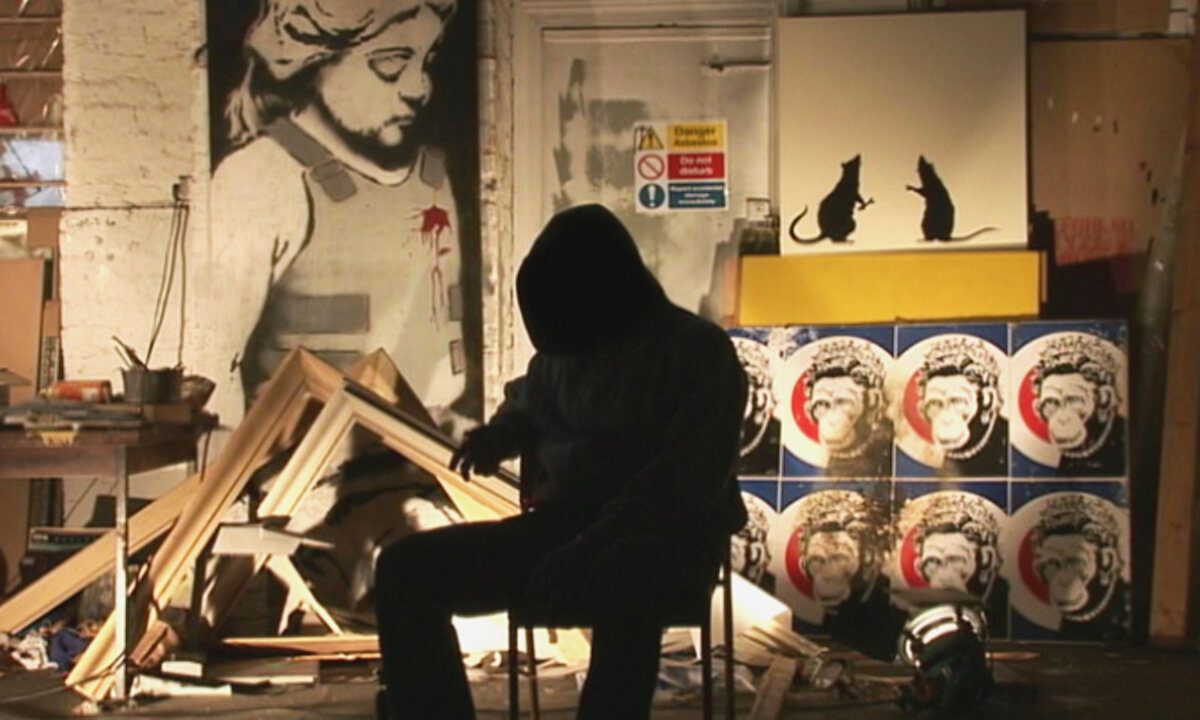
The spraypainting cat is out of the bag! Maybe.
According to a March 13 report by Reuters, the formerly anonymous street artist Banksy is actually one Robin Gunningham, who’s since adopted the alias David Jones — but may currently go by something entirely different. While the impact of this “unmasking” remains to be seen, the mere notion that a team of journalists felt compelled to embark on that quest is a bit of a buzzkill – and also misses that a large part of Banksy’s appeal is accepting that we don’t know his true identity. Some degree of speculation is fun and all, but digging deep and finding a plausible answer is akin to being the first kid to tell their classmates that there’s no Santa Claus.
The intentional mystery of Banksy’s identity, and the ways he exploits that anonymity to comment on the pretentiousness of the art world (and the nature of celebrity), is at the heart of his superb 2010 film Exit Through the Gift Shop. Even if Gunningham is Banksy, precisely what happens in this feature remains deliciously cloudy and keeps it one of the most rewatchable movies of the 21st century.
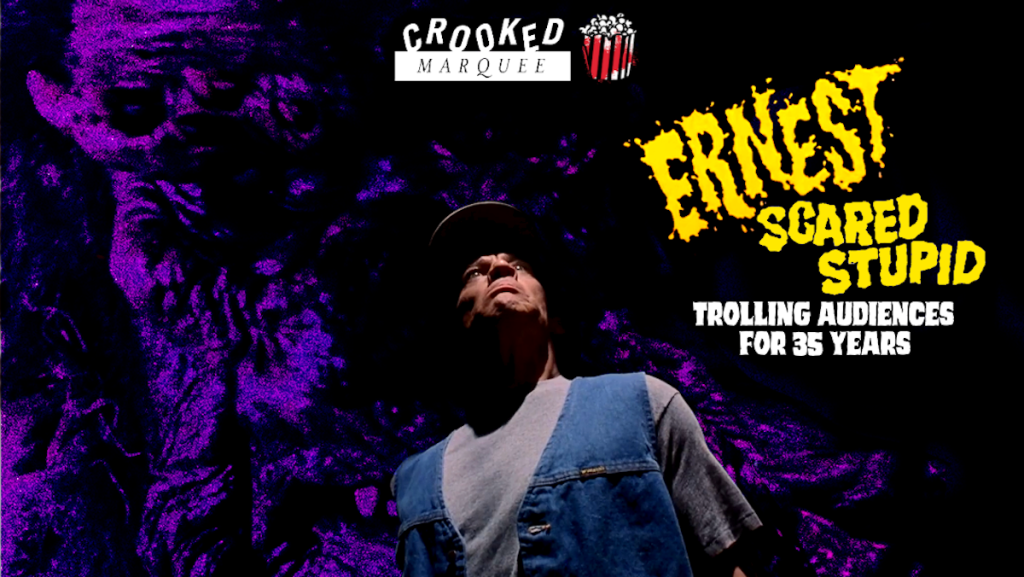
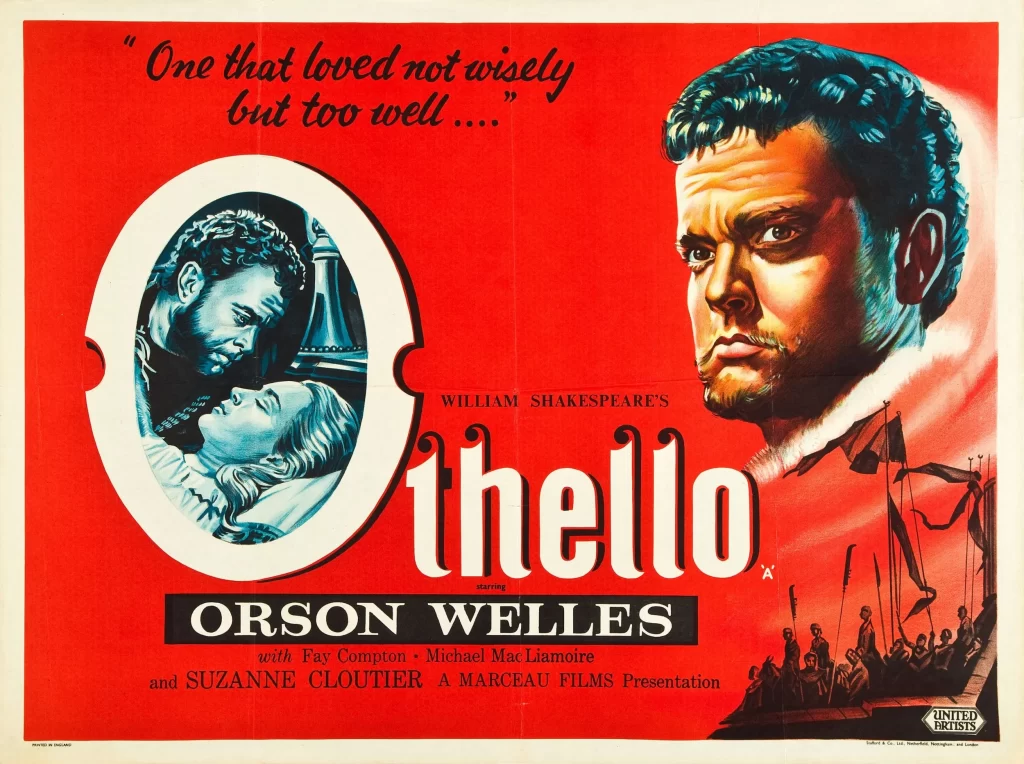
In the tradition of so-called “documentaries” like Orson Welles’ F for Fake that enjoy fucking with viewers by poking holes in popular perceptions with cinematic sleight of hand, Banksy’s film serves up a brilliant magic trick that works on numerous levels. Cloaked in shadow, his voice digitally manipulated, the director innocently enough presents the film as a project that started as a documentary about him. But when it became clear that the initial filmmaker was, in Banksy’s words, “a lot more interesting,” the artist turned the focus on the other guy.
This surprise star is Thierry Guetta, a French expat-turned-LA-based vintage clothing store owner who stumbled upon the street art scene of the mid-2000s while visiting his Parisian cousin, who just so happens to be the ceramic tile mosaic artist Invader. While following Invader around with his omnipresent video camera, Thierry documents the installation of his kin’s creations and those of his street art colleagues — works temporary by nature that, through his footage, now have the power to live much longer lives.
While sufficiently believable, the “right place, right time” nature of Thierry’s good fortune and his fast commitment to directing a street art documentary feels a bit convenient. But it makes for great entertainment while offering an exclusive glimpse at a secretive, niche subculture without blowing their covers (at least of the artists who don’t want their covers blown).
Whether free-hand tagging, stencil-aided pieces, or pre-made work affixed to various structures, these are all fascinating works of art, and it’s thrilling to witness such imaginative creations come into existence. Each artist has their own style that’s a pleasure to experience, and the film’s quick-burst editing keeps the pace cooking while mirroring the smash-and-grab nature of committing these illegal acts before the authorities show up.

Once Banksy — Thierry’s white whale — enters this orbit, the level of artistry takes a significant step up. It’s also a sneaky way for the director to promote/document his own work and to capture hyper-temporary and downright dangerous stunts like his Guantanamo Bay inflatable piece at Disneyland.
The street art portion of the film is all fairly straightforward, though a few details cast some doubt on the project’s legitimacy. Thierry’s klutzy behavior feels a little like a put-on, reminiscent of a Sacha Baron Cohen creation, and it’s never quite clear who’s doing the filming. The conceit of Thierry always documenting things is a terrific excuse for much of the footage’s origins, but that explanation crumbles when he’s the one being filmed.
The semi-convoluted yet convincing enough tale of how Banksy winds up taking over filmmaking duties from Thierry adds another layer of intrigue and explains why the street art sequences are so engaging and personal. But when the director turns his attention to the suddenly booming commercial side of this corner of the industry, Exit Through the Gift Shop starts to feel like an elaborate prank — or at least raises that possibility.
Not knowing for sure is more fun than being presented with definitive answers. But the prospect that Thierry’s sudden transformation into the street artist Mr. Brainwash — whose style, particularly for his debut studio show, suspiciously resembles Banksy’s — is a Banksy-engineered stunt to fool the art world and further expose its hypocrisies remains a juicy theory. And so is the potential (yet unlikely) explanation that Thierry is Banksy.
The mere chance that we — and those who embrace Mr. Brainwash as the next big thing — are being messed with keeps the mystery intact, and that ambiguity sustains a sense of freshness with each viewing that few films possess. Nevertheless, as with the large majority of screen stories, a version of the truth is provided. But taking it all at face value feels too easy and also a bit disingenuous to the critical thinking and skepticism at the core of Banksy’s art and the message of his film.
This masterful manipulation in turn suggests that Reuters’ big scoop may be its own sort of hoax — or, at the very least, another form of fact distortion, rooted in a larger social commentary that’s yet to reveal itself. With Banksy, embracing the mystery has always been a key component of his work, and hopefully that will remain the case, unmasking or not.