Jason Bailey
Sophia Takal’s Always Shine remains one of the most revelatory movies I’ve seen at Tribeca, so her new film Act One warrants keen anticipation — and delivers. First of all, she gets massive credit for finally writing a juicy role for Ari Graynor, an actor who’s always felt one breakthrough role away from the stardom she deserves, and maybe this will be it. She plays Melanie, the teacher, proprietor, and toxic center of Act One Studios, an intensive acting school, and Graynor’s performance is a marvel; watch how adroitly she pivots from eccentric to sinister, and creates real psychological danger via manipulation and cruelty.
Ella Beatty is heartbreakingly convincing as the high-school senior who becomes her latest project; “I’m not a teacher for everyone,” Melanie warns. “I’m going to push you.” Boy, does she ever. The narrative’s final destination stretches credibility a touch, but Takal and her talented cast pull it off; she creates a sense of chaos and terror, even in seemingly innocuous situations, and she has an unsettling way of moving her camera and framing her subjects. Her script seems intensely personal — the late-‘90s period setting doesn’t feel like an empty flourish — and the result is one of the more harrowing portraits of an actor’s life that I’ve seen.
It was a pleasure to watch David Cross playing (we assume) himself in the documentary Bob and David Climb Machu Picchu, and it’s a pleasure to see him playing a single dad of an adult daughter in Lucy Schulman, a single-girl-in-New-York story from writer/director Ellie Sachs, who also stars as the title character. He can put a sharp spin on just about any line, and she’s a charismatic and charming lead, but alas, they’re both working with a script that needed a couple more passes; the elements are there, and the construction is sound, but too many scenes find its talented cast exchanging chit-chat where jokes or insights should be. There’s nothing offensive or glaringly bad about Lucy Schulman; it’s such a nice movie, in fact, that it’s tempting to overlook how thin it is.
Kingston is a similarly mixed bag: laudable for its ambitions, but faltering in the execution. For this Higher Learning-style university story, set on the campus of what may as well be Columbia University, it’s a question of approach; interweaving a trio of stories that all boil down to the death of idealism (educational, intellectual, and emotional), directors Carlos Key and Kalijah Rowe fall too easily into hamfisted lecturing, and more importantly, struggle for narrative consistency. The five actors in the primary roles perform admirably and with frequently poignant realism; the antagonists are all pitched at the level of sitcom day players, telegraphing into the realm of broad caricature. And the final-seconds acknowledgment of the current clashes over political protest on campus play as far too little, too late.
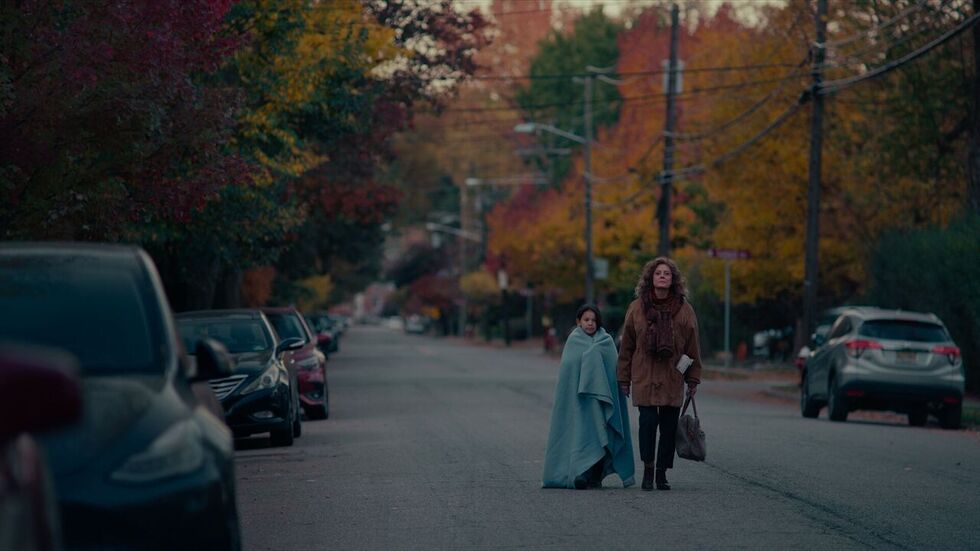
Zach Woods is one of the funniest actors working today, and maybe the inclination to push back on that is why he chose to make a movie as dour as The Accompanist for his feature directorial debut. And it’s easy to see why Susan Sarandon wanted to star in it — this is the juiciest acting challenge she’s had in a while — and why Aubrey Plaza wanted to produce and co-star, in a prickly role that requires real skill to navigate. (Child actor Everly Carganilla, who has more screen time than either of them, is laudable as well.) But its seriousness and sincerity veers too easily into the saccharine, and in attempting to complicate his narrative, Woods ends up painting himself into a corner; it’s unclear, by the climax, what outcome we should be hoping for, because there clearly aren’t any good ones. (And the third-act touches of surrealism mostly just come off confused.) Woods shows a sure hand with his actors, and one has to admire a big swing, but this one doesn’t connect.
The early scenes of Sam Scott’s Turn It Up! are promising enough, tracking a struggling indie rock band during the last leg of a truly terrible tour. The band dynamics make sense, the music is credible, and Scott exhibits a fun sense of style, using little dashes of animation and SFX to visualize the music. Alas, a supernatural element comes into play — while playing a particularly haunted venue, they stumble on a song that can literally kill those who listen to it — and it all goes right off the rails. It’s too silly to play as horror but not funny enough to work as comedy, and the longer it goes, the more flop sweat the performers shed in their desperate attempt to pull it together.
Sound also plays a key role in Recluse, whose protagonist is an indie film audio engineer, so she spends a fair amount of the movie listening to old cassette tapes and wandering around recording nat sound. Her father, a famous visual artist, had a bad accident in his studio and is on the verge of death, so she’s summoned to the family’s shambling old house in the Berkshires, which holds long-buried secrets and, just maybe, the ghosts that keep them. Director Henry Chaisson has a real fluency in the language of dread, with a soundtrack loaded with creaks and jolts and frames filled with inky shadows and hard edges, even if the moodiness sometimes comes at the cost of narrative logic. And to that end, the whole thing gets much less riveting once they start explaining everything, but that seems to be par for the course in supernatural thrillers these days.

Two of the most lauded documentaries of the 2010s were The Act of Killing and Jiro Dreams of Sushi, and in theory, How to Feed a Dictator sounds like someone tried to fuse them, like in one of those pitch sequences in The Player. Director Andrew Neel, adapting Witold Szabłowski’s book, interviews the personal chefs of Saddam Hussein, Idi Amin, Pol Pot, Augusto Pinochet and Kim Jong-il, intermingling their stories of favorite dishes and strained circumstances with historical footage and testimony of their bosses’ many horrific crimes. The incongruity is jarring, but purposefully so, and it becomes an efficient primer on this period of history (and its current relevance). But it’s most effective as a character study of these men and women. Some claim ignorance; others know exactly what they were party to, voluntarily or not, and are haunted by it.
It was a genuinely nice surprise when the director credit for Sean Ono Lennon came up at the end of the documentary threeASFOUR: Full Circle; not to cast any aspersions, but it wouldn’t be completely out of character for Tribeca to take a subpar film because of its maker’s famous parents. But Lennon (who co-directed with Brian Gonzalez) tells a compelling story well, thanks to the full access given by his painfully honest subjects, “avant garde outsiders in New York fashion,” per Vogue. A quartet of immigrants who all came to NYC in the fertile ‘90s to shake things up, they were darlings of the city’s underground during its last gasps; that footage is thrilling, but the heart of the movie is in what comes after, as the dew of the new fell away and they had to make their oddball work into a sustainable career. That’s a story we don’t hear all that often, and Full Circle asks thoughtful questions about finding the balance, in both the fashion industry and art as well, between “things that get attention” and “things that sell.”
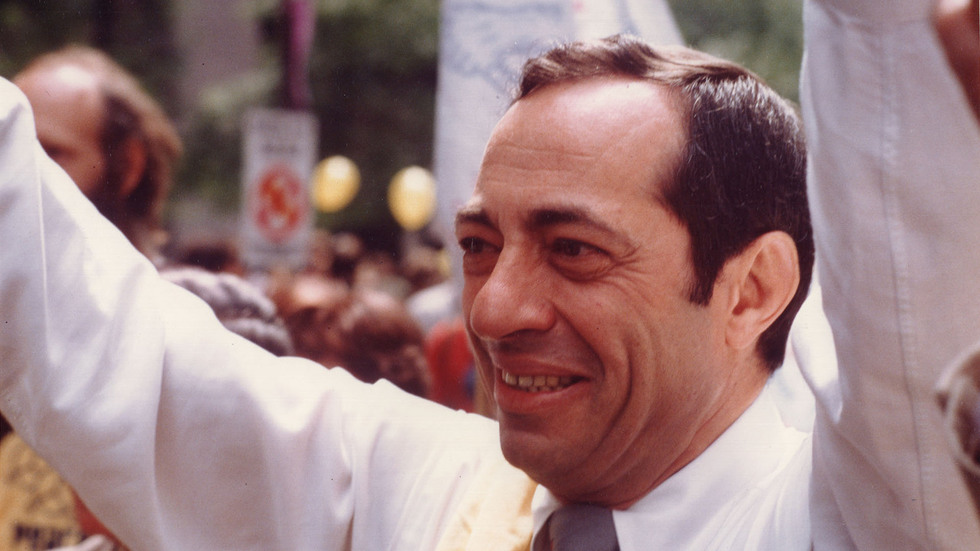
I’m not sure I’ve ever felt as sorry for a group of filmmakers as I have for the poor souls who poured years of their lives into making Mario, a documentary portrait of three-time New York governor Mario Cuomo, only to see Cuomo’s son Andrew, over the past year, absolutely light the family name on fire with his two failed campaigns for NYC mayor — in which he conducted himself in a manner that directly contradicts the kind of high-minded governance the documentary assures us that Governor Cuomo stood for. That perception is a whitewash anyway (no, there is not even a passing mention of “Vote for Cuomo, not the homo”), and they made a choice to involve Andrew after he’d resigned in disgrace from the office his father filled following multiple accusations of sexual harassment (no, that’s not mentioned either).
Had directors Peter Kunhardt, George Kunhardt, and Teddy Kunhardt chosen to, they could have used Andrew’s mess to make a genuinely tough and compelling documentary, a The Roosevelts-style examination of a political dynasty that was carefully built and just as deliberately destroyed by hubris and ego. But we critics are told to review the movie they made, not the one we wish they’d made, and the one they made has a handful of virtues; it grapples thoughtfully with the appeal of Reagan (even to Democrats), details the nuts and bolts of state government with some nuance, and uses his personal diaries to shine some light on how he articulated his various struggles. But throughout the entire running time, it’s tough to avoid thinking about the elephant in the room, and in the frame.
The Tribeca Festival continues through Sunday in New York City.