Sean Burns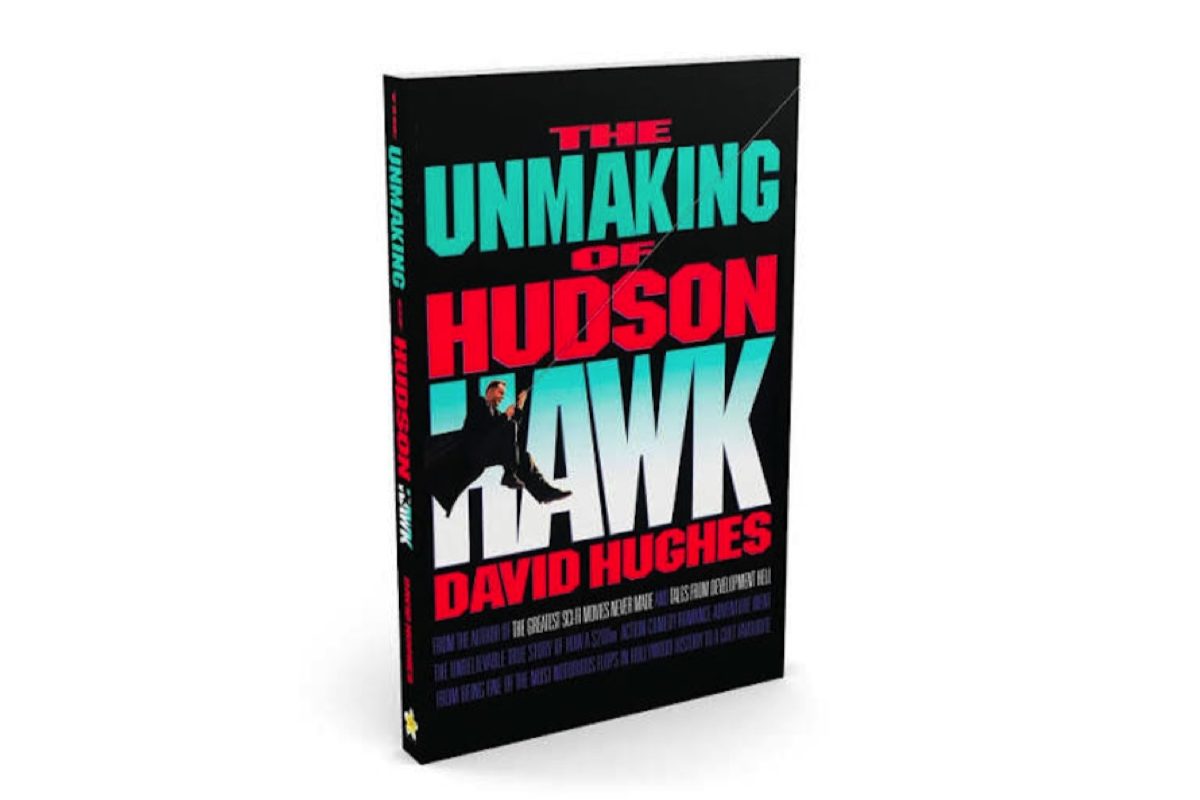
“Maybe the problem was that people were already getting a little tired of Bruce Willis’s bullshit?” film critic Walter Chaw writes in his introduction to David Hughes’s The Unmaking of Hudson Hawk. The compulsively readable book is a forensic examination of a legendary box office bomb, exhaustively assembled from countless screenplay drafts and embittered accounts of an out-of-control production. Hudson Hawk wasn’t just a failure at the summer box office in 1991, it was the kind of exorbitantly expensive, career-derailing superstar folly that gossip columnists and Razzie voters dream about. Flops are forgotten all the time, but Willis’ outlandishly extravagant vanity project remains in the rarefied ranks of Ishtar, Waterworld and Gigli as one of those fiascos that became a household name without anybody going to see it.
There comes a moment in every big star’s career when the public has had just about enough of them. (I’ve been thinking about this a lot lately while reading Taylor Swift’s wedding plans.) We build people up to tear them down, and at some point you’re going to make a lousy movie or jump on Oprah’s couch or people are just generally going to get sick of your bullshit. Willis was riding high from Moonlighting, the first two Die Hards and a marriage to Demi Moore that was one of those situations where two people are famous on their own but when they get together it creates a tabloid supernova. This was probably not the right time to release a movie that was 100% Bruce Willis’s bullshit.
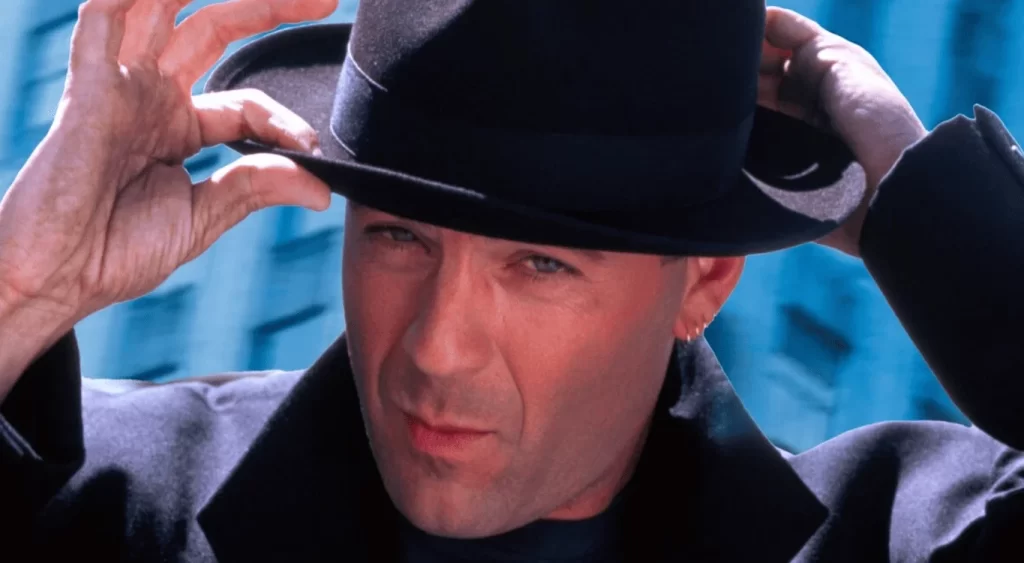
Luckily, I happen to love Bruce Willis’s bullshit. Thirty-five years ago, I went to see Hudson Hawk on opening night. Then I went back a few days later to see it again. Conceived in the early ‘80s by the actor and his old bar band buddy Robert Kraft (not to be confused with the New England Patriots owner and hand-job enthusiast) the character of a hipster cat burglar was an embodiment of the wily, life-of-the-party, Jersey rascal persona the actor had honed behind the bar of many Manhattan nightspots when he was first starting out. This was the Willis of Moonlighting – the soul-singing scamp in sunglasses who taught millions of impressionable young men like myself that it’s possible to woo a woman as out of your league as Cybill Shepherd by being the most annoying person she’s ever met. (This works much better on television than in real life, I’ve discovered.)
This was the Bruce Willis who fancied himself an R&B singer, recording the Kraft-produced, surprise hit 1987 album The Return of Bruno—on the Motown label, no less!—as well as a terrible 1989 follow-up, which anticipated its own reception with the title If It Doesn’t Kill You, It Just Makes You Stronger. Hudson Hawk was partially a musical, with Willis and sidekick Danny Aiello, in lieu of using stopwatches, singing standards to synchronize their robberies. The first heist, set to “Swinging on a Star,” is the film’s early high point, an elegantly staged, effervescent interlude soaring on its star’s insouciant, mega-watt charisma. Hudson Hawk can’t always replicate that kind of magic, but it comes close more often than it gets credit for.
Hughes paints a picture of a calamitous shoot, with indie director Michael Lehmann cowed by both the scale of the project and the temper of blockbuster producer Joel Silver – who two years later would be famously parodied by Saul Rubinek in True Romance after a similarly contentious shoot with that film’s director, Tony Scott. The book charts Hudson Hawk’s perpetually mutating screenplay from the early, straight-laced drafts by Die Hard co-writer Steven E. de Souza, which were later upended into anarchy when Lehmann brought on his Heathers writer, postmodern ironist extraordinaire Daniel Waters. Hawk became a chaotic caper comedy constantly sending itself up, with Richard E. Grant’s magnificent, scenery-devouring fop setting the tone by introducing himself to our hero with the line, “What can I say, Hawk? I’m the villain.”
Grant’s wife is played by Sandra Bernhard, and if possible, she’s even broader, louder and more insane than he is. Frank Stallone shows up as a gangster constantly deflecting questions about his stupid brother. (Their last name is Mario. Yes, they’re the Mario brothers.) A squad of CIA agents are code-named after candy bars, with David Caruso’s mute Kit Kat lurking in the margins of every scene disguised as another character, or sometimes a statue. Head spy George Kaplan—named for the fake spy in North by Northwest—is played by James Coburn with the wolfish grin of a guy who knows exactly what kind of movie he’s in. Andie MacDowell – a last minute replacement for Devil and the Flesh sexpot Maruschka Detmers – is an undercover nun sent by the Vatican to seduce Hawk and steal the precious Da Vinci codes that everyone in the picture is chasing. Later in the film she’ll try to speak like a dolphin.
Hudson Hawk is a profoundly silly picture, lavishly overproduced with bursts of bizarrely gratuitous slapstick violence. It’s a movie in which Willis decapitates a henchman during a swordfight and says, “I guess we won’t be attending that hat convention in July.” You’re either on the movie’s bumpy comic wavelength or you’re not, and that “hat convention” line has been living rent-free in my head for the past 35 years. It’s a tonal free-for-all with an everything-including-the-kitchen sink sensibility set to the whims of its mercurial star, who Hughes’ book makes clear was the 800 lb. gorilla calling all the shots. (Withering excerpts from co-star Grant’s memoir With Nails affectionately detail Willis’ penchant for arriving late and re-directing scenes while expounding on the nature of comedy.)
The production’s mismanagement becomes downright hilarious when they end up tossing huge chunks of the script because they’re behind schedule – you might recall that in the final film Hawk only steals two of the three Da Vinci treasures – eliminating Waters’ entire third act set in Moscow. Yet everyone still had to fly to Budapest to shoot interiors that could have been filmed in Los Angeles. The over-scaled, elephantine heedlessness of the film becomes part of its charm. There will never be another movie like Hudson Hawk. Studios now have entire departments whose jobs are to make sure something like this never happens again.
What hurts watching Hudson Hawk now is that it was the last time we saw this side of Willis. The film’s ignominious failure was the end of that fast-talking, hepcat persona we’d loved since the David Addison days on Moonlighting. (Bruno would not return.) “It’s so sad what Hudson Hawk did to Bruce Wills because he likes to be funny,” screenwriter Waters tells Hughes. Even in ostensible comedies like Red and The Whole Nine Yards, he was still the glowering guy with a gun. The actor retreated into an increasing stoicism that worked in Moonrise Kingdom or his M. Night Shyamalan collaborations, but in later, less judiciously chosen projects became a crutch to mask indifference, and illness. “He had a goofball side to him and this movie killed his goofball side,” Waters laments. “I feel like the movie stole some joy from him.”
“The Unmaking of Hudson Hawk” is available now.