Audrey Fox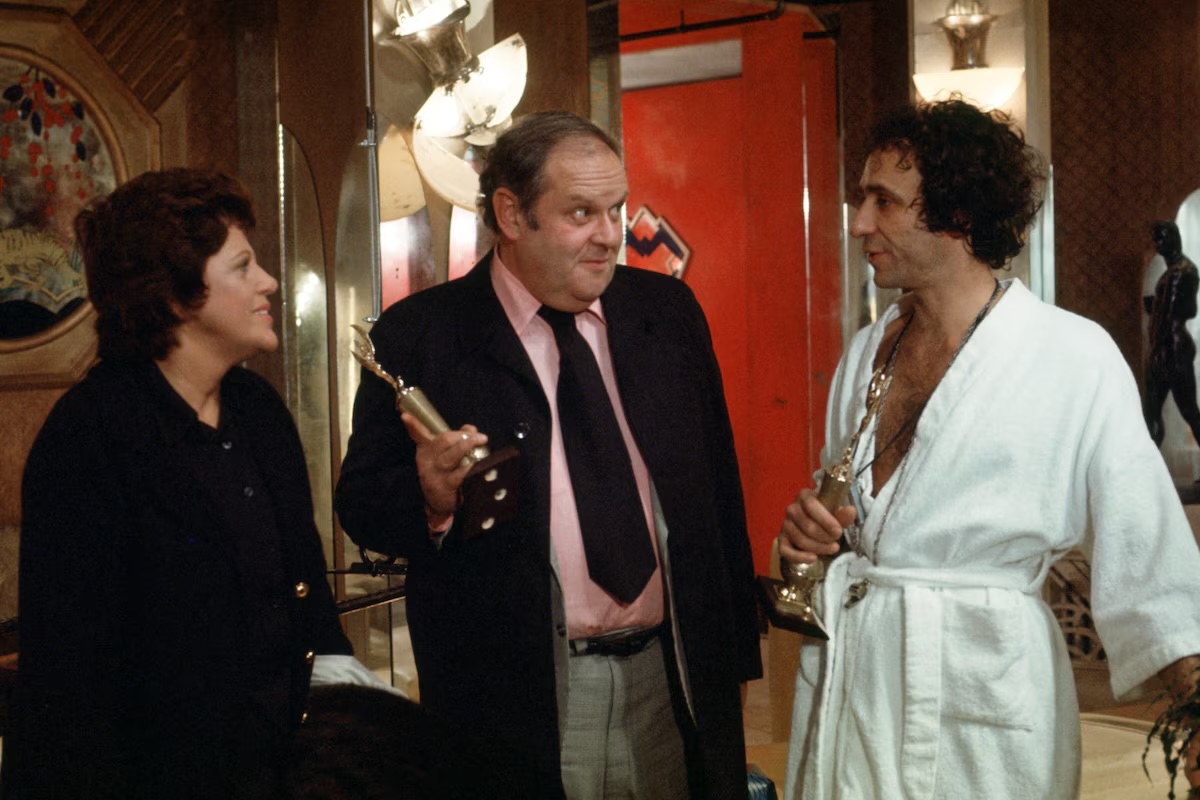
For a lot of audiences, the queer experience in cinema has often dealt with more than its fair share of suffering. If a movie isn’t tackling the AIDS epidemic, it’s focusing on the very real threat of violence against the LGBTQ community. Heavy on the sad, not so much on the celebratory. But then you find an odd little gem like The Ritz, a madcap 1970s comedy set almost entirely in a New York City bathhouse, and it hits you like a hammer, all the stories we could have been telling this whole time instead of focusing exclusively on queer pain. And in a lot of ways, The Ritz captures a unique, silly, joyful moment – almost like a time capsule – just before disease decimated its community.
When Gaetano Proclo arrives at the Ritz, it’s not the result of a naughty little whim to see the forbidden side of 1970s New York City – it’s an act of desperation. Although he’s an affable, bordering-on-clueless Midwesterner with a quiet life and a typical suburban family, his brother-in-law (Jerry Stiller, perpetually on the verge of hysterics) is a violent mobster, one who has no compunction about taking a hit out on him. So he takes refuge at the Ritz, not realizing that it’s filled with men on the prowl. Naturally, comic misunderstandings ensue.
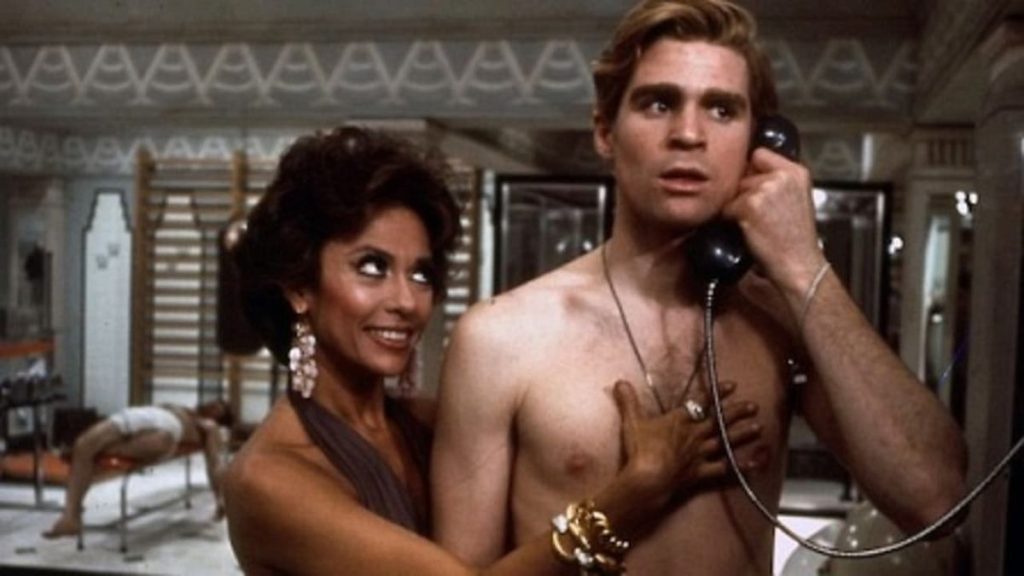
Aside from Jack Weston, who plays Gaetano as the straight man in every sense of the word, shuttled from mishap to mishap with reckless abandon, the rest of the performances in The Ritz go for broke. There are no acting choices in this film, only Acting Choices, from Rita Moreno’s cabaret star Googie Gomez with a chip on her shoulder (a role she won a Tony for in the original stage production) to Treat Williams’s undercover agent with an inexplicable falsetto and F. Murray Abraham’s chaotic, kinetic, endlessly horny Chris. This film came out in 1976, so it wouldn’t be a shock if it came out that the performers had been receiving a little pharmaceutical help to keep a pep in their step – they certainly act like it.
But underneath these broad performances, there’s a real heart at the center of the sleazy titular bathhouse. It represents a coming together of figures otherwise ostracized by mainstream society, all with a wide range of sexual interests that are more or less tolerated as members of this Island of Misfit Toys. The fact that a straight midwesterner finds support and a cheery welcome when literal members of his own family are out for his blood speaks to the supportive nature of the denizens of The Ritz. These are their people, their home, and they’ve been too ill-treated by society at large to start turning on each other. If they can’t belong at The Ritz, where can they?
When The Ritz was first released, it’s doubtful that it ever intended to be anything more than a zany comedy featuring a community dipping its first tentative toe into a mainstream world. But as we look back on it, the picture’s sheer warmth and humanity gives it a greater sense of historical significance, considering that just a few short years later, this sort of bathhouse would be on the brink of extinction. When AIDS first began to spread, and doctors began to realize that it was spreading disproportionately within the gay community, the messaging became clear: shut down the bathhouses, stop having sex. And while that’s perfectly logical from a public health perspective, it’s also easy to see why the men most at risk for this terrifying new disease would be reluctant to completely turn their backs on the promiscuous lifestyle that exists at the center of The Ritz, considering that sex existed at the center of this shared community space that had been hard fought for. Building these tiny worlds where they could feel safe to be themselves was a massive undertaking – only to be faced with the realization that their salvation was putting them in grave danger.
The Ritz doesn’t exactly have lofty aspirations in its storytelling: it’s a raunchy, slapstick comedy, and never claims to be anything more than that. But in part because we’re time travelers, watching this film with the knowledge of everything that would come after it, the bathhouse in The Ritz takes on a hint of melancholy, lending its over-the-top shenanigans an unexpected pathos. The characters in the film aren’t able to realize that they’re living in the end of an era, the final days of a hyper-specific lifestyle before their world would be turned on its axis and changed forever.
“The Ritz” is available for digital rental or purchase.