Jason Bailey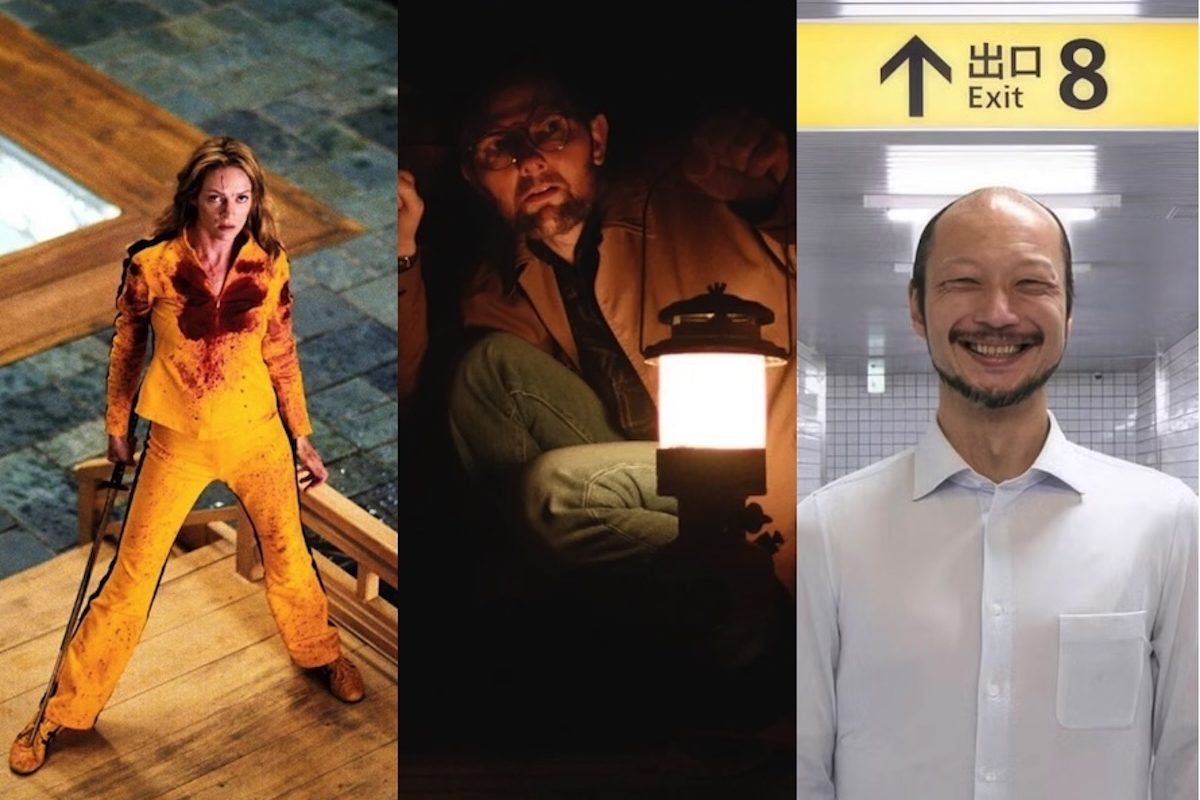
Every Tuesday, discriminating viewers are confronted with a flurry of choices: new releases on disc and on demand, vintage and original movies on any number of streaming platforms, catalogue titles making a splash on Blu-ray or 4K. This twice-monthly column sifts through all of those choices to pluck out the movies most worth your time, no matter how you’re watching.
PICK OF THE WEEK:
Safe: When Todd Haynes’s breakthrough movie (newly upgraded to 4K UHD by the Criterion Collection) was released in 1995, critics read it as metaphor for any number of maladies. Now, from a distance, Haynes’ target seems clearer, and the film all the more prescient: in many ways, Safe predicts both the insular nature of contemporary society, and the (counter-intuitive) disease of conformity that’s synonymous with it. Haynes classified the picture as a horror movie, and he wasn’t just being arch; it plays like that, particularly in its first hour, which lacks gore or even any real “suspense,” but is disturbingly unnerving all the same. (Includes audio commentary, interviews, short film, trailer, and essay by Dennis Lim.)
ON 4K / BLU-RAY / DVD / VOD:
Kill Bill: The Whole Bloody Affair: Let me get my hot take out of the way right up front: I liked it better as two movies. Most know, by now, that Quentin Tarantino initially conceived his story of the Bride (Uma Thurman) and her quest for revenge as one long grindhouse extravaganza, before being talked into splitting it in two by Harvey Weinstein, who did a lot of that. For my money, putting it all together is just a little too much (for a pair of movies that are already a lot), particularly since Vol. 2 set itself apart from its predecessor by augmenting the killer action beats with genuine emotional heft; David Carradine finds and sounds just the right notes as the titular target, and the beats surrounding he and the Bride’s long-lost (to her) daughter echo the warm feelings of Jackie Brown. But this is all nitpicking — together or apart, the setpieces are dynamic, the dialogue is memorable, and it goes with the headlong momentum of a freight train. I might prefer the earlier experience, but I’m glad this one is finally readily available. (Includes that terrible Fortnite thing.)
Project Hail Mary: One has to applaud the cojones of directors Chris Miller and Phil Lord, whose first live-action feature after their notorious dismissal from a big-budget space movie was… another big-budget space movie. But they’ve had the last laugh; this is the kind of wonder-inducing, crowd-pleasing, full-on entertainment that IP maintenance like Solo was never going to be. Ryan Gosling is splendid in the lead, as he must be — you have to really enjoy watching someone who is alone onscreen this much — while Sandra Huller proves surprisingly funny thanks to some bone-dry line readings. Miller and Lord’s comedy chops are fully intact, but they don’t let the comedy overwhelm the wonder of it all, and the structure of Drew Goddard’s script, which masterfully interweaves its parallel timelines and distributes exposition as late as possible without seeming to keep secrets, should be taught in screenwriting schools. (Also streaming on Amazon Prime.) (Includes audio commentary, deleted scenes, and featurette.)
Hokum: Writer/ director Damian McCarthy is clearly aware of the grand horror tradition he’s calling upon with this story of an American novelist (Adam Scott) trapped in a haunted Irish hotel. But this is no simple pastiche. McCarthy has his own style and his own thematic concerns, which are explored with wit and sensitivity without short-changing the tropes of the genre; rest assured, there are creaky doors and unpredictable dumbwaiters and cobwebs galore and plenty of things going bump in the night. But his protagonist, played with a well-measured mixture of cruelty, humor and pathos by Scott, is no mere placeholder, and his tortured psychological journey is ultimately what gives this spook-fest its juice. (Includes audio commentary, featurette, and trailer.)
EPiC – Elvis Presley in Concert: Baz Luhrmann’s combination documentary and performance film is impeccably assembled, beginning with an efficient biographical summary (he gives you what you need to know about the pre-live era, and illustrates it well) before moving into the meat of the movie, spotlighting the King’s live performances in the late ‘60s and early ‘70s. (It mercifully does not include the later years.) As with the earlier docs this footage was shot for, the rehearsals are most enlightening, spotlighting the camaraderie and familial feeling of the band and backing vocalists, his playfulness, and his skill as a bandleader (perhaps his most underrated talent). And the concert footage is electrifying; I found myself watching every single song with a big, stupid grin on my face. Most importantly, folding the bio-doc into the concert movie is a masterstroke, dropping in archival audio of Elvis’s stories and memories between the songs that best illustrate and complement them. It’s not a cradle-to-grave documentary, but for God’s sake, we’ve had plenty of those for him; this is its own thing, and it’s a real treat. (Also streaming on Paramount+) (No bonus features.)
ON BLU-RAY / DVD / VOD:
Exit 8: Though based on a video game, this “liminal horror” suspense thriller is clearly cut from the same cloth as Backrooms, and works in many of the same ways — and is frankly better off without some of the clunky exposition and explanation of the latter film. Our protagonist here doesn’t have a name, and everything we know about him is conveyed in a single phone call early on, but it’s all we need; what matters is he’s stuck in a loop while trying to exit a subway station, looking for patterns and anomalies and help of any kind. Director Genki Kawamura really gets the internal logic of a nightmare, and has a gift for visualizing it, and in spite of the minimalism of the screenplay, it comes to a conclusion of genuine pathos. And then it keeps going, which is unfortunate, but it’s well worth your time nonetheless. (Includes interview, featurette, and trailer.)
ON 4K UHD:
Lady in White: Someone smarter than me once posited that there’s a whole subgenre of horror movies that feel like they’re based on Stephen King books, even when they’re not; this 1988 chiller from writer/director/composer Frank LaLoggia, about a horror writer from a small Northeastern town, certainly applies. Lukas Haas stars as the writer’s boyhood incarnation, recalling the spooky story that overtook the town clear back in 1962, which unfolds as a series of farily conventional horror vibes and unexpected plot turns. Haas is excellent, carrying the entire movie on his tiny shoulders, and LaLoggia’s filmmaking is refreshingly unconventional; it’s the kind of movie that seems to wind down and then gets really nuts, and one has to respect that. Vinegar Syndrome’s 4K presentation nicely preserves the impressive (and often gnarly) visual effects. (Includes three cuts, new and archival audio commentaries, deleted scenes, interviews, featurettes, trailers, radio and TV spots, and essays by Molly Henery, Mark H. Harris, and Heidi Honeycutt.)
54: The story has been well-told, here and other places: in 1998, Harvey Weinstein (looking for a Miramax riff on the previous year’s Boogie Nights) hired first-time writer-director Mark Christopher to make this fictionalized account of the glory days of New York’s ‘70s disco haven, Studio 54. But Weinstein, earning his “Harvey Scissorhands” nickname, demanded extensive cuts and reshoots to the bisexual bacchanal that Christopher turned in, and the resultant, compromised picture satisfied no one. Cinématographe’s new edition presents the theatrical version in 4K alongside a Blu-ray of Christopher’s director’s cut, pieced together from video work prints and the like, and it offers a fascinating window into the picture’s protracted post-production (it’s wild to watch the image get blurry whenever anything explicitly gay happens). It’s still not a particularly good movie — Christopher’s script relies too much on dusty tropes and Saturday Night Fever cosplay, and it’s ultimately a fairly standard “sex and drugs ruin everything” morality tale — but it’s certainly a better one in this form. (Includes new and archival audio commentaries, interviews, video essay, featurette, deleted scenes, behind-the-scenes footage, and essays by Sean Abley, Alex Gootter, and Dan Mecca.)
The People Vs. Larry Flynt: Screenwriters Scott Alexander and Larry Karaszewski proved themselves the masters of the unconventional biopic by following up Ed Wood with this fierce, funny, and melancholy portrait of the Hustler publisher and free-speech advocate for director Milos Forman. Woody Harrelson was seldom better than he was in the leading role, mixing the man’s perversions, ego, and self-righteous pugilism into an indelible portrait of an American original; Courtney Love is every bit his equal as Flynt’s soulmate Althea, a tragic figure whom she never plays like one. Some of the beats are a tad pat (or have become that), but Forman orchestrates the action with bawdy, rowdy force, crafting a crowd-pleasing underdog story from the least likely of sources. (Includes audio commentaries, deleted scenes, new and archival interviews, archival featurettes, TV spots and trailer.)
ON BLU-RAY:
Coup de Torchon: This early entry in the Criterion Collection (getting a long-overdue Blu-ray upgrade) is a pitch-black French adaptation of quintessentially American hardboiled author Jim Thompson’s novel Pop. 1280, with director Bertrand Tavernier shifting the setting to French West Africa, but keeping Thompson’s jaundiced view of the human spirit fully intact. No one gets away clean here; Philippe Noiret’s seemingly sad-sack weasel of police chief is quick to reveal his amorality; everyone around him is varying degrees of vile or, at the very least, heartless. It’s a bleak worldview, yes, but a mighty funny movie for those who share it. (Includes new and archival interview, featurette, alternate ending, trailers, and essay by Lynn Anthony Higgins.)
I Love Lucy – The Complete Series: CBS and Paramount honor the 75th anniversary of the most influential sitcom in television history with this massive doorstop of a box set, a 33-disc collection boasting 194 episodes of both the original I Love Lucy and its follow-up iteration, The Lucy-Desi Comedy Hour. It remains the gold standard of the genre, a gut-busting combination of domestic comedy, slapstick set pieces, top-tier guest stars, and combustible situations, while also quietly breaking boundaries of race and gender (and setting the long-term style of the three-camera sitcom to boot). It’s a pricy set, but warm blankets like this are worth it. (Includes audio commentaries, original pilot, radio episodes, vintage sponsor spots and broadcast versions, and spin-off movie.)
Money From Home: This 1953 Dean Martin and Jerry Lewis vehicle was originally released in 3-D but only seen in its flat version for previous video releases. KL Studio Classics and the 3-D Film Archives collaborated to restore it, and it’s a beaut, boasting eye-popping Technicolor and immersive but not aggressive stereoscopic effects. Director George Marshall opens it like gangbusters, going hard at the script’s origins in the stories of Damon Runyon; Sheldon Leonard was born to be a Runyon baddie, and Dino seems particularly at home (one longs to see what he might’ve done in the Brando role in Guys and Dolls). Once it goes on the road, it loses some steam, but there are still plenty of good numbers and big laughs, particularly when Jerry trots out his old (but still enjoyable) record-miming bit. (Includes audio commentaries, shorts, promos, teaser and trailer.)
Hyperspace: I was previously unaware of the output of the Owensby Studios, which produced low-budget genre movies during the short but potent 3-D boom of the early 1980s; this is their best-known film, primarily due to the participation of future alt-comedy stars Chris Elliott and Paula Poundstone in early roles. (They’re billed above the title, alongside one “Daisy the Cow.”). It mostly spoofs the original Star Wars trilogy — which had just concluded on its 1984 release — and does so well, while also landing strays at Jaws and E.T. (among others). The effects are cheap but fairly impressive, and though it overstays its welcome even at a brisk 86 minutes, enough of the machine-gunned gags land to make it worth a look. KL’s 3D presentation is showier this time around, exactly as silly as most of the movies using that technology at the time. (Includes short film, making-of feature, isolated music track, vintage pre-show, and trailers.)
The Wages of Sin: Kino Classics and Something Weird continue their long-running “Forbidden Fruit: The Golden Age of the Exploitation Picture” with this 18th volume, showcasing the 1938 melodrama from producer Willis Kent about a good girl gone to seed. It opens with the comically inaccurate assertion that approximately 90,000 girls disappear from the homes annually in the U.S., and goes from there, tracing sweet Marjorie (Constance Worth) and her unfortunate decision to spend one (1) night on the town, falling into a hellscape of drugs, prostitution, and worse. (Yes, as with any disreputable ’30 movie, there are lingering close-ups of stockings being attached.) Director Herman E. Webber makes some dubious choices — I’m not sure why we watch the film’s JV Margaret Dumont sing two full songs — but Worth is charismatic and the big ballyhoo ending is deliciously silly. (Includes audio commentary, abridged version, and Something Weird roadshow shorts.)
Jailbreak: This 2017 Cambodian action-o-matic from Italian expatriate Jimmy Henderson takes a minute to get going, but once the fights start, watch out. Most of them play out in long, messy, medium-wide handheld shots, pugilistic and participatory, eschewing the slice-and-dice cutting and blurry geography of too many Western directors. The scenes between them are basic stuff, with prison guards battling a chilling villain who’s going after a new, high-profile inmate, and there’s something of a video game quality to the storytelling — fighting up to the final boss and all that. (Slight demerit for actually ending the movie with the line “I am too old for this shit!”) But action fans who got high off The Raid movies a few years back and The Furious this summer will find much to love here. (Includes deleted scenes, bloopers, featurettes, music video, and essay by Pierce Conran.)