Craig D. Lindsey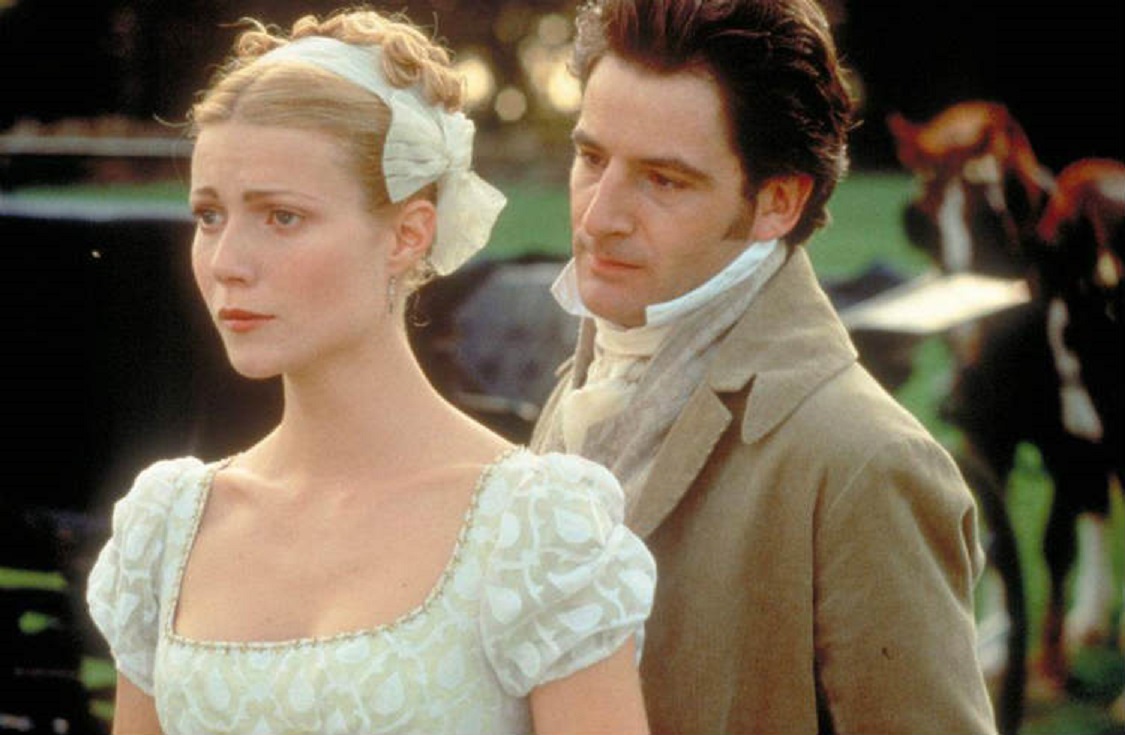
Welcome to Harvey’s Hellhole, a monthly column devoted to spotlighting the movies that were poorly marketed, mishandled, reshaped, neglected or just straight-up destroyed by Harvey Weinstein during his reign as one of the most powerful studio chiefs in Hollywood. Let’s take it back to 30 summers ago, when Miramax had a full schedule of films, including three high-profile titles.
Harvey Weinstein was feeling the fuck out of himself back in the summer of ‘96.
Miramax was still in its golden era of being the independent studio, dropping arthouse cinema that made money and won awards, and Weinstein wanted everyone to know it was his world and we all gotta live with it. When he and his team made their annual trip to Cannes, it was more like a victory lap, as they showed off the big titles they had lined up for the summer while also looking for new imports to release later that year.
Weinstein held a world-premiere, amfAR-benefit screening for what would become his biggest moneymaker that season: a tony adaptation of Jane Austen’s Emma. You could say Harvey and them were late to the big-screen Austen party that began the year before, when audiences saw not only Ang Lee’s Best Picture nominee Sense and Sensibility (star/screenwriter Emma Thompson did win a Best Adapted Screenplay Oscar) and Roger Michell’s critical favorite Persuasion, but another Emma retelling in the form of Amy Heckerling’s hit teen satire Clueless.
First-time writer/director Douglas McGrath (who co-wrote Woody Allen’s Miramax-distributed Bullets Over Broadway) claimed he didn’t know about Clueless while shooting this prim-and-proper period piece. Regardless, the movie is less concerned about putting a more contemporary spin on an Austen classic and more about providing a star-making vehicle for Gwyneth Paltrow, who plays the titular matchmaker.
Fresh from getting raves as then-boyfriend Brad Pitt’s doomed wife in Seven (and co-starring alongside David Schwimmer in the Miramax dramedy The Pallbearer, which we’ll get into another time), Weinstein was ready to make this rising nepo-baby his prized possession. So, of course, the sumabitch made a pass at her in a hotel suite before they started working together. (Years later, she told Howard Stern how Pitt put his ass in check after the experience.)
Even after that ugliness, she still headlined the adorable, $7 million date movie, which made $37.3 million and later won an Oscar for Rachel Portman’s score. Paltrow gives a charming, sunny-faced performance, as she’s supported by a cast that includes Miramax regulars like Muriel’s Wedding star Toni Collette, once again packing on the pounds as gal pal Harriet Smith.
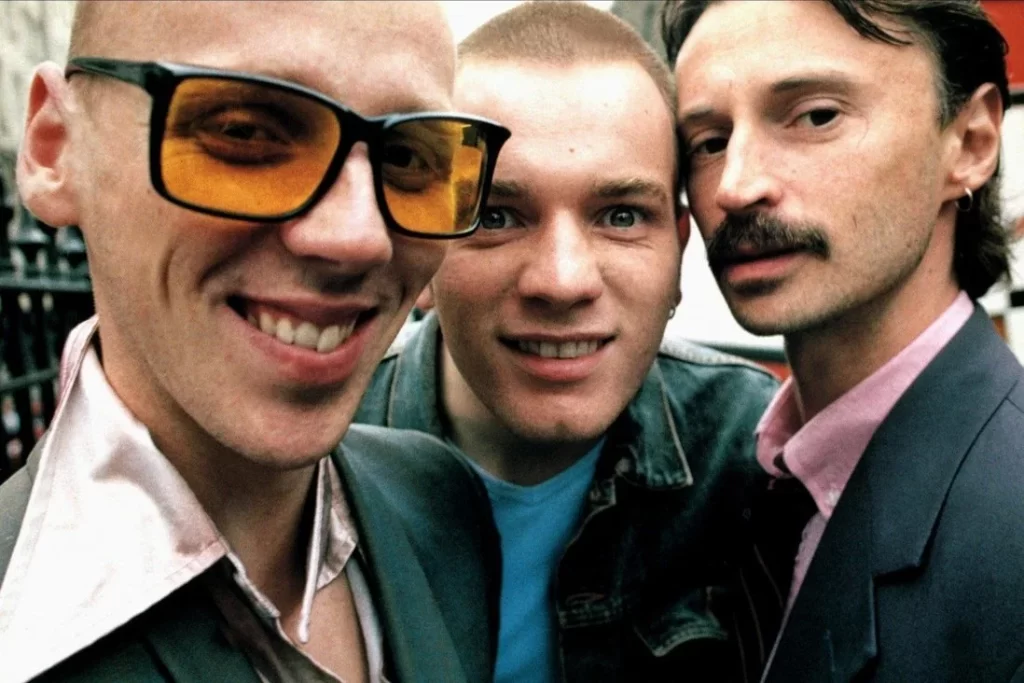
Future Miramax regular Ewan McGregor, who plays charming-ass gent Frank Churchill in Emma, would also star in another Miramax release that summer, a disreputable thrill ride known as Trainspotting. The English-Scottish filmmaking team of director Danny Boyle, writer John Hodge, and producer Andrew Macdonald followed up their 1994 pitch-black yuppie thriller Shallow Grave (which also stars McGregor) with a gleefully anarchic adaptation of Scottish author Irvine Welsh’s odyssey of drugs, danger, and all-around depravity.
McGregor broke out with his performance as Renton, the main druggie in a gang of drug-fueled, damn-near-indecipherable degenerates from Edinburgh. Whether they’re shooting up dope (like Jonny Lee Miller’s Sean Connery-loving Sick Boy or Ewen Bremner’s motormouthed Spud) or getting into alcohol-enhanced brawls (like Robert Carlyle’s psychotic, possibly closeted Begbie), these boys are a constant bad influence for Renton, who often tries — and usually fails —to kick the habit.
Trainspotting hit theaters smack dab (Jesus, I didn’t even mean to write that!) in the middle of the heroin-chic era, when rail-thin models like Kate Moss were all the rage while the drug was sending famous users to jail, rehab, or the upper room. However, it still won over audiences on both sides of the Atlantic with its kinetic filmmaking style, snarling/snarky attitude, and chaotic-but-cool soundtrack (Britpop, EDM, friends of David Bowie, etc.) – all encapsulated in that adrenaline-pumping opening sequence where Renton and Spud run from cops to the sounds of Iggy Pop’s “Lust for Life” and Renton’s voiceover “Choose Life” rant.
Miramax scored the North American distribution rights, even getting it shown at Cannes (and throwing a rager of an after-party). Out of the $72 million this $1.5 million movie made globally, $16 million of that came from the States. This is mostly thanks to the studio marketing the film as the next Pulp Fiction, as well as Bob Dole notoriously condemning it, along with other edgy, bad-influence flicks — even though he didn’t see it. Hodge was later nominated for a Best Adapted Screenplay Oscar, but lost out to another Miramax property: Billy Bob Thornton’s Sling Blade.
But that wasn’t the only film Miramax dropped that summer about a junkie that features “Lust for Life” on its soundtrack. After Trainspotting hit theaters, they released Basquiat, a biopic on the late New York artist Jean-Michel Basquiat (a young, heavily dreadlocked Jeffrey Wright). Painter/Basquiat confidant Julian Schnabel spends his directorial debut giving us a woozy, occasionally unflattering tribute to his dearly departed friend. He presents Basquiat as a flaky, insensitive opportunist, rising in the Big Apple’s art scene during the hoity-toity ‘80s, casting aside those who were initially there for him (like Claire Forlani’s long-suffering girlfriend and Benicio Del Toro’s ball-playing bestie) in favor of legends like Andy Warhol (David Bowie, impressively capturing the pop-art icon’s trendy aloofness) and art dealer Bruno Bischofberger (Dennis Hopper, slapping on a European accent).
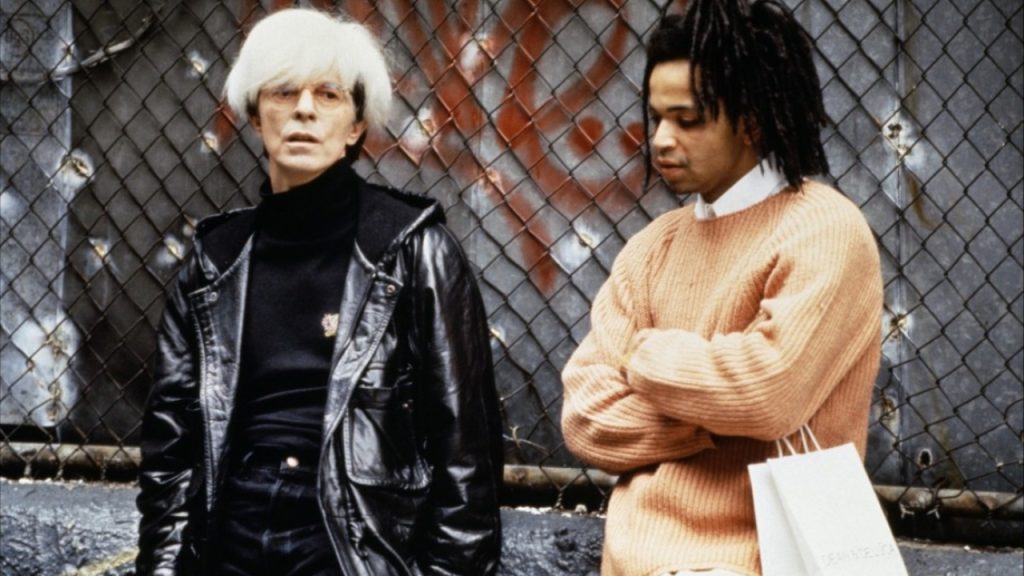
Schnabel packs some all-star cameos in Basquiat, with Christopher Walken, Willem Dafoe, Tatum O’Neal, and Courtney Love playing some of the folks Basquiat meets during his rags-to-riches journey. Along with writing and directing, he also gives himself a stand-in in the form of Gary Oldman’s mentor/family man Albert Milo. Of course, Schnabel received criticism for making himself an integral part of Basquiat’s story. “Basquiat can be seen as a huge, lurking self-portrait of the artist-Schnabel, not Basquiat,” wrote art critic Brooks Adams, while the late critic/curator Okwui Enwezor said, “In every shot Schnabel worked hard to dismantle the Basquiat aura, rubbing it out with each frame of the picture as if to punish his ‘friend’ for having died young and claimed the trophy of immortality first.”
Although he and Schnabel butted heads during filming, Wright nevertheless did a slyly sympathetic job playing Basquiat as a lonely, bruised weirdo trying to excel in a world that usually ignores brothas like him. “[I used] my own life experiences,” he told me when I interviewed him 30 years ago. “I think there are a lot of people, like Basquiat, who are up on talent and have to fight and struggle.”
Unlike Emma and Trainspotting, Basquiat wasn’t a big moneymaker for Miramax, as the $3.3 million movie only made $3 million. Schnabel didn’t collab with Weinstein again until 2010, when The Weinstein Company distributed his polarizing film Miral, which followed a Young Palestinian woman (Slumdog Millionaire’s Frieda Pinto) at the dawn of the first intifada. (Previously, Miramax released Schnabel’s Oscar-nominated 2007 biodrama The Diving Bell and the Butterfly, but the Weinsteins were already long gone by then.)
Out of those trio of movies, Schnabel was the only filmmaker who bothered to work with Weinstein again. McGrath, who died of a heart attack in 2022 at age 64, quietly moved on to other projects and other studios, while the Trainspotting team refused to deal with him after he went into bully mode after learning they were making their follow-up, the surreal 1997 Bonnie-and-Clyde flop A Life Less Ordinary, for 20th Century Fox. (This decision was made when Weinstein allegedly pinned producer Macdonald against a wall and cussed him out, spraying spittle all up in his face.)
It’s interesting to note how the Criterion Collection releases of Trainspotting and Basquiat practically omit Weinstein’s involvement in releasing both films. (Sony Pictures Classics, which now owns the North American rights to Trainspotting ever since they released the T2 Trainspotting sequel in 2017, recently gave it a 30th anniversary run in theaters.) Schnabel, who supervised a Basquiat black-and-white restoration in 2024, does admit in the director’s commentary to getting a bit of PTSD whenever he hears the music for the Miramax logo.
As much as certain filmmakers would love to forget their involvement with the Weinstein brothers, their films are still part of Miramax history. These were part of a summer where the bros gave us everything from French imports to Jackie Chan actioners to the underappreciated Gen-X rom-com Walking and Talking. They were at their glorious, powerful peak and they could do no wrong. Of course, we’d all eventually learn that they were actually doing a shitload of wrong.
“Emma” is available on Pluto TV, “Trainspotting” is available to rent or buy, and “Basquiat” is available on Tubi.