Craig J. Clark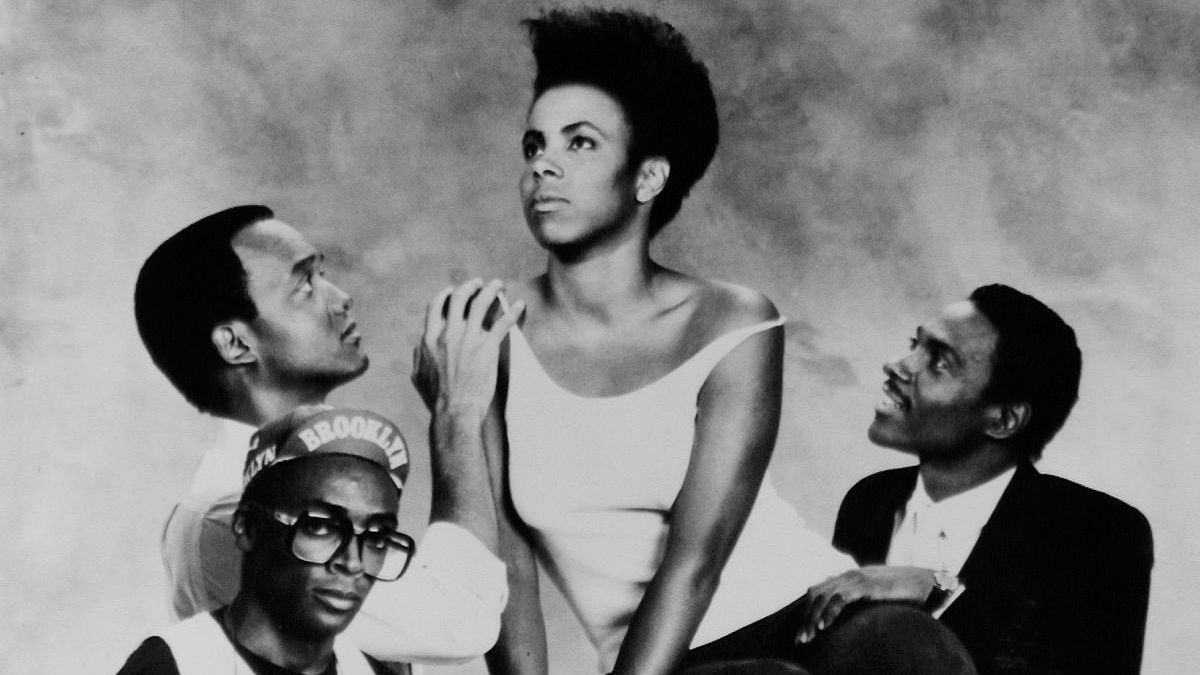
“That’s the way I became a filmmaker. You get tired of going to the movies and seeing stuff that you don’t want to see or not seeing the stuff you want be dealt with. When the subject matter you love is not being done right, you have to make your own movies.” –interview in Spike Lee’s Gotta Have It: Inside Guerrilla Filmmaking
When Spike Lee burst onto the scene in 1986 with his debut feature She’s Gotta Have It (released on August 8, in the middle of the summer doldrums), he was intent on expanding the kinds of films someone like him could make. Not only was it defined by what he chose to include – raucous comedy, frank discussions about male/female relationships, artistically shot sex scenes, a range of Black music from jazz to hip-hop – but what he explicitly excluded. Is there a more direct statement of purpose than “THIS FILM CONTAINS NO JERRI CURLS!!! AND NO DRUGS!!!”?
The former was such a plague in the community (as demonstrated by the hysterical “Soul Glow” runner in Coming to America two years later), the protagonist of Lee’s NYU thesis film Joe’s Bed-Stuy Barbershop: We Cut Heads refused to have anything to do with it, even if his principled stance cost him business. And the latter was so insidious, making a film populated entirely by Black people where none of them do drugs or sell drugs was practically a revolutionary act. So was placing a strong-willed, sexually active young woman at its center, but it’s unlikely a headstrong character like Nola Darling (Tracy Camila Johns in what should have been a star-making role) would accept anything different.
To paint Nola from multiple angles, Lee employs the Rashomon-inspired technique of having her and the men in her life (along with a handful of women) directly address the camera to tell what they know about her entanglements with three very different suitors. The first is Jamie Overstreet (Tommy Redmond Hicks, the soft-spoken heavy from Joe’s Bed-Stuy), who has his head on straight and believes she’s his soul mate. Next is Mars Blackmon (Lee), who’s chronically unemployed, but his secret weapon is he makes her laugh. And last is Greer Childs (John Canada Terrell), a narcissistic body builder/model who thinks he’s God’s gift to women, Nola in particular. Each is introduced in a way that reflects their character: Greer in a convertible, Mars on a bicycle he promptly falls off, and Jamie on a park bench reading the newspaper. As for Nola, she’s discovered in her “loving bed,” where she prefers to spend most of her time with them.
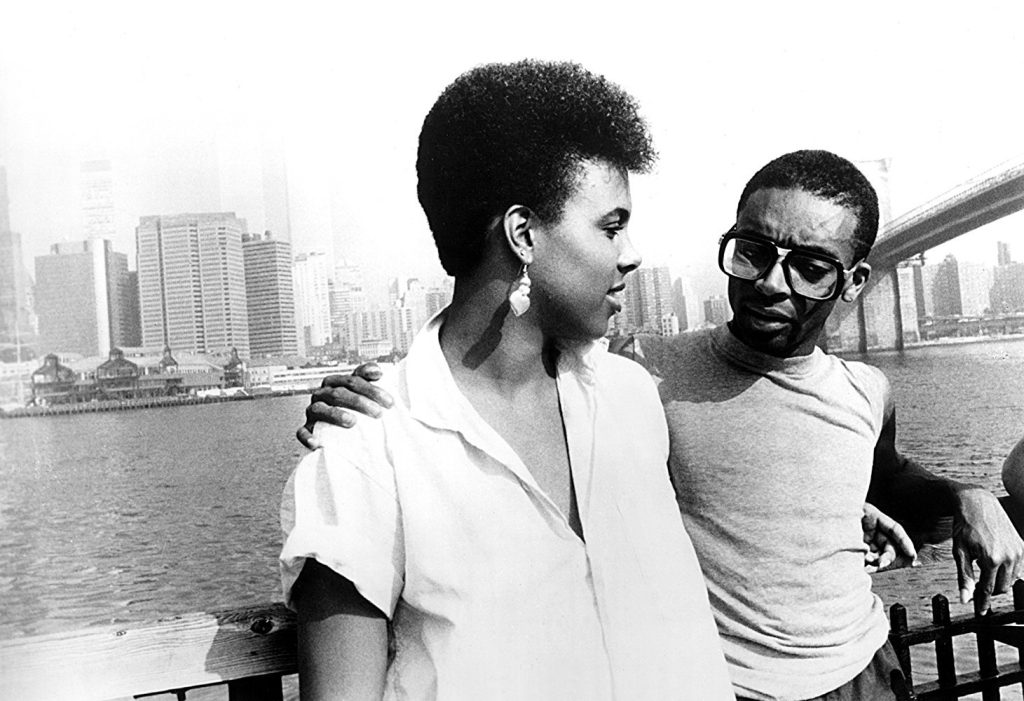
Lee also gets the perspectives of Nola’s former roommate, a lesbian friend, her father (played by his father, jazz musician Bill Lee, who composed the score), and her psychiatrist, but the focus is squarely on Nola and her men, all of whom want her to drop the others. Nola’s determined not to be a one-man woman, though, and brings them together for an eventful Thanksgiving dinner so they can meet their other thirds. Later on, Greer sums up the situation when he says, “We let her create a three-headed, six-armed, six-legged, three-penis monster. And it was all our fault.” (Lee revisited that unforgettable image in his 2017 Netflix series, which updated the saga of Nola Darling and her abundant sex life to the streaming era.)
As is sometimes the case with first-time directors, there’s a kitchen-sink mentality to She’s Gotta Have It. No matter how talented they may be, there’s no guarantee a first feature will lead to a second, so the temptation to include things like photos of his neighborhood, a sidebar about pro basketball, and a Wizard of Oz-inspired color sequence/musical number can be too great to resist. While the rest of the film was shot by cinematographer Ernest Dickerson (a fellow NYU grad) in shimmering black and white, the color sequence sticks out like a sore thumb, but since it was built around a song written by his father, Lee wouldn’t hear of trimming it.
Also on the chopping block, but for a different reason, was a scene that straddles the line between rough sex and assault, and is in direct contrast with the comical or lyrical treatments of sex elsewhere. It is by default the most ugly, aggressive scene in the film, designed to put Nola in her place, though she gets over it without too much drama. Some distributors balked at its inclusion, but Lee stuck to his guns, and the company that ultimately picked the film up, Island Pictures, made a bundle and helped launch his career.
Thanks to the fortuitous timing of its release, Spike Lee was a big thing right away, and She’s Gotta Have It was a big part of that. It not only showed off his skills as a writer, director, and performer, it proved he had the hustle to get his vision out there – and that there was an under-served audience ready to take it in. Much as the “It” in She’s Gotta Have It is sex, the “It” in Spike Lee’s Gotta Have It is success.
If you’ve gotta have “She’s Gotta Have It,” the only place to get it is Netflix.