Sean Burns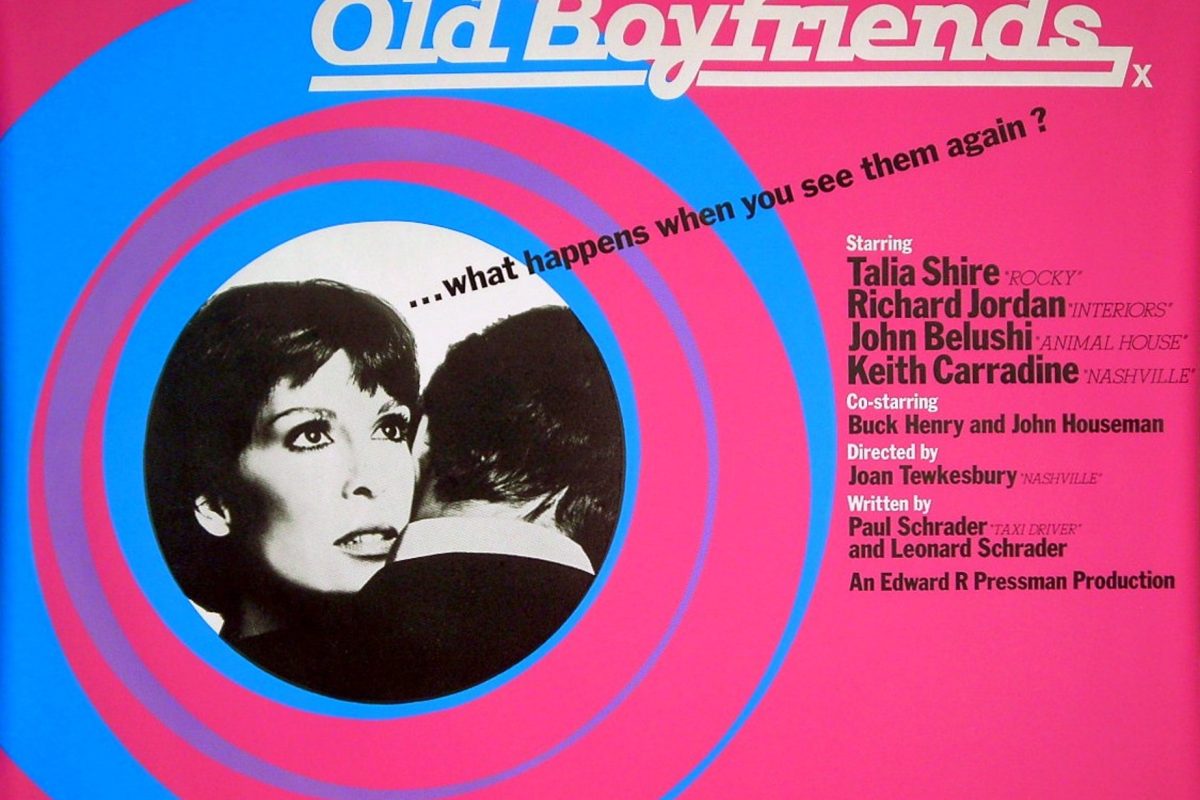
From Taxi Driver to First Reformed, The Card Counter and beyond, you’re probably familiar with the Paul Schrader protagonist: An isolated and increasingly dangerous man in search of a purpose, confessing his innermost thoughts to a diary in voice-over narration. Schrader has often said his favorite trick is keeping the audience’s perspective limited to that of the character’s, which normalizes things so it takes us a while to realize how crazy he is. But what if the Paul Schrader protagonist was a woman? That’s what happens in director Joan Tewkesbury’s fascinating 1979 curio Old Boyfriends, which stars Talia Shire as a suddenly single psychologist seeking out her exes, looking for emotional closure and to settle some scores. The film started out as a screenplay by Schrader and his brother Leonard called (you guessed it) Old Girlfriends.
Tewkesbury had written Nashville and Thieves Like Us for Robert Altman. She and Schrader shared an agent, who suggested flipping the genders in the unproduced script. According to the Director’s Guild of America, Old Boyfriends was the only movie directed by a woman to be released in 1979, a chilling statistic that shows how far Hollywood has come while still not coming very far at all. The movie is as loopy and unhinged as its heroine, keeping us on the back foot from an opening car crash set to screeching strings courtesy of the star’s soon-to-be ex-husband David Shire. The Bernard Hermann-esque score makes a menacing introduction for Dianne Cruise, our shape-shifting protagonist traveling up a river of memory.
Tracking down beaus from college, high school, and early adolescence, Dianne reads from contemporaneous diary entries that are by turns adorable and creepily obsessive. She states at the outset that she needs to understand who she was before so she can figure out who she is now, yet she’s constantly lying and trying on guises that would seem to undercut such an exercise. The first old boyfriend she finds is Jeff, a college sweetheart she came close to marrying. Or he asked a few times, anyway. Appealingly played by Richard Jordan with a romantic charm the actor seldom had a chance to exhibit onscreen – he’ll always be the sleazy cop from The Friends of Eddie Coyle to me — Jeff is a divorced director of local TV commercials in Colorado who needs a push to get his life going again.
Rekindling his relationship with Dianne is just what the doctor ordered. Or so he thought. She abruptly ghosts him and Jeff spends the rest of the movie trying to find her again, enlisting the aid of a private investigator played by Buck Henry. (This cast is stacked.) As the film goes on, Jeff uncovers facts about Dianne that directly contradict the things she’s told him. The movie keeps her a mystery to us as well. We’re as in the dark as Jeff is, but similarly intrigued by the identities we see her trying on along her journey.
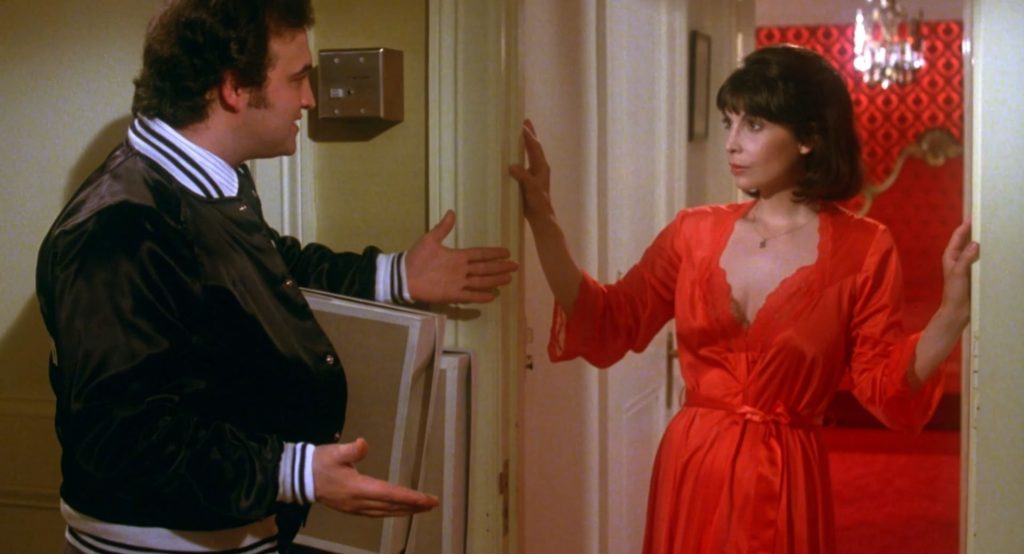
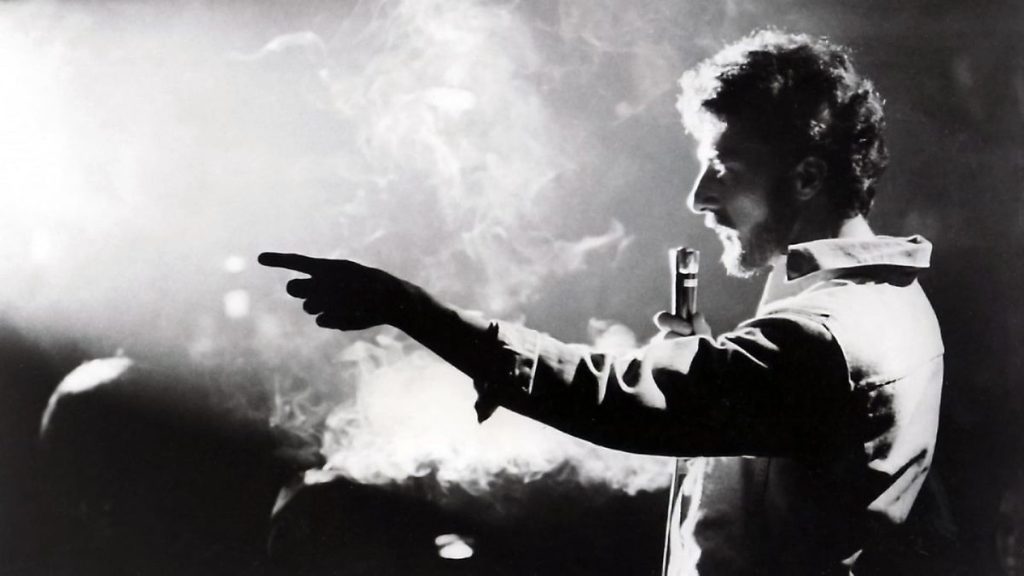
The film’s centerpiece sequence finds Dianne tracking down her high school sweetheart Eric, the coolest guy in class, now a lounge-singing loser played with a pathetic pride by John Belushi. Old Boyfriends came out the year between National Lampoon’s Animal House and The Blues Brothers, hinting at a dramatic career the Saturday Night Live star could have had. Eric runs a formal-wear rental shop, but all he can still talk about is his band. They typically play at proms and the Holiday Inn, gigs that to Eddie might as well be Madison Square Garden. Sheepishly confessing that he’s gotten too old to get away with the “Dr. Cool” stage persona he put in high school, Eric sees in Dianne a way to recapture his past glories, conveniently forgetting how their relationship originally ended.
It was brave of a superstar on the ascent like Belushi to play such a pitiful figure. One assumes Tewksbury allowing him to perform three full songs in the film was part of the deal. He really hammers away at the cowbell during a cover of ZZ Top’s “Touch,” and if you look closely you’ll spot Murphy Dunne on the keyboards, from Murph and the Magic Tones. (He was also in some other band.) More than any other performer I can think of except maybe Jack Nicholson, Belushi was able to create an instantaneous rapport with the audience, using those ambidextrous eyebrows to pull us into an almost conspiratorial relationship. Yet he doesn’t do that at all with Eric. There’s no star standing outside the character. He’s just a small town guy who kind of sucks, and Dianne does to him what she should have 16 years ago in high school.
She’s on significantly less stable moral ground with Keith Carradine’s character, the mentally disabled kid brother of Dianne’s grade school crush who died in Vietnam. This is the most unsettlingly audacious stretch of the picture, with Shire donning a schoolgirl’s outfit and regressing into a horny adolescence. What she’s doing is a crime, yet it’s pointedly contrasted with Jeff discovering that the ex-husband Dianne claimed was dead is actually shacked up with a barely-literate bimbo half his age (P.J. Soles!) The movie doesn’t come out and ask you if that’s really any better than what Dianne’s being excoriated for, but the question lingers nonetheless.
A lot of questions linger after Old Boyfriends, the poor reception of which banished Tewkesbury to a career directing episodic television. Talia Shire tries like hell in an extremely tricky role, and one can only imagine the reaction of an audience expecting Adrian from Rocky. It’s probably because of Tewkesbury’s Altman connection, but on this viewing I couldn’t stop thinking how much I wish Dianne had been played by Geraldine Chaplin, who mined similar territory in the previous year’s Remember My Name with a more anxious and intimidating energy than we get from Connie Corleone. Schrader himself has said, to nobody’s surprise, that he would have taken the story in a darker direction. But there’s something I find more gratifying about Tewkesbury’s conciliatory conclusion, which serves as a warning about the dangers of being hung up on the past. What a relief it is that life goes on.
“Old Boyfriends” is streaming on Amazon Prime, Kanopy, and several ad-supported streamers.