Chelsea Spear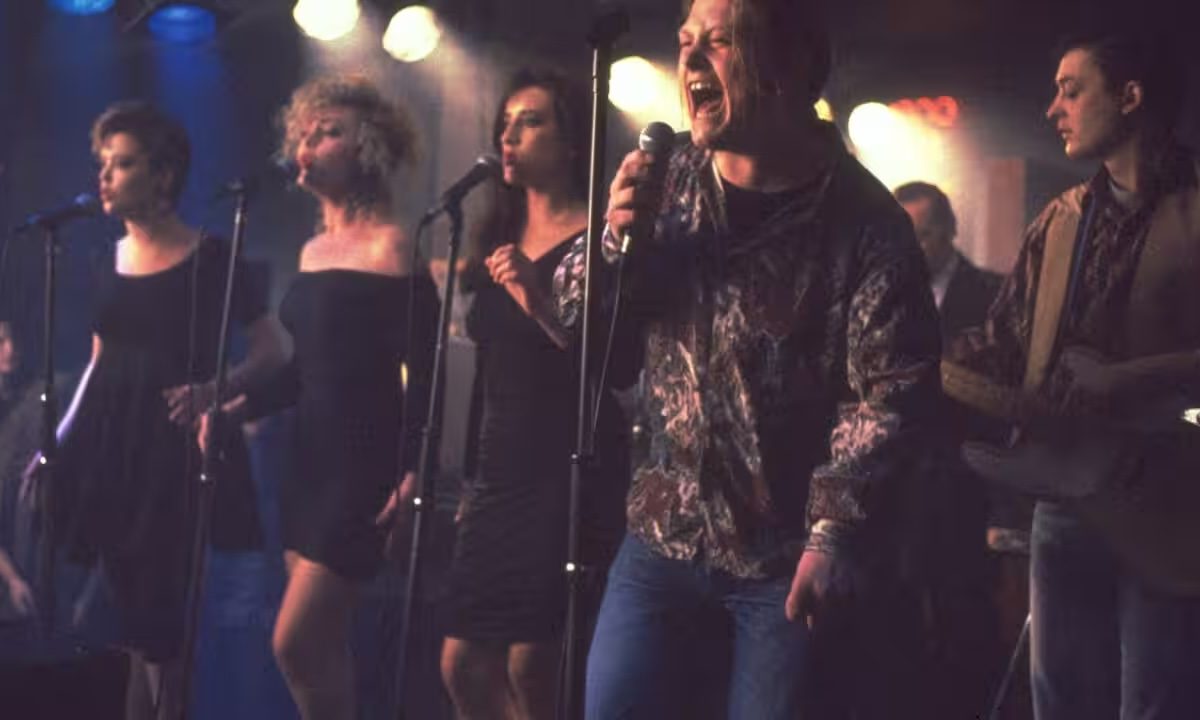
A few weeks ago one of my teenaged relatives texted me about a “bodacious old movie” they found on Pluto that I had to see. The “old movie” in question was The Commitments, a scrappy musical drama that I’d seen on its original release. In 1991. When I was their age.
I felt my life flash before my eyes. When I came back to the present, I pulled up The Commitments on my laptop for the first time since I taped it off the HBO preview weekend in 1993. Rewatching it for the first time in a few decades made me reflect on why a movie like The Commitments meant so much to young people in the pre-Nirvana 1990s, and why it might resonate with digital natives coming of age today.
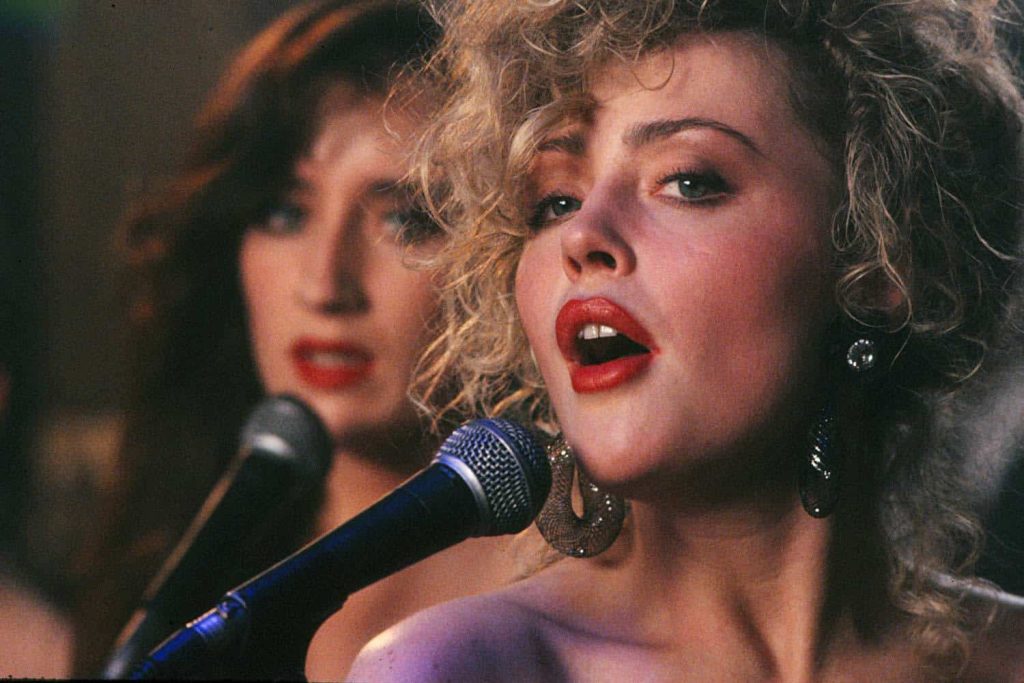
The time is the mid-1980s; the place, north Dublin. Motormouthed music maven Jimmy Rabbitte (Robert Arkins) wants to put together a soul band. After an ad in the local paper brings some of Dublin’s most questionably talented musicians to the Rabbitte family’s door, Jimmy puts together his band from his friends and people in his community, including a high school student with a voice like a foghorn, a short-fused drummer on probation, three of the prettiest girls in Jimmy’s parish, and a charismatic creep with specious ties to the music industry. For a split second, The Commitments are the hottest soul band in Dublin, but their high-energy live shows can’t prevent the usual internecine conflicts—love affairs, fights, inflated egos, lack of money, competition from other bands on the Dublin music scene—from pulling the band apart.
After some early success as a playwright with the Passion Machine, a theatre company in Dublin, Roddy Doyle self-published The Commitments, a dialogue-heavy novel about an Irish soul band that garnered positive reviews in England and America. British film producer Lynda Myles brought the book to Alan Parker, a journeyman director known for flashy musicals with up-and-coming talent like Fame, Bugsy Malone, and Pink Floyd: The Wall.
At the time, Parker had finished a pair of high-profile studio films, Mississippi Burning and Come See the Paradise, and “had a yearning to do something closer to home and to my working-class roots,” he told The Guardian in 2016. The fictitious working-class milieu of Barrytown reminded Parker of his childhood home in Islington, as did the protagonists’ pursuit of a music career. “Everyone I knew wanted to be in a band to escape the world we found ourselves in,” he observed.
The Commitments is a grittier mirror to Fame, Parker’s movie about a year in the life of students at LaGuardia High School for the Performing Arts. As with Fame, which cast students at Manhattan performing arts colleges in the principal roles, Parker and casting directors Ros and John Hubbard worked with up-and-coming musical talent they found in the pubs and busking pitches in Dublin. (The open casting call, which Parker describes as “Deaf Aid,” sounds like a real-life version of The Commitments’ opening scene.) Where the cast of Fame had the polish of theatre kids who attended a high school a few blocks from Lincoln Center, the characters in The Commitments, with their frumpy wardrobes and frequent cursing, seemed a bit rougher around the edges. Parker leaned into the looseness of the story with a five-week rehearsal schedule and encouraged the cast to improvise, which led to the film having the largest number of F-bombs in history to that point.
Coming of age in the early 1990s was an unusual experience for those whose attention strayed to the left of the dial. The valedictorians of college rock had matriculated from low-wattage radio stations and dive bars to summer shed tours and the cover of Rolling Stone, and we were all waiting to find out what was next. The Commitments was the first R-rated movie I sneaked in to see, and after my friends and I got over my disappointment that it got that rating for something as boring as profanity, we were convinced that Irish soul was going to be our generation’s music. The Commitments’ live performances had an immediacy that made songs I’d written off as oldies sound fresh and new, and the band members reminded me of the cool older kids in the musical I did the previous summer.
For Gen Z kids like my young relative, who’s nine years younger than the iPhone, The Commitments represents what they think of as a purer time, when music fans found their new favorite artists by walking into a bar and when shows were disrupted not by cell phone use but by fistfights over the cover charge at the door. While the fighting and miscommunication that led to the band’s demise was a far cry from the digitally mediated social experience of my relative or the idyll of my community theatre experience, watching the members of The Commitments come into their own made pursuing an artistic goal—even if it eventually led to disappointment—seem like it could be worth the heartbreak.
“The Commitments” is streaming on Peacock, the aforementioned PlutoTV, and several other ad-supported streamers.