Ciara Moloney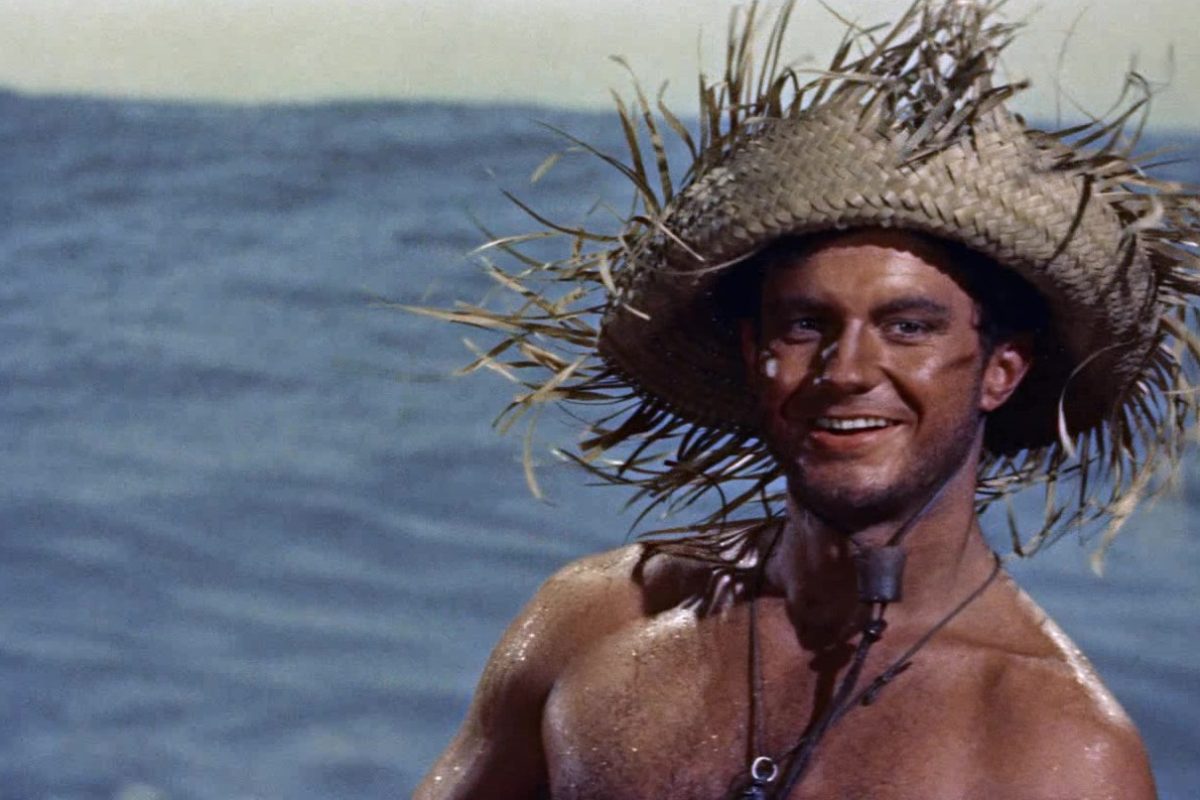
Cliff Robertson had one of those up-and-down acting careers that leaves you thinking “I’ve seen that guy before,” but not quite able to recall the name. That’s exactly how I enjoyed him opposite Joan Crawford in Robert Aldrich’s gonzo melodrama Autumn Leaves (1956) and as Uncle Ben in Sam Raimi’s Spider-Man (2002). “Nobody made more mediocre films than I did,” he told The New York Times in 1972. “Nobody ever did such a wide variety of mediocrity.” A bit harsh: along the way, he’d won an Oscar for Flowers of Algernon adaptation Charly (1968). As with Shakespeare in Love a few decades later, there were accusations that the award was effectively bought through an excessive advertising campaign, but I doubt anything underhanded was necessary when his moving performance as an intellectually disabled man who is “cured” is exactly the kind of showy, transformative role the Academy loves.
They never would have dared to give him an Oscar for his greatest role, a performance of such deep, dark soulfulness that it seared his name out of the credits and into my heart. I’m referring, of course, to his work as the Big Kahuna in teen beach sensation Gidget (1959).
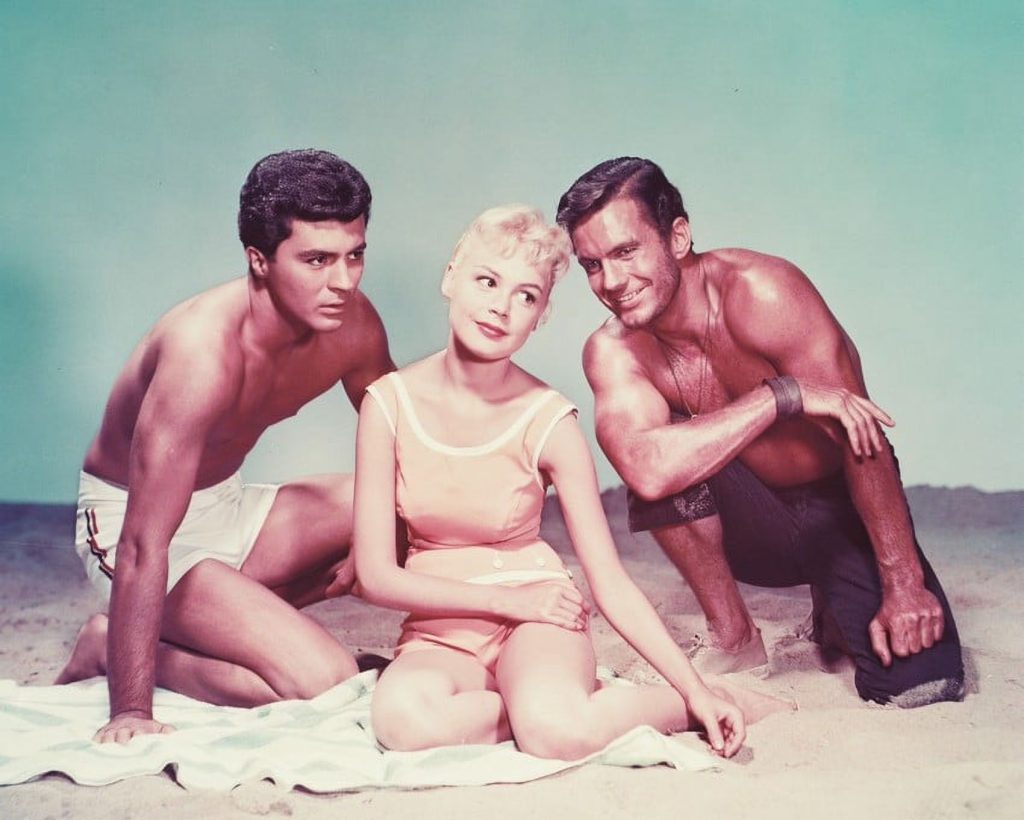
Sandra Dee plays Francine, nicknamed Gidget, a teenage girl who wants to surf. Her school friends are only interested in boy hunting and the boys who surf down the beach don’t take her seriously, but she is determined. The film’s reputation is as vapid nonsense, but it’s a delightful picture: well-structured and quite funny, it struck some minor blow for girl power while launching the teen beach party genre.
And then there’s Cliff Robertson, who, in a decidedly supporting role in this quite silly movie, gives such an unexpected performance that his gravity shifts the whole film’s orbit. Whereas the other surfers down at the beach are high school or college kids hanging around for the summer, Kahuna is a year-round beach bum. He has a deep tan – the kind you don’t get in a week or two – and creases in his forehead. He seems cool to the young people who idealize him, but Robertson is not content to play Kahuna as some archetypical slacker dispensing countercultural wisdom. Kahuna’s life as a beach bum is deeply sad – not, as Gidget wonders aloud, because everybody should work, but because he’s a man on the run. From the world, from his feelings, from himself.
Kahuna is a veteran of the Korean War. “Nobody ever consulted me about what flight I was in the mood for,” he explains. “When that Korean bit was over, I knew there was one thing I didn’t want in life: chains.” This detail is adapted from the second Gidget novel, but where the book treats it as fairly neutral, Robertson plays Kahuna as a man haunted. His life as a beach bum is a reaction to the constrictions of the Air Force, and a reaction to his war trauma: an attempt to avoid living life at all. It is a lonely, transient existence where nothing can get close enough to hurt him.
His pet bird Flyboy is his one true companion. So when Flyboy dies, it’s a key turning point for Kahuna’s character. The easy thing for Robertson as an actor would be to thrash and cry. Instead, he’s quiet, trying to convince Gidget he’s still Teflon while a storm rages inside him.
He buries Flyboy in the sand and starts walking along the beach immediately, both affecting nonchalance and getting as far from Flyboy’s makeshift grave as he can. Gidget follows and tries to commiserate in ways that just rub it in – “Gee, I’m sorry, Kahuna. I know Flyboy was all you had” – or guilelessly try to sell his own projected self-image back to him: “You’re so self-sufficient. You don’t need anybody… Gosh, if I had a whole lifetime of that, well, I’d about die. But of course, you’re different.”
Gidget does almost all the talking in this scene, while Robertson as Kahuna contributes a flat “yeah” or a deflecting “I told you myself, I’m a surf bum. There’s nothing to be sorry about.” But it’s his scene. His face shifts as he tries to hold back his emotions, with feigned casualness giving way to steely silence when it gets progressively harder. It’s painful, as Gidget rambles on and on, inadvertently telling him how empty and meaningless his life is. When he tells her she can come to the luau she’s been begging to attend, it seems as much an attempt to be alone at last as to put a smile back on her face. Then he returns to his hut, drinks a couple of mouthfuls of whiskey straight from the bottle, and lies down with a coat for a pillow.
It can be hard to separate out good acting from the good writing or directing or editing that frames it. The greatest performances are assumed to be in the greatest roles. But acting is creative work in its own right, capable of changing the tone or meaning of a film on its head. The Big Kahuna in Gidget is not a great role. But it is an extraordinary performance.