Chelsea Spear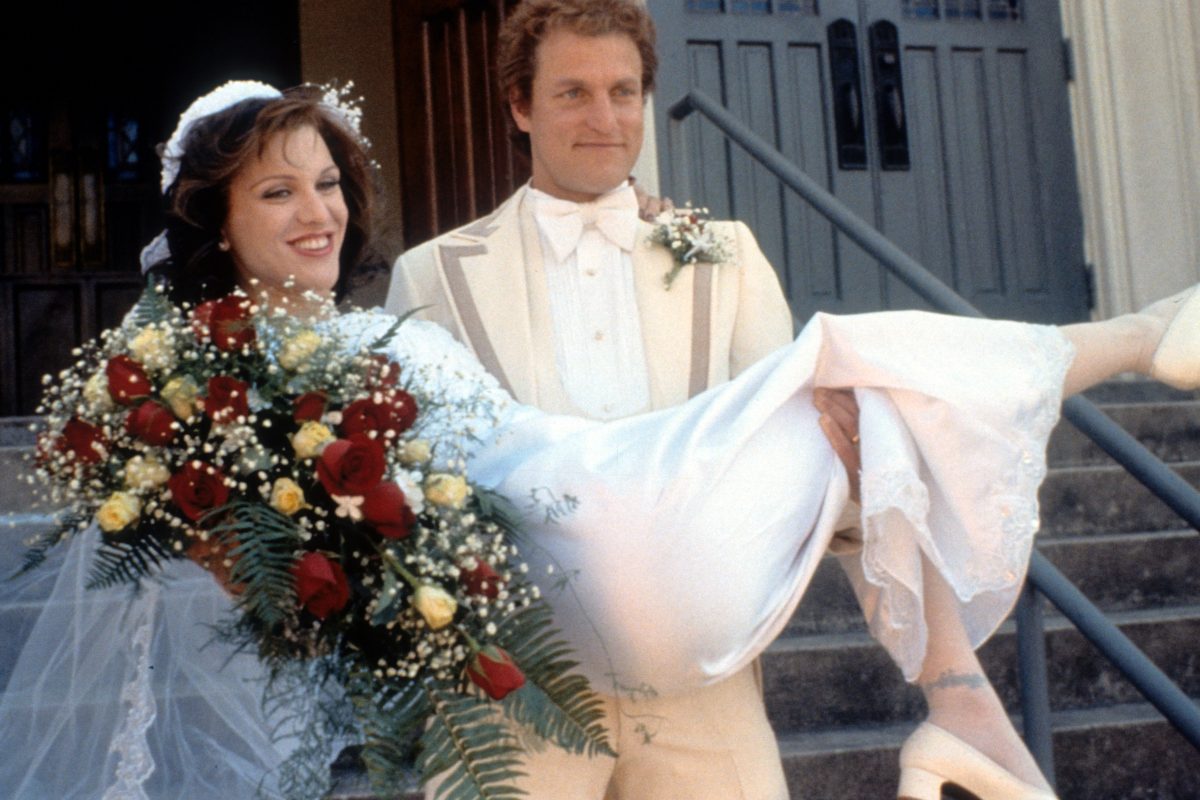
From the cover of Sassy magazine to the stage at Lollapalooza, no one did the ‘90s quite like Courtney Love. The staccato power chords and whisper-to-a-howl vocals of her band Hole cut a wide swath across FM radio and MTV. Her fashion style—lots of satin, lace, and tiaras—brought babydoll dresses into the mainstream. In interviews, she spoke unflinchingly about her traumatic experiences as a woman in the public eye in a way that drew disaffected teenage girls to her music, just as her alleged hard drug use and frequent appearances in court scared their parents.
From the start of her music career, Love engaged with the mythos and toxicity of Hollywood. Her stage makeup and clothing were inspired by movies like Whatever Happened to Baby Jane and The Red Shoes, and she balanced signifiers of 1940s style like red lipstick and platinum blonde hair with evocations of tragic ingenues like Frances Farmer. With her raw-nerve stage presence and her devoted fan base, it was inevitable that Hollywood would eventually come calling. This month, the Criterion Channel spotlights Love’s foray into film with the series “Starring Courtney Love.”
After playing supporting roles in low-budget punk movies like Sid & Nancy and Tapeheads, Love stepped into the spotlight with The People Vs. Larry Flynt, a glossy biopic about Hustler publisher Larry Flynt and his obscenity case before the Supreme Court. Love took on the role of Althea Leasure, Flynt’s wife, who rose from stripping in her husband’s nightclub to running his publishing empire before her premature death at 33.
The role of Althea lined up with many of the biographical details of Love’s life. Like Althea, Love worked as a stripper early in her career, and she was known—and derided for—her involvement in her husband’s business. Both women allegedly shared a taste for intravenous drugs, which made Love a hard sell to the studio. “They came [to me] with the argument that they can’t find an insurance company,” Forman said in a 1996 interview. “So I found an insurance company. But it was not cheap. Then they refused to pay the insurance. And then Woody Harrelson, Oliver Stone, Michael Hausman, Courtney herself, and me, we just put down money for her insurance out of our pockets.”
Their investment paid off. Even if you didn’t know about Love’s rambunctious reputation, as Forman claimed on the film’s release, you believe her from the first frame. In her first scene with Larry (Woody Harrelson), she has this rangy physicality as she plops down on the ratty couch in his office, spreading her long limbs across the cushions with a playfully defiant expression on her face. As Larry fires questions at Althea about her age, Love responds in a singsongy taunt, a smile playing at the corners of her lips. The lightness of her performance in the first act contrasts not only with the heaviness of the later scenes, in which Althea becomes addicted to morphine and drowns while taking a bath, but also with the cathartic intensity of her live shows.
The People Vs. Larry Flynt opened to critical acclaim in the winter of 1996, but controversies from feminist groups about Hustler’s actual content (compared to its depiction in the film) slowed its awards-season momentum. Love’s performance was nominated for a Golden Globe, and she followed up the film with Celebrity Skin, an album that ruminated on her experiences in Hollywood. When the album cycle completed, Love booked another role, this one in an ensemble comedy.
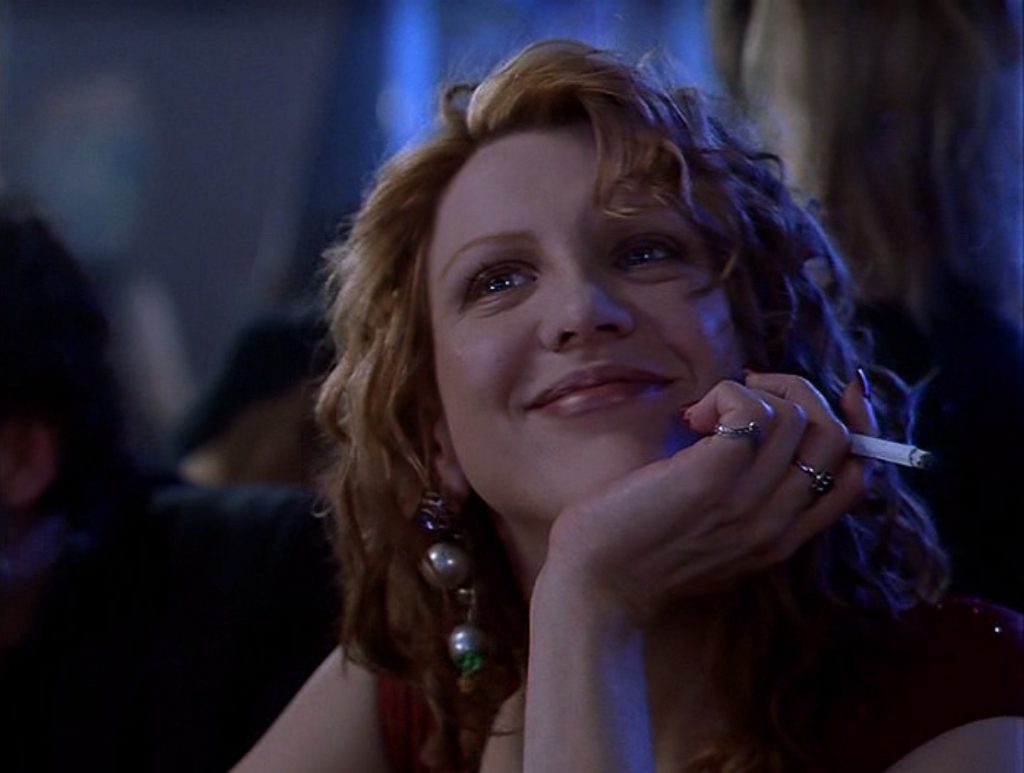
Unfolding on New Year’s Eve 1981, 200 Cigarettes follows a string of couples and friends as they make their way to a party at a Lower East Side apartment, their stories interconnected through the Disco Cabbie (Dave Chappelle). Love plays Lucy, a free-spirited troublemaker who’s cajoled her best friend Kevin (Paul Rudd) out on the town after he’s been dumped, and the pair clumsily negotiate their mutual attraction. While the film looks great, the script’s perky tone and the broad performances hew closer to a sitcom than one might hope. Lucy is saddled with reams of expository dialogue; Love is able to not only deliver these monologues as though they’re the most natural thing in the world, but also to find glimmers of comedy in unexpected places.
Unfortunately, Lucy and Kevin’s relationship falls flat. The idea of Courtney Love and beloved comic actor Paul Rudd looks like a fever dream of ‘90s casting, but Love’s loopy comic timing and Rudd’s buttoned-up straight man act don’t mesh as well as you’d hope. The clunky screenplay, combined with Risa Bramon Garcia’s loose direction, torpedoes what could have been a highlight of the late indie era.
In most of her films to this date, she played a supporting role or a character in an ensemble. What would a starring vehicle for Courtney Love look like? Beat attempts to answer this question. In the last weekend before her death, Joan Vollmer (Love)—the wife of Beat icon William S. Burroughs (Kiefer Sutherland)—takes a road trip through rural Mexico with Burroughs’s colleague Allen Ginsberg (Ron Livingston) and Lucien Carr (Norman Reedus), who’d been found guilty of manslaughter a few years before the events of the film took place.
The idea of Beat is an appealing one. By focusing on the wife of one of the preeminent Beat poets, the film could have served as a rebuke to the bro-y image that many critics had of the movement. Casting Courtney Love, perhaps the most notorious rock widow of her generation, as Burroughs’s wife—who died in a William Tell act gone wrong—seems like a sick joke in light of the rumors about her husband Kurt Cobain’s death.
Love’s portrayal of Vollmer doesn’t dignify any of those rumors. The lightness of her previous film roles is gone, replaced with pained sidelong glasses and line readings heavy with portent. While the chemistry among the leads is credible, Gary Wakilow’s reliance on freeze frames and voiceover narration from Ginsberg, combined with the maturity of the actors compared to their real life counterparts, gives the film a distant feeling, like you’re watching these events play out through a pane of glass.
In the imperial phase of Love’s acting career, she almost exclusively appeared in period films. Trapped, the most recent title in the Criterion showcase, brings Love into the present with a grimy kidnapping heist that’s not quite squalid or knowing enough to be campy. When anesthesiologist Will Jennings (Stuart Townsend) leaves his family to attend a conference, Joe Hickey (Kevin Bacon) kidnaps his young daughter (Dakota Fanning) and traps his wife (Charlize Theron) for reasons that slowly reveal themselves.
Love plays Cheryl, Joe’s wife and accomplice. As with her previous roles, the details of Cheryl’s life parallel some aspects of Love’s biography. The Seattle setting echoes where Love and Cobain spent the ‘90s, and Cheryl’s experiences as the mother of an absent child, echo many of the rumors about Love’s relationship with her own daughter (who’s about the same age as Fanning). Love’s portrayal of Cheryl initially seems tawdry, with her attempt at a seduction in the hotel hallway. As the film progresses and we learn about what led Cheryl to Will’s hotel room, Love’s facial expressions soften and her staccato dialogue gives way to a slower drawl that brushes up against a sob. When Will confronts Cheryl as she takes a bath in his suite, the effect isn’t tawdry; you see her as vulnerable.
Love has continued acting, but her onscreen appearances have become more intermittent. She’s spent the last few years writing her memoirs, collaborating with up-and-coming bands like 070 Shake, and sharing her madcap globetrotting adventures with a devoted audience on social media. As rumors about a solo album and a book have surfaced, can we hope that the popularity of “Starring Courtney Love” will bring Courtney back to the big screen?
“Starring Courtney Love” is currently available on the Criterion Channel.