Jason Bailey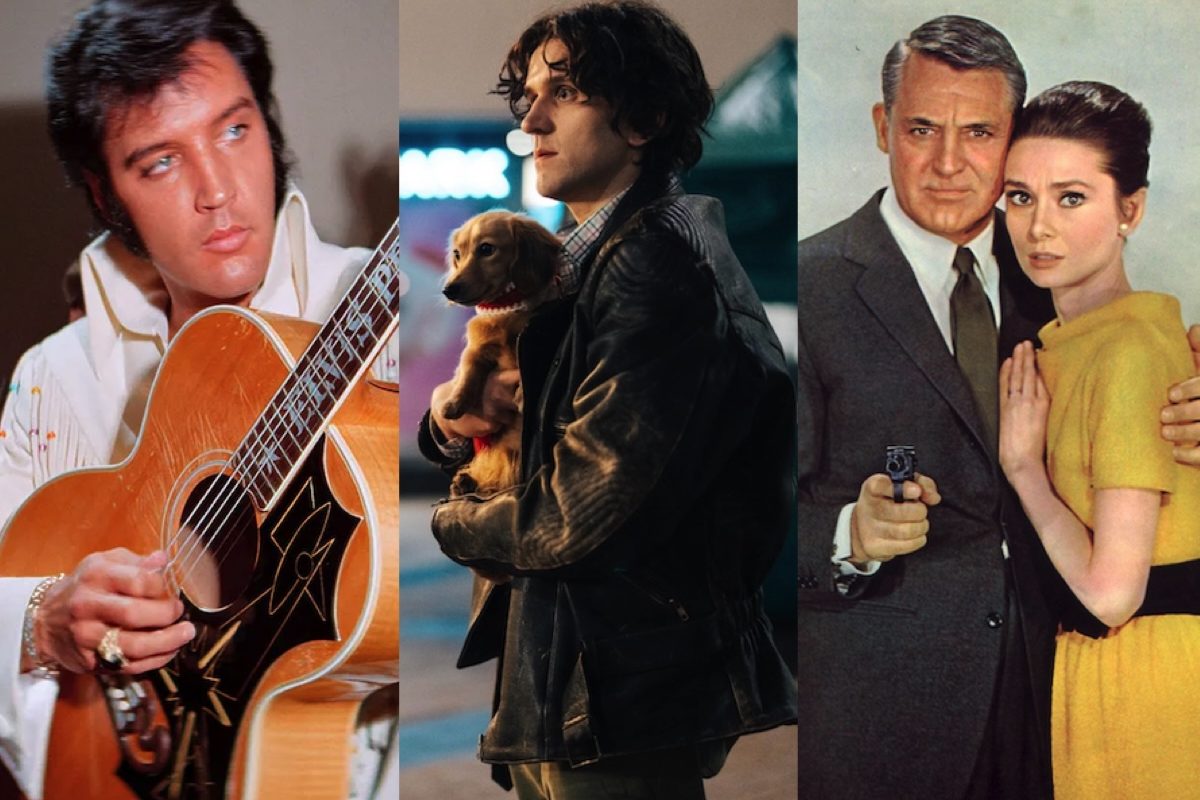
Every Tuesday, discriminating viewers are confronted with a flurry of choices: new releases on disc and on demand, vintage and original movies on any number of streaming platforms, catalogue titles making a splash on Blu-ray or 4K. This twice-monthly column sifts through all of those choices to pluck out the movies most worth your time, no matter how you’re watching.
PICK OF THE WEEK:
Charade: When Stanley Donen’s light romantic thriller was released in 1963, some doofus left off the proper copyright notice, which immediately put the picture in the public domain, resulting in decades of subpar video releases. Luckily, the Criterion Collection put out a spiffy, official version on DVD in the early days of the format, which they subsequently upgraded to Blu-ray and now, happily, on 4K UHD. It deserved it, and not just to preserve Charles Lang’s eye-popping color cinematography or Henry Mancini’s delightful score; it deserves it because it’s a perfect movie, a purely pleasurable combination of deliciously twisty plotting, knockout location work, and off-the-charts chemistry between stars Audrey Hepburn and Cary Grant. What a picture! (Includes audio commentary, trailer, and essay by Bruce Eder.)
ON PARAMOUNT+:
EPiC: Elvis Presley in Concert: While making his Elvis biopic, director Baz Luhrman came across scores of unused footage (much of it shot for Warner Bros’ 1970s concert movies Elvis: That’s the Way It Is and Elvis on Tour), painstakingly restored it, combined it with other archival footage and interviews, and came up with the idea of this combination of bio-documentary and concert movie. As with the earlier docs, the rehearsal footage is enlightening, spotlighting the camaraderie and familial feeling of the band and backing vocalists, his playfulness, and his skill as a bandleader (perhaps his most underrated talent). And the concert footage is electrifying; I found myself watching every single song with a big, stupid grin on my face. Most importantly, folding the bio-doc into the concert movie is a masterstroke, dropping in archival audio of Elvis’s stories and memories between the songs that best illustrate and complement them. It’s not a cradle-to-grave documentary, but for God’s sake, we’ve had plenty of those for him; this is its own thing, and it’s a real treat.
ON HBO MAX:
Earth, Wind & Fire (To Be Celestial VS That’s the Weight of the World): Earth Wind & Fire sold 40 million records, had 30 hit songs, and won six Grammys, but us casual admirers may not know that when you’re talking about the band, you’re talking about its founder, Maurice White. His vision was of wide-appeal music that would evolve consciousness to literally change the world, and Quest details the musical and cultural context that vision was borne out of — black is beautiful, the power of positive thinking, New Age lifestyles — to show the evolution of their sound, style, and audience. This isn’t a hagiography; his personal and professional shortcomings are given a thorough airing-out. But director Questlove’s greatest achievement here is how vividly he captures and celebrates the sheer joy of their sound, and why it’s still so prominent in so many of our lives.
Pillion: Harry Melling stars in this gay BDSM coming-of-age romance as a tentative young man named Colin (so wholesome that he sings in a barbershop quartet) who captures the attention of ridiculously attractive biker Ray (Alexander Skarsgård) and discovers that he has, in Ray’s words, “an aptitude for devotion.” Writer/director Harry Lighton immerses the viewer into an entire scene, with its own rules and roles (which we learn alongside him), and does not pull punches in terms of its graphic sex. But he also has a sense of humor, thankfully (nothing is potentially funnier than someone else’s kink), with most of the laughs provided by Colin’s endearing politeness. Pillion could’ve played as a collection of cheap thrills, but it’s ultimately about healthily navigating a transgressive relationship: how to understand what you like, understand what your partner likes, and navigate your individual boundaries. And Lighton also gets that it can be about those things, and also be sexy and funny and fun; in fact, one can inform the other.
ON BLU-RAY / DVD / VOD:
Happyend: Director Neo Sora (Ryuichi Sakamoto: Opus) makes his fiction feature debut with this “story about the near future” in which every daily interaction is observed by an increasingly bold surveillance state. (So, more “near” than “future,” really.) His protagonists are a group of disaffected, devil-may-care youth, a quintet of Tokyo high school students, and in its best moments, ‘Happyend’ tunes in to their high-strung energy. It frankly works best as an old-fashioned story of rebellious students taking on their petty tyrant principal, the kind of bureaucratic schmuck who responds to a prank on his goofy sportscar by asking, “Is this terrorism?” Sora works in a quietly hypnotic style, with a dry, borderline absurdist sense of visual humor, even if the picture’s hang-out vibe gets a little draggy in the home stretch. (Includes audio commentary, featurette, deleted scenes, and essay by Ryan Swen.)
ON 4K:
Five Easy Pieces: Bob Rafelson’s 1970 character drama, previously released by Criterion as part of their “America Lost and Found: The BBS Story” Blu-ray box set, gets a stand-alone release and 4K upgrade to boot. Director Bob Rafelson had produced Easy Rider, Jack Nicholson’s breakout film, and had directed the Monkees vehicle Head, which Nicholson penned, so they were well onto each other’s wavelength by the time of this collaboration, and Nicholson’s performance, as a piano prodigy who turned his back on his privileged past in favor of a working class life as an oil rigger, may well be his best. Everybody remembers the “hold it between your knees” scene, but that’s an outlier; this is a quiet, contemplative picture about coming to terms with what you’ve been given, and the lonely search for something more. (Includes audio commentary, featurettes, archival interview, trailer, teasers, and essay by Kent Jones.)
The Boys in the Band: Cinématographe marks Pride Month with a matched pair of 4K releases for films based on plays that made early attempts to grapple with dramatizing the queer experience. First was this 1970 breakthrough for director William Friedkin (a year before The French Connection), adapting Mart Crowley’s 1968 play about a group of gay New Yorkers gathering to celebrate a birthday. It’s occasionally schematic in its plotting, and some of the acting (especially by the usually reliable Cliff Gorman as the swishiest of the bunch) is over the top. But Crowley’s dialogue is witty and sharp-edged, the performers — all reprising their stage roles — invest their characters with real depth, and Friedkin’s unconventional angles and energetic camera movements keep it from feeling too stage-bound. (Includes new and archival audio commentaries, interviews, video eassay, TCM intros, essays by Alonso Duralde, Caden Mark Gardner, Nat Segaloff, and Kyle Turner, and full-length Friedkin Uncut documentary.)
Come Back to the 5 & Dime, Jimmy Dean, Jimmy Dean: Director Robert Altman, on the other hand — who spent much of the ‘80s making low-budget indie film adaptations of stage plays like Secret Honor and Streamers — embraces the theatricality of his source material (which he also directed on Broadway). He uses sets, stage lighting, and mirrors to simultaneously stage scenes from the 1975 reunion of a Texas small town’s James Dean fan club, and events from twenty years earlier that have impacted all of their lives. His cast is stuffed with wonderfully eccentric actors (Sandy Dennis, Karen Black, Cher, Kathy Bates), all of whom dig into their roles with gusto, while the handling of the trans narrative, then quite rare on stage or screen, is surprisingly sensitive. (Includes new and archival audio commentaries, video essays, archival interviews, TCM intros, and essays by Elsie Fisher, Drew Burnett Gregory, Saffron Maeve, and Justine Smith.)
Explorers: Here’s how poorly marketed Joe Dante’s 1985 sci-fi adventure was, and how quickly it disappeared from theaters: I was nine years old when it was released, the bullseye target audience, and I just got around to watching it (via Vinegar Syndrome’s new 4K release). It was just a summer overcrowded with similar entertainments, hitting theaters too close to the likes of Back to the Future and The Goonies, without the imprimatur of Steven Spielberg (though it feels highly Spielberg-coded). But it’s a total charmer, benefitting from the considerable charisma of stars Ethan Hawke, River Phoenix, and Jason Presson and the cock-eyed approach of director Dante, who operates at the intersection of slick studio sci-fi and goofy throwback UFO movies. It has both a true sense of wonder and excitement and a Looney Tunes-style sense of humor, and that turns out to be a lovely combination. (Includes theatrical and home video cuts, audio commentary, documentaries, deleted scenes with audio commentary, original EPK, student film, teaser, and trailer.)
Nightwatch: Miramax’s remake of Danish filmmaker Ole Bornedal’s 1994 thriller, helmed by Bornedal from a screenplay adaptation by Steven Soderbergh, was barely released after two years of delays, and all but forgotten by the time it completed its brief theatrical run. But there’s no such thing as forgetting for Vinegar Syndrome, which rescued it from oblivion for this sharp-looking 4K release. It doesn’t quite land — maybe something was lost in translation — but there’s a lot to like here: Soderbergh’s sharp dialogue, Bornedal’s moody direction and set piece assembly, charismatic turns by Ewan McGregor and Patricia Arquette (even with the former’s notoriously dodgy American accent in place) and shades-of-grey supporting turns from Josh Brolin and Nick Nolte. (Includes audio commentary, interviews, featurette, video essay, behind-the-scenes footage, and trailer.)
The Front: One of the rare films featuring Woody Allen in a starring role — but for another writer and director — is this heartbreaking dramatization of McCarthyism and its impact on the entertainment industry. Allen is the title character, a small-timer who stumbles into celebrity by acting as a “front” for blacklisted writers, putting his name on their scripts and collecting their earnings (minus his small fee). Allen finds effective variations on his neurotic loser schtick, and Martin Ritt is a strong enough director to keep his persona in service of the story without overwhelming it. Co-star Zero Mostel was himself a victim of the blacklist, as was screenwriter Walter Bernstein. (Includes audio commentary and trailer.)
ON BLU-RAY:
High Art: When this indie drama landed in 1998, most of its chatter centered on star Ally Sheedy, whose low-key performance as a renowned yet reclusive photographer kicked up all sorts of chatter about a comeback for the Brat Packer. That didn’t really happen, but you can see why people were so worked up; there’s little hint of her Hughes-honed ‘80s persona in this hard-edged, lived-in turn. From this vantage point, as High Art enters the Criterion Collection, the real bugles here are for writer/director Lisa Cholodenko, who here and hereafter (in films like Laurel Canyon and The Kids Are Alright) perfects a distinctive tone and approach — her movies sneak up on you, immersing you in their worlds, contemplative and searching, much like her protagonists. (Includes audio commentary, interviews, short film, and essay by B. Ruby Rich.)
West Indies: The Fugitive Slaves of Liberty: Mauritanian-French actor/director Med Hondo’s 1979 political musical (another new addition to the Criterion Collection) is a polemic, a pageant, and a provocation, mixing absurd humor, pointed commentary, and catchy songs. Hondo sets the action on a slave ship, staging the forced immigration and fraught integration of the West Indian people by French imperialists, using the cover of musical theater to say (well, sing) things that are normally not articulated aloud. It’s a cacophony of sound and movement, though Hondo can also pierce the viewer with a passage of silence or stillness, and he uses shifting frames and perspectives to keep the viewer off-guard. It’s a big swing of a movie, thrilling and angry and joyful, all at once. (Includes new and archival interviews, trailers, and essay by Ashley Clark.)
Diane: Diane is just a nice retired lady in a nice little town upstate who spends her days going around doing her part: trading casseroles (and borrowed dishes), visiting sick relatives, scooping out mac and cheese during dinnertime at the shelter. But there’s darkness in her day-to-day; whenever anyone asks how her twentysomething son is doing, there’s a hesitancy in their voice, and everyone knows why. Writer/director Kent Jones tells her story in short, simple scenes, snapshots of this seemingly ordinary life – and then he digs deeper, with a reminder that even someone like Diane had younger, wilder days, and maybe she’s not some folksy saint after all. Mary Kay Place is marvelous in the leading role, and her screen presence is so calm and comforting, we think we know her. Jones uses that familiarity, brilliantly. (Includes audio commentary, video essays, Q&A, and trailer.)
Undine: Christian Petzold’s 2020 romantic drama gives you everything you expect from a Petzold picture: a glorious leading role for Paula Beer, a complicated key relationship (with Franz Rogowski, who previously paired with her for Petzold’s Transit), a sprinkling of magical realism, and an abundance of quotable dialogue. Beer is the title character, a water nymph (yes really) whose breakups are… well, let’s just say messy. Not many filmmakers can do spiky modern romance and ancient mythology at the same time, but Petzold doesn’t seem to break a sweat, and Beer and Rogowski are transcendent, wisely playing the material without a wink. (Includes audio commentary and essays by Olivia Landry and Ailie Margot.)
Wadd: The Life & Times of John C. Holmes: Cass Paley’s documentary profile of the notorious adult star was released in 1998, when interest in the late Mr. Holmes was at a peak, thanks to the previous year’s loosely-inspired-by-Holmes indie hit Boogie Nights. And sure enough, Paul Thomas Anderson is among the talking heads in this thorough chronicle of his rise (and rise…) in the porno industry — no mean feat when you’re profiling a guy who lied as frequently and contradictorily about his past. (Palley’s clever construction frequently cuts from the real history to Holmes’s colorful yarns). Paley gives equal time to his long, sad slide in the 1980s, which not only included the grisly quadruple murders on Wonderland Avenue in 1981 but the crime, addiction, and deception that led to his AIDS-related death in 1988. The filmmaking is a touch amateurish, but Paley gathers all the voices you want to hear from, and complements their testimony with copious clips and plenty of valuable context. (Includes audio commentary, featurette, and essay by Dan Erdman.)
It’s a Wise Child: It’s been said before that the greatest disservice done by Citizen Kane was the conflation of the Susan Alexander character with her real-life avatar, William Randolph Hearst’s longtime mistress Marion Davies — because Alexander is a no-talent barnacle, and Davies was quite a gifted actress indeed. The conventional wisdom these days falls more along the lines that Hearst’s insistence in bankrolling her in period dramas and classy entertainments circumvented her natural comic gifts, but she made a handful of honest-to-goodness comedies, and this 1931 Robert Z. Leonard picture (new on Blu from Warner Archive) is one of them. It’s based on a play and sometimes looks it, its staginess augmented by the mostly (but not entirely) locked-down camera typical of early talkies. But Davies is an undeniable movie star, bright and vivacious and charismatic, and her charm carries it through its occasional dry stretches. (Includes cartons and short films.)
Marlowe: This 1969 riff on the Philip Marlowe stories (new to Blu from Arrow Video) attempts neither the classical verve of Farewell My Lovely or the subversive kick of The Long Goodbye. But it has a couple of undeniable attractions: the leading work of James Garner in the title role, testing out the well-worn weariness that he would later bring to The Rockford Files, and an early appearance by Bruce Lee, who steals scenes with the precision of the movie star he would soon become. (Includes video essay, trailer, and essays by Jeff Chang and Priscilla Page.)