Jason Bailey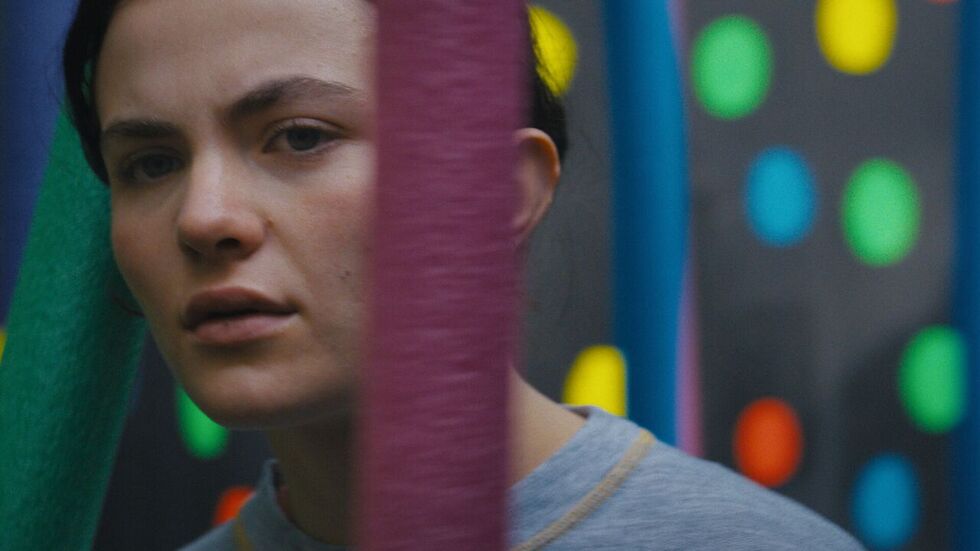
Thanks to a combination of scheduling specifics and lessons learned in previous years, I closed out this year’s Tribeca Festival by almost exclusively attending documentaries. But the one narrative feature in this third and final report gives us all a name to remember: Lindsay Calleran. She’s the writer and director of Caity, a low-key character drama about a teen girl, her dad, and the haunted house they run, in which Calleran reveals herself as a screenwriter of uncommon nuance and a director of real skill. Her script is a marvel of characterization through conflict; the first dialogue scene between its two main characters is an argument, and you know exactly who these two are, right off the bat, from this fight and how they fight it. The family dynamics are painted with deftness and clarity, and Calleran’s very good at fogging up a scene with the things no one is saying; the first mention of dad’s AA meetings, for example, is so organic that it doesn’t feel like a setup.
But it is, of course; dad’s been sober for several months, but we all know addiction doesn’t go away, and that Caity will be in the awkward position of covering for a father she loves, in spite of everything. Ultimately, though, this is not another addiction drama (or family drama, or family addiction drama); it’s about the tension between the adult she’s expected to be and the teenager she is, which is a rich, unexplored subject. And Chiara Aurelia is extraordinary in the title role.
Natalie Baszile and Hyacinth Parker’s Harvest is one of the best documentaries I’ve seen at Tribeca, mostly because it’s doing several things at once. Focusing on the four Nelson brothers, fourth-generation farmers in rural Louisiana, it’s initially of interest as a process piece — I, for one, am unfamiliar with the logistics of farming in the modern world, and it’s not exactly a glamorous life, backbreaking work for minimal profit (if any at all). But this is also a stellar character piece, as its subjects are both a tight family unit and four people with distinct and often conflicting personalities. And they’re funny together, busting chops, cracking each other up, but occasionally creeping into genuine resentments and conflict. Directors Baszile and Parker deploy some snazzy visual flourishes, but their film is mostly modest and observational, and quietly affecting.
Let’s get this out of the way right up front, because the filmmakers are thoughtful enough to: House of Criticism starts with the coffees. Early in COVID-19 lockdown, New York art critic Jerry Saltz wrote an article about the bizarre coffee retrieval and consumption rituals of himself and his wife, New York Times art critic Roberta Smith. His oddball coffee habits were well-known in his community, but this piece broke containment in that specific lockdown way (i.e., we all shared it on Twitter and said “WTF”); it’s now the first thing that those of us who aren’t keyed in on the NYC art world think of when we think of Saltz, and director Alison Chernick has done the world a favor by immortalizing it forevermore.
And the rest of the movie is pretty great too. There’s plenty of material about how Saltz and Smith became art critics, about what they like and what they hate and how they write, but House of Criticism is pleasurable primarily because it’s a love story, and few things I saw over the course of this festival delighted me as much as the way Saltz gasses Smith up, even when she busts his balls in return. About midway through, he asks her, “Do you like going to galleries with me?” and she immediately replies, “It’s complicated!” And folks, that’s what love is.
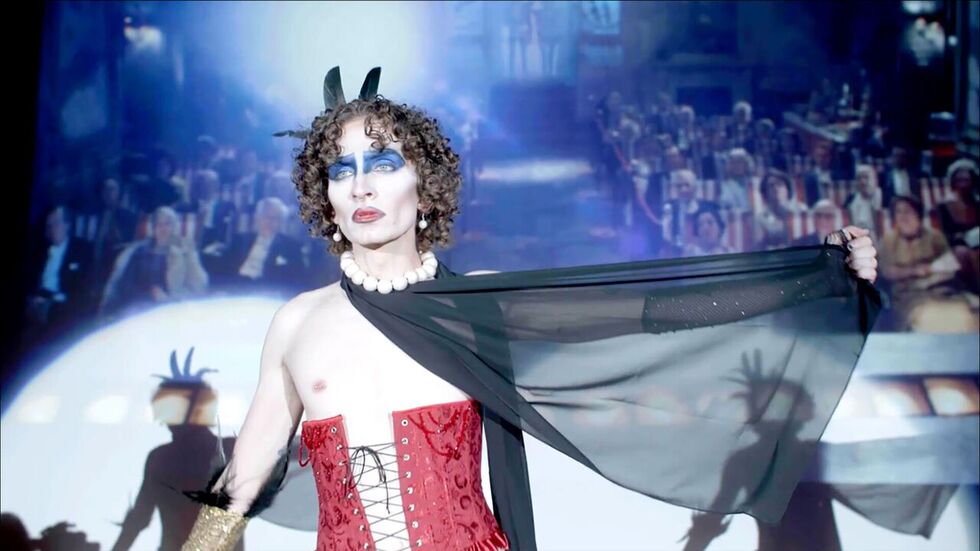
I managed a performing arts center back in Kansas for a couple of years, which was when I was first made aware of the concept of the “shadow cast.” To wit: at full-scale, (usually) midnight screenings of The Rocky Horror Picture Show, a cast of local performers doubles the action and actors onscreen, and leads the crowd participation that’s so much part of the experience. Allison Berg’s Time Warp is about one such cast, preparing a fall 2022 production of Rocky Horror in Rock Springs, Wyoming, which is not exactly a hotbed of queer-friendly theatrical activity.
Her focus is on 25-year-old Kenny Starling, the out, gay head of the company and (of course) the production’s Frank-N-Furter. “Rocky Horror has been such an integral part of my life,” he explains, and one of the best qualities of Time Warp is how acutely Berg pinpoints what makes people form such a strong (and early) bond with Rocky Horror — how these screenings always draw outsiders and eccentrics of various stripes to both their audiences and their casts. And she puts across how and why this stuff matters; there’s real joy in watching this conservative audience embrace the show, and the people who made it.
The least surprising credit in recent memory is probably when Odyssey, a new documentary about the American space program as seen primarily through the eyes of Jim Lovell, opens with the words “TOM HANKS PRESENTS.” Hanks, as we know, played Lovell in the beloved 1995 film dramatization of Apollo 13, and the fact that the mission was recently the subject of its own documentary underscores the danger of saturation here; Odyssey further risks the overshadowing of the excellent 2019 documentary Apollo 11, which focused only on that first manned mission to the moon, but in an archival-only style that Odyssey emulates.
But director Avi Belkin is no copycat; he directed the excellent documentary Mike Wallace is Here (which was also archival-only), and he finds enough off-grid and memory-holed moments to turn this oft-told tale into something visceral and dramatic. The harrowing immediacy of the cockpit footage and genuine panic in the radio transmissions are well orchestrated and crisply cut by Belkin (who also edits), and like the initial landing sequence in Apollo 11, the real-time scene of the world waiting for the crew to break radio silence upon their re-entry is gut-wrenching and suspenseful, even if we’re well aware of the outcome.
Speaking of awareness, Miss Representation: Rise Up is a book you can judge by its cover — sort of. You can look at the subject (how toxic online and social media discourse is poisoning young women, and specifically their inclinations towards public service) and the bold-faced names among the interviewees (Hillary Clinton, Nancy Pelosi, Katie Couric, Amy Klobuchar, Jameela Jamil) and get a pretty good idea of what you’re getting, particularly if you’ve been paying any attention to what’s been happening online and in politics for the past decade.
But it’s organized and analyzed in an informative and insightful way by director Jennifer Siebel Newsom, who tells the story less through the eyes of the famous faces than of less-known (and therefore less-shielded) young women who are entering politics and activism and are astonished by the misogyny and rhetoric they encounter. The internet is stifling any sense of safety and security, and thus a developing sense of self, for young women today, and Newsom puts it all together into a persuasive case, almost as if she’s in a courtroom. If so, the plaintiffs are the techbros, and your mileage may vary, but my main takeaway was a strong inclination to unplug and move to a cabin in the woods.
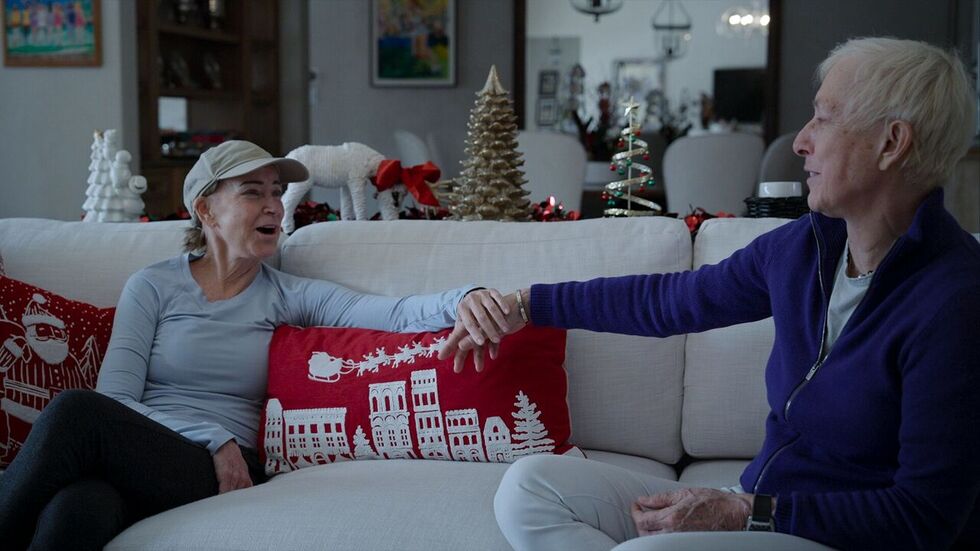
Chris & Martina: The Final Set is a Netflix sports documentary, so you also may know exactly what you’re in for, and you’re not entirely wrong: archival footage, soft-focus interviews, inspiration music, and so on. But you don’t always have to dazzle us with innovative style if you have a compelling story to tell, and director Rebecca Gitlitz certainly has that: the riveting origins of subjects Chris Evert and Martina Navratilova as teenage tennis prodigies; the ups and downs of their on-the-court rivalry (they faced off 80+ times) and off-the-court friendship; and their current, concurrent battles with cancer, which have brought them even closer.
Gitlitz also uses a clever wraparound device, sitting her subjects on a comfy white couch in front of a big TV and showing them their old matches for commentary. It’s fun to watch them watch themselves (“What a game!”); the director also helpfully gets into the weeds of their specific styles of play, and how they evolved, which is helpful for a tennis noob like me. I had a bit more trouble locking in to the athletic activity at the center of Spin Wars, Philip Byron’s chronicle of spin fitness, told via the rises and falls of SoulCycle, Flywheel, and Peloton; I found myself not infrequently thinking, “Ok, but this is all pretty ridiculous when you come down to it.”
Luckily, Byron doesn’t exactly treat his subject matter with reverence — this is a gossipy, occasionally eye-opening account of unnecessary backstabbing, inexplicable celebrity, and the kind of toxicity that’s kept a lot of us out of gym environments. (That’s the reason, promise.) It moves fast, boasts a memorable cast of characters, and will certainly prompt a chuckle or two the next time I hop on my Peloton.
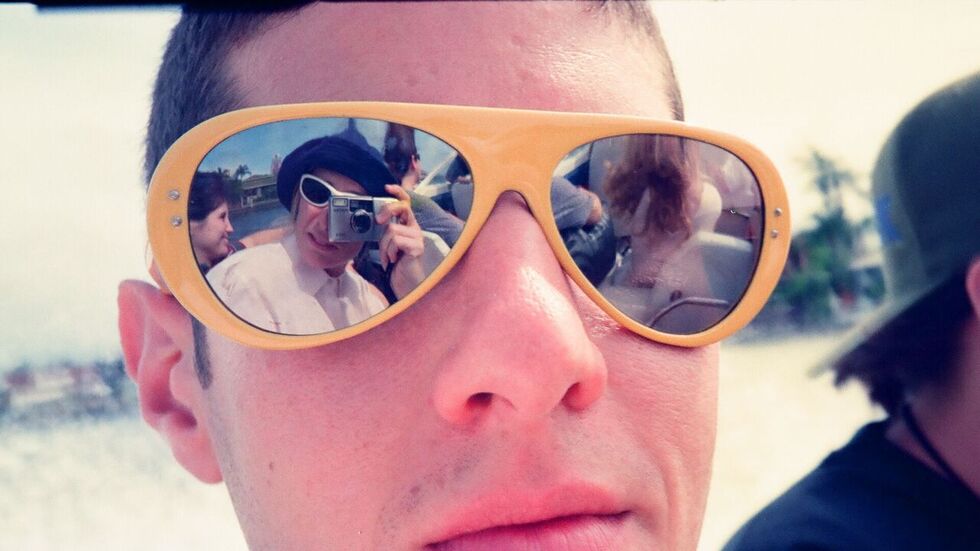
Over the 1995-1996 holiday season, Bikini Kill, the Beastie Boys, Foo Fighters, Sonic Youth, Beck, Rancid, and more went on the Somersault tour through Australia and Asia. Director Tamra Davis was newly married to Beastie Boy Mike D at the time, so she grabbed her camera and tagged along; the boxes of tapes were thrown in a box and forgotten, until Davis discovered them during last year’s California fires and assembled them into her new documentary The Best Summer.
I was an undergrad in college that year, which is to say that I’m a Gen-Xer to my core, and the results are absolute catnip. Davis resists contemporary retrospective interviews or even much in the way of fancy filmmaking (the end credits note, “all songs recorded live on my Sony camcorder,” and that’s as it should be), preferring to make her film feel like she’s sharing some cool home movies, making an indelible moment in pop culture into something warm and human and recognizable. She also spent a lot of time with Kathleen Hanna (one of the few other women knocking around), who gets a “Starring” credit — it’s “Featuring” everyone else — and earns it, sitting in and contributing to interviews, joking around and being cool, and, in just a few precious flashes, flirting with her future partner Adam Horowitz. “She’s blushing!” Davis squeals, and Horowitz giggles, and it might be my favorite rom-com moment of the year.