Zach Vasquez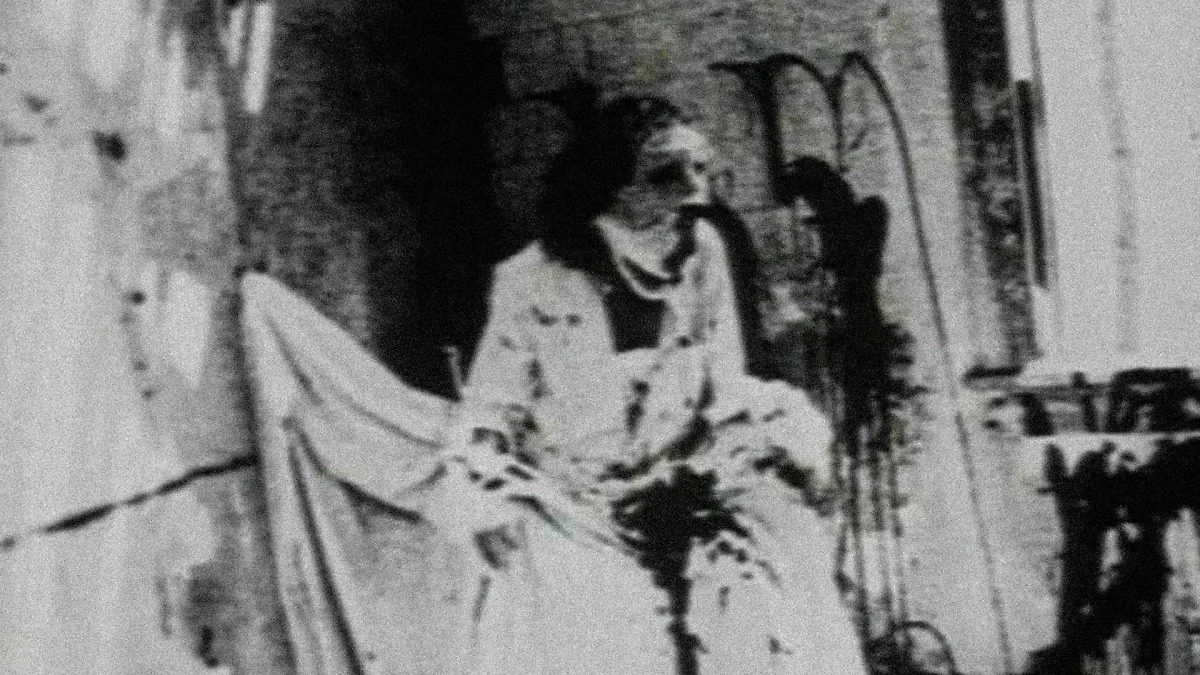
Twenty-six years after spilling into the world, the notorious underground shocker Begotten is back on screens, via a brand-new 4K restoration ahead of a Blu-ray release. This is both a surprising turn of events—few films seem as incongruous with the prospect of 4K as the intentionally degraded-looking Begotten—and entirely appropriate, given that the film is about the cyclical nature of existence: birth, death, and rebirth.
The passion project of writer-director-producer-cinematographer E. Elias Merhige, a visual artist, special effects designer, and member of New York’s experimental theater scene, Begotten was originally conceived as a dance production. But when that proved prohibitively expensive, Merhige, who’d directed a couple of shorts during his time at State University of New York, retooled it as a screenplay and set about raising funds to turn it into a feature, working alongside members of his Theaterofmaterial troupe.
Shot in black-and-white, entirely silent and wordless save for a cryptic opening epigraph, Begotten has a narrative, if not a plot. It is, above all, a creation myth. If that, combined with the previously mentioned focus on the regenerative nature of life, makes it sound like a piece of New Age psychedelia, be warned: it is not. Although it certainly shares some of the more transgressive and grotesque aspects of, say, the films of Alejandro Jodorowsky, it is less interested in the astrology of the cosmos than it is in the primordial ooze of earth.
The film begins with a hideously masked and robed figure sitting alone in a run-down shack. This figure—credited as, no shit, God Killing Himself—undertakes a long, extremely graphic act of self-mutilation, ending in suicide by disembowelment. From his desiccated remains crawls a woman, Mother Earth, who then uses his twitching corpse to impregnate herself. She gives birth to a deformed creature, Son of Earth, and the two chart a path across a barren wasteland, where they are set upon by a murderous, cannibalistic tribe of nomads. More torture, rape, and murder follow, but from these acts of horror nature springs forth before the cycle repeats itself.
So, not exactly a breezy watch.
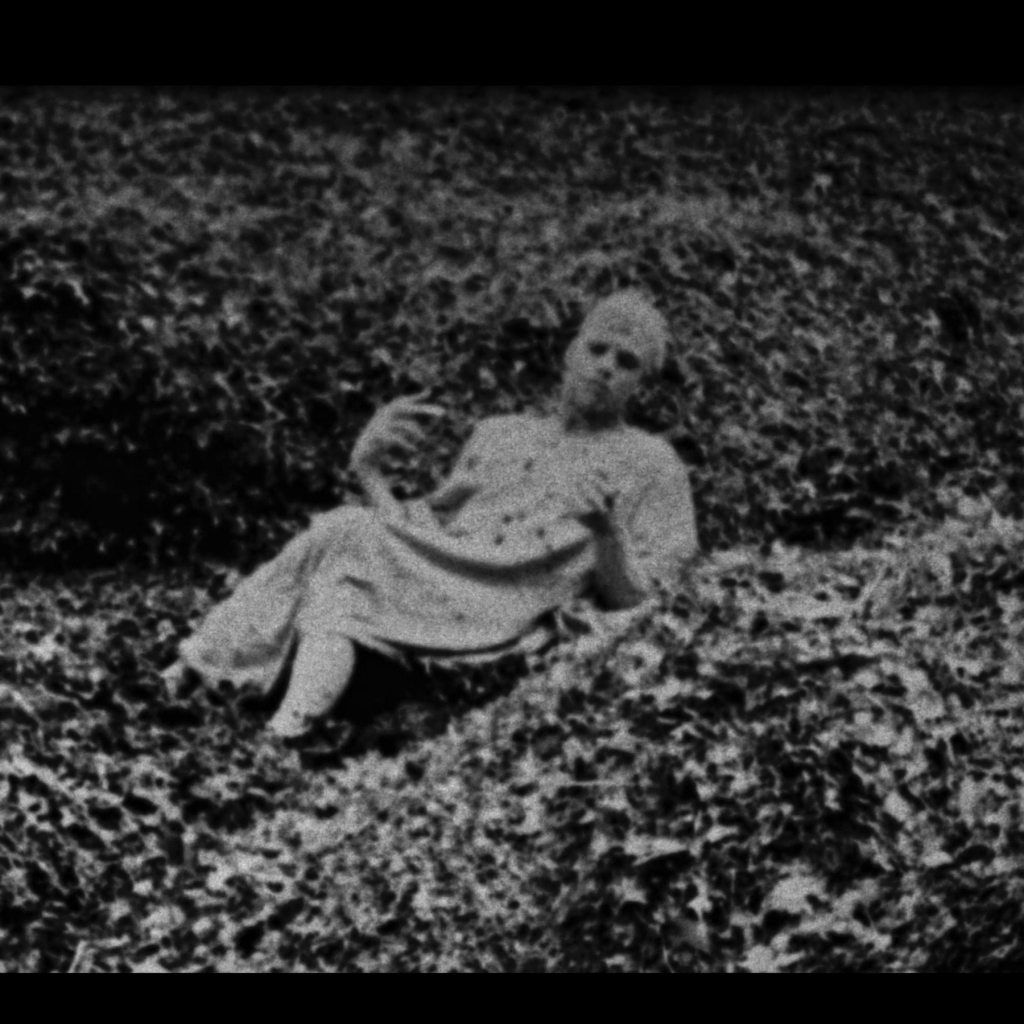
Begotten is an art film in the truest sense. It takes itself and its ideas, pulled from a variety of sources—Christian, Pagan, Egyptian; Buddhist, Hindi, Jainist; the philosophy of Friedrich Nietzsche, the paintings of Hyronymous Bosch, the writings of Samuel Beckett—deadly serious. The aesthetics are equally ambitious, with Merhige expending a huge effort experimenting with the actual celluloid, going so far as to scratch the film stock prior to shooting, intentionally underexposing it during filming, and in post-production, building his own optical printer to process it. Merhige explained that he didn’t want Begotten to resemble a film from the Silent era, so much as “a cinematic Dead Sea Scroll that had been buried in the sands, a remnant of a culture with customs and rites that no longer apply to this culture, yet are somewhere underneath it, under the surface of what we call ‘reality.’”
He certainly achieved his intended effect, as Begotten looks like no film that’s come before or since. And while it all may sound extreme to the point of silly, it’s appropriate that a film that presents the dawn of creation as an act of self-mutilation should be produced in exactly that spirit and manner.
This violent aesthetic, combined with the extremely graphic nature of the violence it depicts, made Begotten a hard sell to film festivals, to say nothing of distributors. It took two years for Merhige to find any distribution, although by that time his film had some big-name champions, foremost amongst them the critic Susan Sontag. On home video, Begotten, despite its high-art origins, became a must-see for gorehounds and lovers of psychotronic cinema. I remember reading about it in a compendium of cult films (I forget the name of the actual book) and on the early internet as a tween, and when I eventually saw it some time in high school, it lived up to all my fearsome expectations.
In the decades since, its reputation has faded slightly, no doubt due to its easy accessibility (it’s on YouTube in its entirety), and also because, gore-wise, what was once considered extreme is now pretty run-of-the-mill in a post-torture porn world (Eli Roth has proselytized about Begotten, but we won’t hold that against the film). Merhige, meanwhile, has stayed mostly out of the cinema scene. Following Begotten’s release, he landed a few high-profile gigs directing music videos for Marilyn Manson (a big fan of Begotten, natch) and two features: the underrated 2000 meta-horror movie Shadow of the Vampire (for which he was brought on board by exec producer Nic Cage, who also admired Begotten), and 2004’s dull serial killer dud Suspect Zero (which may be due a rewatch, as the recent horror hit Longlegs seems to have cribbed a fair amount from it). Since then, he has also directed two visually striking experimental shorts—Din of Celestial Birds (2006) and Polia & Blastema: A Cosmic Opera (2022)—that serve as thematic sequels to Begotten. But otherwise, he’s stuck with theater.
Begotten’s new restoration and re-release marks a turning of the cosmic wheel, the next step in its own cycle of birth, death, and rebirth, and a chance for new audiences to have their minds blown and stomachs churned by it.