Sara Batkie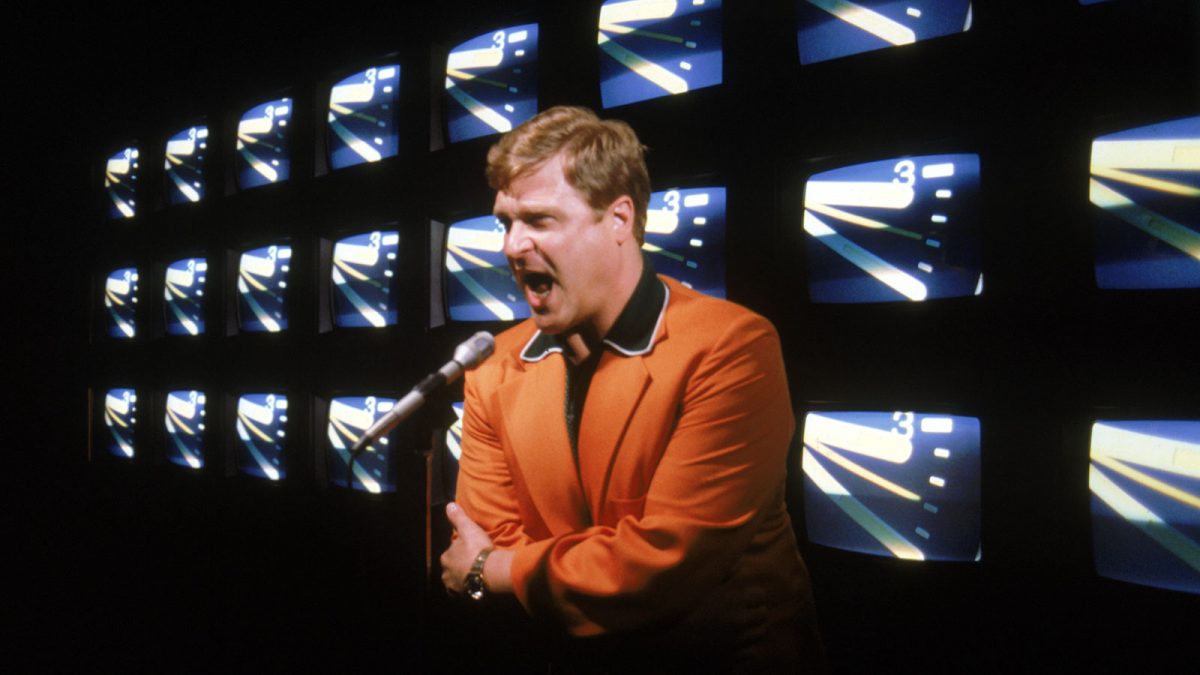
In 1978, Talking Heads released their second studio album, More Songs About Buildings and Food. It was a breakthrough for the band, their first collaboration with producer Brian Eno, featuring their first top 30 single. The final song on the record was “The Big Country”; unlike a lot of their work up to that point, it featured a loping guitar line that wouldn’t be out of place in a honky tonk. There’s a sincerity to lead singer David Byrne’s observations of America’s wide open spaces, until his chorus suddenly adopts the sneering attitude of a coastal elite: “I wouldn’t live there if you paid me.”
Eight years later, Byrne made his directorial debut with True Stories, an affectionate ode to the offbeat denizens of smalltown Virgil, Texas that ends with a song called “City of Dreams.” So, to paraphrase another Talking Heads classic, how did he get there? Growing older and wiser, and touring large parts of the country with his band might have had something to do with it. Coming further into his own voice probably did, too. Within five years, Talking Heads would release its final album amidst an acrimonious split. Four decades on, the film feels like a thesis statement for the solo career Byrne was about to embark on.
Byrne has been open about one of the inspirations for True Stories: tabloid headlines. According to co-screenwriter Stephen Tobolowsky, after meeting at a preview screening of Jonathan Demme’s Stop Making Sense, Byrne invited him and his girlfriend Beth Henley over to his house early in the development stage. The walls were pasted with drawings that Byrne had made based on clippings that he’d scrapbooked over the years. He encouraged the pair to draft a script around the question, “What if all these stories were true?” While Byrne has stated he was “lured” to Texas by its right-to-work laws, which would keep production cheap, it was Tobolowsky who came up with the idea of centering on a town celebrating the state’s upcoming sesquicentennial. Byrne eventually tossed out most of what Tobolowsky and Henley came up with, but they retained credit to keep the film from looking too much like a “vanity project.”
Byrne is still front and center onscreen, though, at least in the early going of True Stories, acting as both a tour guide and audience proxy on our journey through Virgil. His initial narration provides historical context, painting Texas as a place where cyclical violence and relentless innovation are intertwined in its identity. Alternating between rear projection and on-location footage as he drives down the open road, Byrne directly addresses viewers with folksy, almost-aphorisms like “You know, things that never had names before are now easily described.” Cinematographer Edward Lachman captures Virgil’s scenery with a fluid vernacular that matches the setting; the homes and gas stations have the starkness of a William Eggleston photograph while the expansive fields at the magic hour can look downright Malickian.
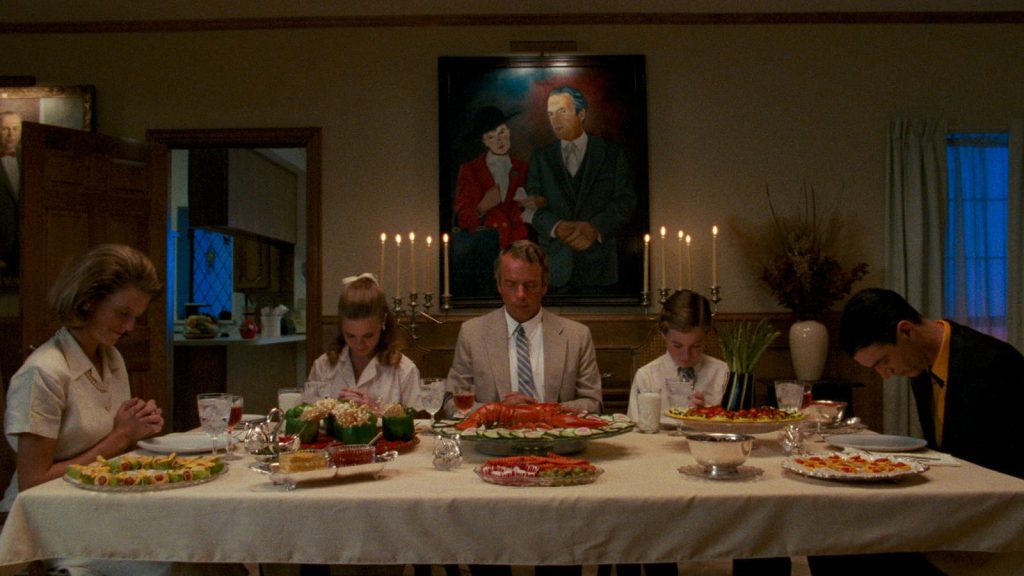
Byrne populates Virgil with an endearing assortment of oddballs. There’s the Lazy Woman (Swoosie Kurtz) who has amassed enough wealth that she literally never has to get out of bed. There’s Earl and Kay Culver (Spalding Gray and Annie McEnroe respectively), a married couple who haven’t spoken directly to one another in years. Voodoo priests (Pops Staples, patriarch of The Staples Singers) practice alongside conspiracy-addled preachers (John Ingle). But the film’s guiding light is Louis Fyne, a lovelorn “clean room” technician with a big heart and the “consistent panda bear shape” to match, played by John Goodman. It’s his performance of “People Like Us” that provides the culmination of Virgil’s Celebration of Specialness with its lyrics about persevering in the face of God’s laughter.
There are many touching aspects to True Stories, but perhaps the most gracious is how Byrne ends up almost entirely ceding the spotlight to his actors. Here in Virgil, everyone has the opportunity to be a performer and a showman, whether on a stage built yesterday or in their living room. Though Talking Heads released an album of recorded material from the film, the band only appears in cameos and is never seen actually playing their music. Instead the songs are interpolated through various genres and configurations that highlight many of Texas’s subcultures, from tejano bands to shopping mall muzak to a group of 4H kids hitting pots and knocking bricks together. Virgil’s parades and talent shows have a Tati-esque choreographed profusion, featuring motor-mouthed auctioneers, elderly line dancers, even a cavalcade of nannies pushing strollers. It’s a roving curiosity that points the way forward to Byrne’s later projects like Contemporary Color and Here Lies Love.
The gently satirical view of late capitalist, Reagan-era consumer culture might have limited its commercial success at the time. But True Stories has proven to have a long shelf life. Few films can claim to be both part of the Criterion Collection and the inspiration for the name of one of the most influential bands to emerge in the ‘90s. And while its production history does little to dispel the claim from some of his bandmates that Byrne could be tyrannical, there’s a purity to its vision that feels like a natural progression for his singular perspective on America’s idiosyncrasies. As he sings in one of Talking Heads’s last singles, he “was an angry young man” who “fell in love with a beautiful highway.” If it feels like things have fallen apart in the decades since, Virgil is always a play button away.
“True Stories” is available for digital rental or purchase, or on Blu-ray from the Criterion Collection.