Josh Bell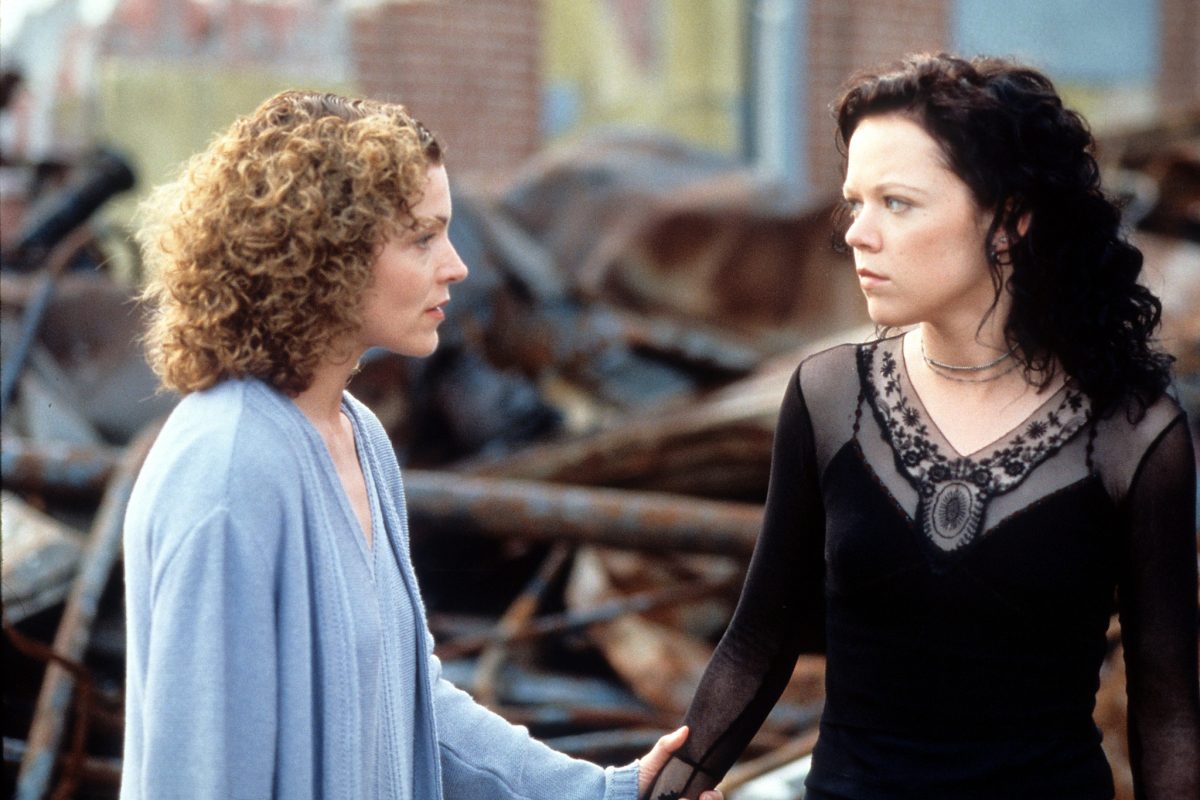
When Mike Flanagan’s new TV-series adaptation of Stephen King’s classic 1974 horror novel Carrie premieres on Amazon Prime Video this week, plenty of people will compare it to director Brian De Palma’s 1976 film version, which is deservedly considered one of the greatest horror movies ever made. But Flanagan isn’t the first filmmaker since De Palma to take on King’s story of a bullied telekinetic teenager and her bloody, horrific revenge. There have been three other Carrie adaptations in the intervening years, although it’s not surprising that they’ve been mostly forgotten.
That doesn’t mean they aren’t fascinating to watch, as much for their failures as for their limited successes. It’s impossible not to compare them to De Palma’s movie, which has largely surpassed King’s novel in the pop-culture consciousness, and that’s a challenge that none of the filmmakers overcome. These movies are intriguing for the ways that they both embrace and subvert their source material, even when what’s actually onscreen is less than compelling.
Director Katt Shea has the advantage of telling an ostensibly different story in 1999’s The Rage: Carrie 2, which like many latter-day horror sequels was originally written with no connection to its predecessor. While it follows many of the same narrative beats in unfolding the tale of another misfit teenager with burgeoning telekinetic powers, Rachel Lang (Emily Bergl), it’s not beholden to King’s plotting or characterization, and the inclusion of original Carrie supporting character Sue Snell (Amy Irving, reprising her role from the 1976 film) turns out to be mostly superfluous.
Here, guidance counselor Sue takes on a similar function as the original movie’s gym teacher Miss Collins (Betty Buckley), attempting to shield the outcast Rachel from mistreatment by other students. Unlike Sissy Spacek’s Carrie, though, Rachel doesn’t really need any help, and she’s the kind of person some viewers might have wished Carrie to be: assertive, independent, smart, and eager to take down her tormenters. Bergl gives her a mix of goth moodiness and punk rebellion, and she even has a best friend, the equally riot grrrl-ish Lisa Parker (Mena Suvari).
While King’s novel and thus every other adaptation are about the cruelty of teenage girls, The Rage is a surprisingly stark portrayal of rape culture that remains sadly relevant. There are some popular mean girls in the mix, but Rachel’s main adversaries are a group of crude jocks who keep track of their sexual conquests via a points system. After Lisa kills herself following an encounter with a member of this crass crew, an assistant district attorney (pointedly played by Shea herself) attempts to bring statutory rape charges against the young man, only to be shot down by her boss. “You want to be responsible for ruining these boys’ lives?” sneers the accused rapist’s father, echoing a disturbingly persistent perspective.
That righteous anger is The Rage’s greatest strength, but it’s only one aspect of a movie that has to make time for a limp romance between Rachel and slightly less odious jock Jesse Ryan (Jason London) and awkward callbacks to the previous movie, including multiple gratuitous clips. Sue even takes Rachel to the ruins of the original high school that Carrie destroyed, which have somehow never been cleared away. Rachel’s final rampage, which takes place at a house party rather than a prom, is more campy than disturbing, although there’s some gleeful satisfaction in seeing her massacre these unrepentant dickwads.
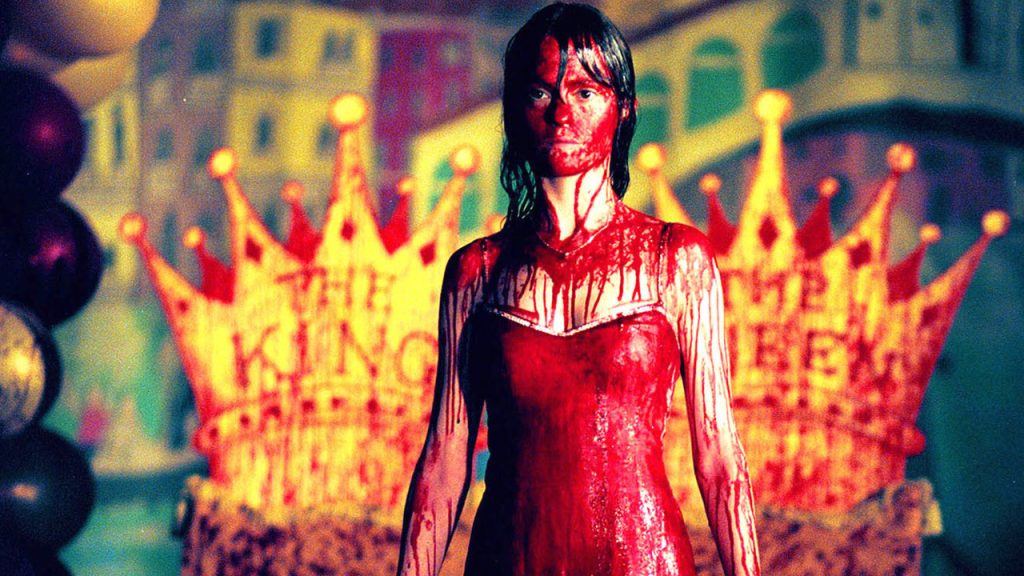
There’s no such feminist fury in 2002’s Carrie, an interminable made-for-TV movie that runs half an hour longer than De Palma’s film without adding anything useful or interesting. Even with its budgetary and content limitations, this Carrie had real potential, thanks to writer Bryan Fuller and star Angela Bettis. Fuller would go on to create or co-create other TV updates of acclaimed properties, including Hannibal and Star Trek: Discovery, and Bettis had just played another maladjusted young woman who violently lashes out in future cult classic May.
It’s hard to discern any of that talent in the movie, though, which is clumsily written and often poorly acted. Fuller lifts large chunks of dialogue verbatim from De Palma’s film, making his “hip” new additions sound even clunkier. When this version of Sue (Kandyse McClure) suggests to her boyfriend Tommy Ross (Tobias Mehler) that he should take Carrie to prom, he compares her plan to She’s All That. The naïve Carrie seems to know about Botox for the sake of a weak joke. Head bully Chris Hargensen (Emilie de Ravin) insults Carrie by telling her “You suck.” It’s not exactly the clever writing that Fuller would later be known for on shows like Pushing Daisies and Wonderfalls.
Bettis is easily the weakest of the Carries, playing the character as twitchy and mumbly. She has scraggly hair and goes cross-eyed whenever she uses her powers, looking more constipated than focused. Director David Carson gives the movie a harsh, overlit visual style, except during the inexplicably green-tinted framing sequence of police interrogating survivors about Carrie’s prom-night killing spree. That overarching investigation is drawn from King’s novel, but Fuller never finds a way to make it feel relevant, only draining any potential tension from the story by revealing who made it out alive.
There are still bright spots among the performances, especially Patricia Clarkson bringing a sense of eerie calm to Carrie’s ultra-religious mother Margaret, in contrast to Piper Laurie’s zealotry in the De Palma film. McClure gives Sue a snarkier edge even as she’s still honorable in her efforts to help Carrie, but she’s also ensnared in the movie’s worst narrative decision, an open-ended finale that was meant to set up a TV series that never happened. Carrie is ultimately a tragedy, but Fuller and Carson turn it into a long-winded origin story for much less interesting theoretical adventures to come.
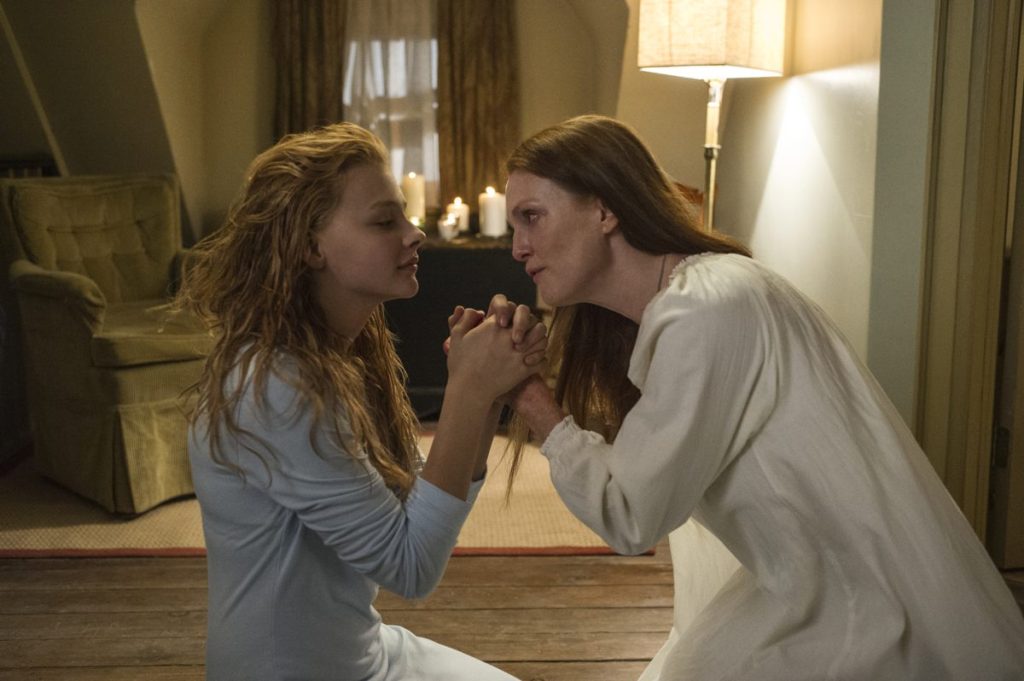
Director Kimberly Peirce channels some of the rage of The Rage in her 2013 remake, which sticks to the basic template from King and De Palma with only slight variations. Still, having a woman in the director’s chair seems to make a difference for both The Rage and this Carrie, which are less inclined to objectify their teen-girl characters. Shea even swaps the casual female locker-room nudity of De Palma’s film for casual male locker-room nudity in The Rage, and while Peirce doesn’t go that far, she does pay more attention to the emotional lives of her versions of Sue (Gabriella Wilde) and Chris (Portia Doubleday).
Like Clarkson in the 2002 film, Julianne Moore offers an intriguing twist on Margaret White, playing her with a deep well of contempt, both for her daughter and for herself. Although Carrie (Chloë Grace Moretz) is a teenager, Margaret is always calling her “little girl,” and the movie opens with Margaret nearly murdering her newborn daughter. She resents Carrie, but she also hates herself for indulging in parental love, and that hate manifests in self-harm, from cutting her arms and legs to banging her head against a wall.
The dynamic between Carrie and Margaret is more rewarding than her interactions with Wilde’s somewhat bland Sue or Doubleday’s bitchy Chris, who lacks the pure malevolent energy of Nancy Allen’s 1976 take on the character. Judy Greer fares better as gym teacher Miss Desjardin, and she has some genuinely tender moments with Carrie. Moretz’s version of Carrie is a bit closer to the proactive Rachel Lang of The Rage, and it’s telling that while other Carries search for “miracles” at the library to understand their newfound abilities, this one searches for “magic powers.”
Peirce amps up the gore in the climactic prom confrontation, and this Carrie seems to take delight in using her powers, even though she’s still traumatized. Moretz’s hand gestures as Carrie wreaks havoc make her look like she’s auditioning for the X-Men, and Peirce’s film could be a more effective superhero origin story than the 2002 TV production, if it went in that direction. That means it’s a bit too slick and smooth, but it’s also briskly paced and consistently engaging, and if this was the first time the story had been adapted, it would be a perfectly acceptable outcome.
Of course, Peirce never really had a chance at living up to De Palma, any more than the filmmakers who came before her. There’s still value in all of their approaches to the story, from Clarkson and Moore’s subtler, more insidious shadings of Margaret White to Bergl and Moretz’s fiercer attitudes as the volatile outcast teens to Shea’s venomous social commentary and Peirce’s emotional sensitivity. These flawed Carries still have their strengths, offering worthwhile inspiration for Flanagan to take into his new series.