Chelsea Spear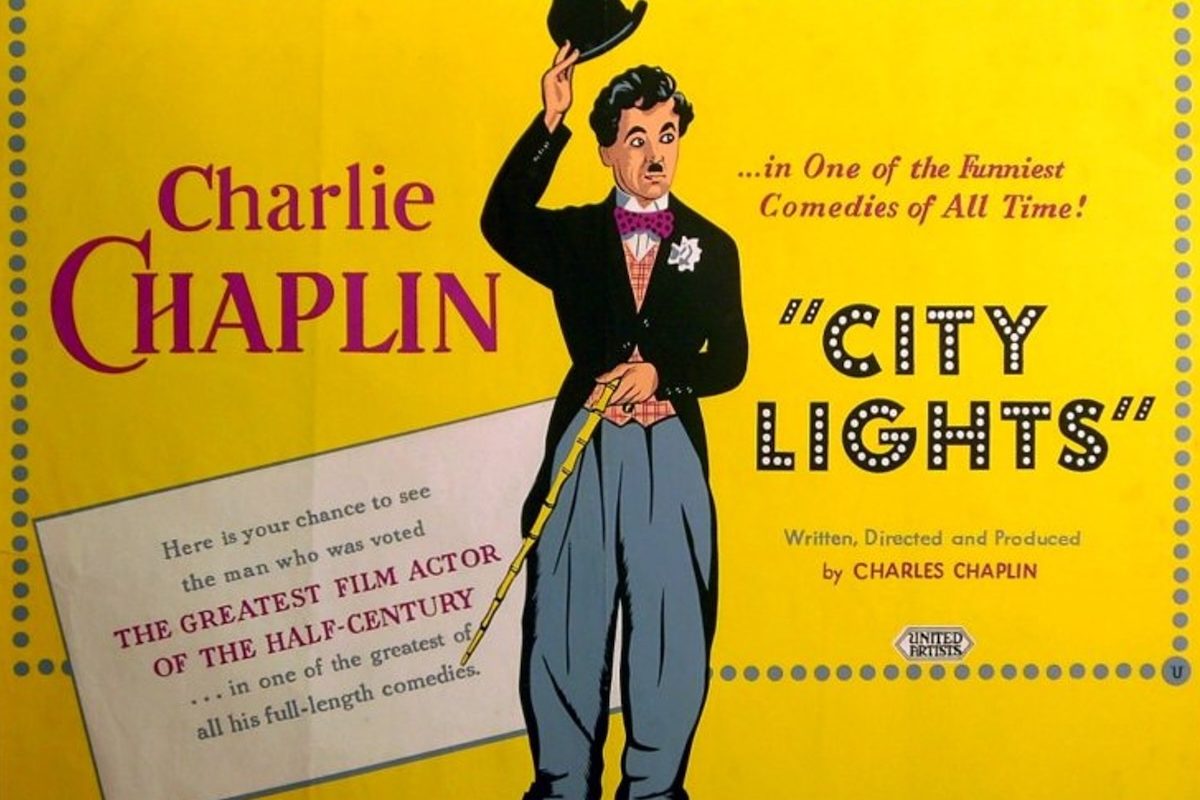
When sync sound movies, known then as “talkies,” made millions at the box office, few silent film stars had more to lose than Charlie Chaplin. The actor had risen from a supporting role in Mabel’s Strange Predicament to an internationally recognized icon who not only made audiences laugh but also represented a version of the American dream and stood up for marginalized people. Because Chaplin was able to tell his stories visually instead of through dialogue and spoken language, his films were wildly popular not only with English-speaking American viewers but among moviegoers in countries across the world.
After the massive critical and commercial success of The Jazz Singer, the first feature film with sync sound, studios began rushing talkies into production. One of the few holdouts was Charlie Chaplin. “How would he speak?” asked David Robinson in the biography Chaplin: His Life and Art. “What kind of voice and accent could be conceived to suit the Tramp?” Chaplin fans and other viewers coming to his 1931 feature City Lights would not have left the theatre with any answers to these questions. They would instead have seen a film that used a lush score and humorous sound effects to enhance a hilarious and ultimately poignant comedy.
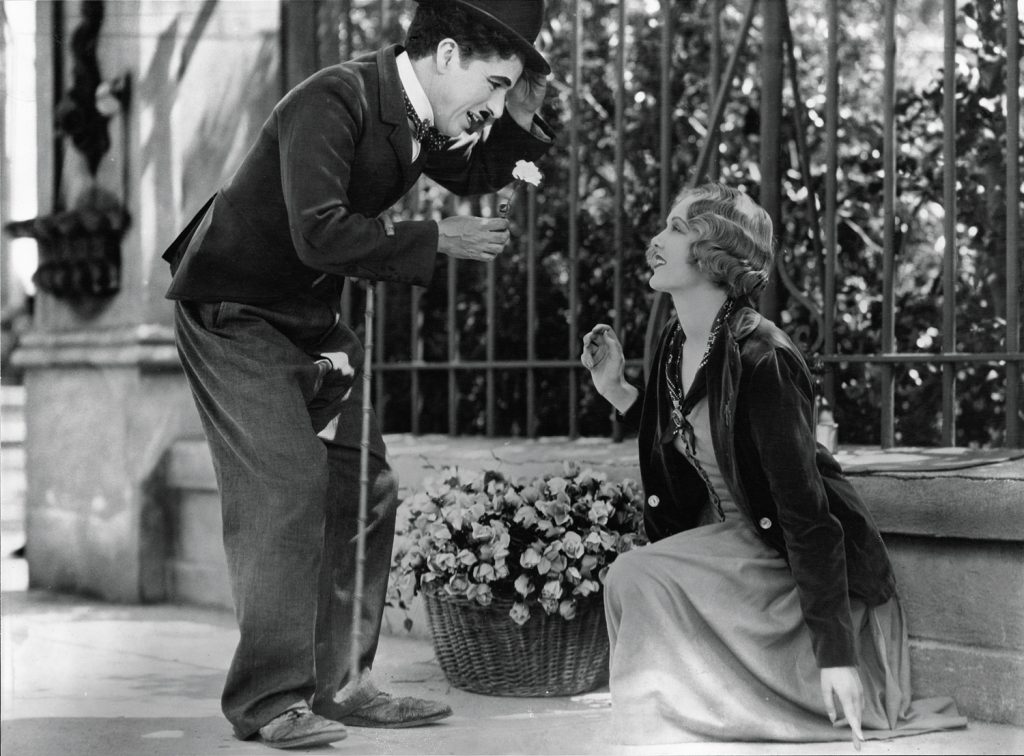
The use of sync sound touches off the plot for City Lights. In order to escape a traffic jam, The Tramp (Chaplin) cuts through a limousine idling at a curb by a city park. When he comes out on the other side of the car, he meets a beautiful blind girl (Virginia Cherrill) selling buckets of hydrangeas. She assumes he’s rich after she hears the limo door close and the car pull away, which leads to a series of misunderstandings as The Tramp tries to help her get an operation that will restore her eyesight.
City Lights was released four years after The Jazz Singer, and in that time audiences had become accustomed to sync sound and dialogue in films. Still skeptical, Chaplin opened with a scene in which two politicians are poised to give a speech dedicating a statue. When they open their mouths to speak, however, the sound of kazoos comes out instead — an expression of Chaplin’s attitude towards dialogue in his movies.
While Chaplin was irreverent about the use of sync sound, he threaded some well-chosen sound effects in the party scenes that punctuate the film’s second act. When The Tramp and his friend the eccentric millionaire (Harry Myers) visit a supper club, a slide whistle undulates on the soundtrack as The Tramp slurps up an errant spaghetti noodle—possibly the first use of a slide whistle on a comedy soundtrack. In a party at the millionaire’s home, The Tramp swallows a whistle and cannot speak with any of the party attendees. Their dialogue remains inaudible as he inadvertently summons a cab and leads a pack of stray dogs to the millionaire’s mansion.
If Chaplin’s use of sound effects leaned towards the comic, his score met the heartbreaking romance between The Tramp and the blind girl with lush melodicism. “One happy thing about sound was that I could control the music,” Chaplin noted in his autobiography, “so I composed my own.” The strong melodic bent of the score could be traced to his manner of composition. “I really didn’t write it down,” he told the New York Telegram. “I la-laed and Arthur Johnson wrote it down, and I wish you would give him credit, because he did a very good job.” Though Chaplin preferred the use of elegant themes to contrast with his broader comedy, he used a few pastiches to underscore the humor in the film, most notably when The Tramp and the millionaire paint the town red to a brassy arrangement of the drinking song “How Dry I Am.”
The absence of sync sound didn’t impact the success of City Lights at the box office. For the premiere New York engagement, United Artists four-walled the film at a large, out-of-the-way theatre at no small expense to the distributor or to Chaplin. Though the press was skeptical of a silent film being released in the 1930s, he awoke on opening day to an announcement from his publicist: “There’s been a line running around the block ever since ten o’clock this morning and it’s stopping the traffic. There are about 10 cops trying to keep order. They’re fighting to get in. And you should hear them yell!”
In the 95 years since City Lights was released, it remains popular among audiences around the world. It’s studied in film classes, screened at revival houses, and the closing scene is giffed on Tumblr dashboards everywhere. That City Lights has kept its status as one of the great films of the late silent era speaks to the potent universality of Charlie Chaplin’s vision.