Sean Burns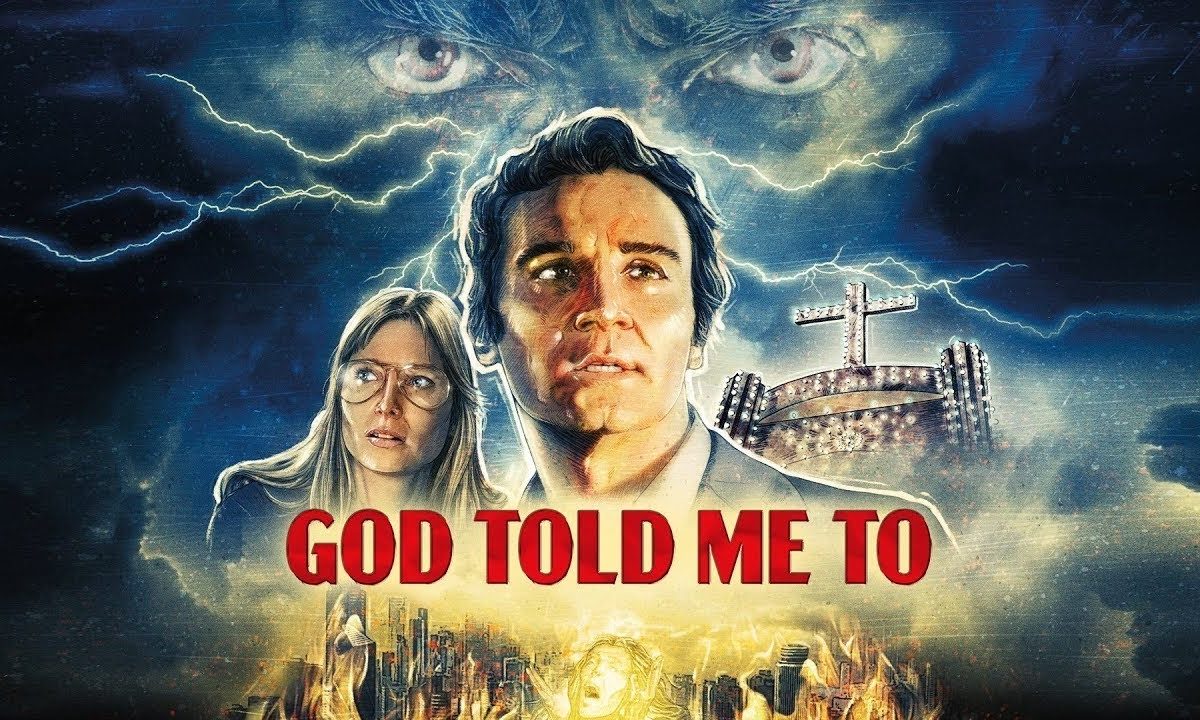
If you take them out of allegorical context and strip them of any cultural familiarity, Bible stories can be bizarre, grisly affairs. Most of us grew up socially indoctrinated into one church or another, so we tend to take for granted these ancient accounts of scary, supernatural goings-on and bloodthirsty demands from an often terrifyingly unreasonable God. Writer-director Larry Cohen’s 1976 curio God Told Me To is a fascinating experiment, in that the filmmaker is trying to make a secular Biblical epic in a crumbling, contemporary New York City. It’s a completely irreligious – some have even argued sacrilegious – saga of prophesized destinies, blood sacrifices and virgin births in the trappings of a gritty cop movie starring one of the guys from The French Connection.
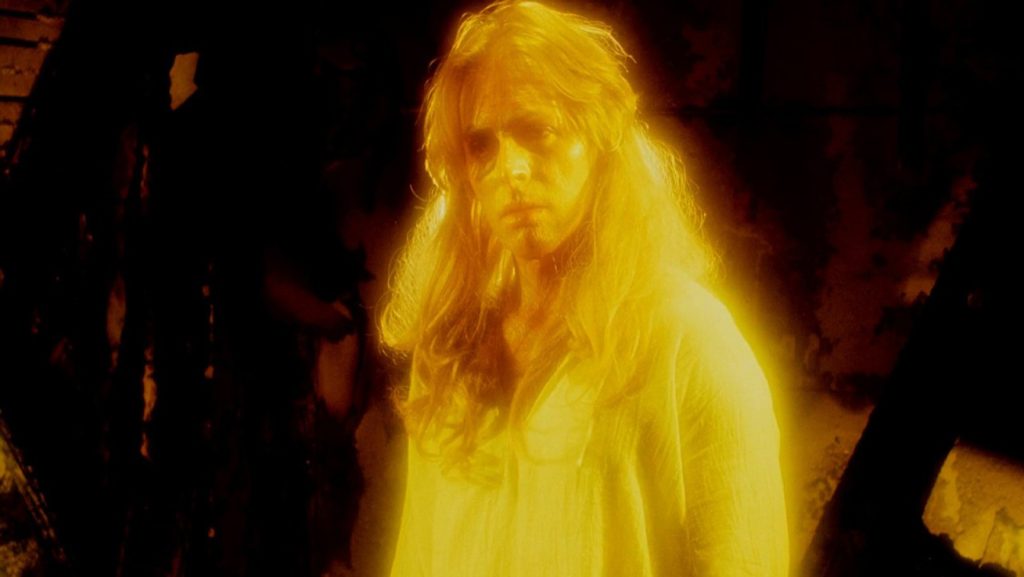
It’s a hauntingly earnest piece of dreck, the kind of odd, unsettling movie you start watching from somewhere in the middle on late night television and find that it’s imprinted itself on you. There are scenes in God Told Me To so strange that I still can’t believe I saw them, and if you try and describe the final act to a friend they’ll think you’re pulling their leg. Yet the picture proceeds with a forlorn gravity that casts a lingering spell. There’s nothing campy about it. Cohen never winks. Not even during the bits with the yellow, hermaphrodite Killer Jesus.
One of the great schlockmeisters of the drive-in era, Cohen began his career writing TV Westerns. (It was he who created NBC’s Branded, not that guy from The Big Lebowski in an iron lung.) He broke through to the movies with blaxploitation pictures like Hell Up in Harlem and Black Caesar, but is most beloved for wild, semi-satirical horror films with self-explanatory titles like It’s Alive and Q: The Winged Serpent. Like the killer yogurt story The Stuff, Larry Cohen pictures were knowingly ridiculous affairs with a side of sly social commentary.
According to Rotten Tomatoes, God Told Me To is Cohen’s most critically acclaimed picture, which isn’t saying all that much. Roger Ebert gave it one star and called it “the most confused feature-length film I’ve ever seen. There were times when I thought the projectionist was showing the reels in random order, as a quiet joke on the hapless audience. But, no, apparently the movie WAS supposed to be put together this way, as a sort of 52-card pick-up of cinema.”
Tony LoBianco stars as an NYPD detective who has been living with his mistress (Gwyneth Patrow lookalike Deborah Raffin) for four years but still won’t divorce his wife (Sandy Dennis) because he’s a good Catholic, sneaking off to Mass every morning before work. The city is being rocked by a spate of brutal, seemingly motiveless murders, after which the killers explain themselves with the movie’s title. They’re all disturbingly serene in the act of killing, with unerring accuracy to boot. The movie begins with a genuinely upsetting sniper attack from a Manhattan water tower that echoes the 1966 Charles Whitman massacre in Texas. LoBianco has a chilling interaction with the shooter, and soon becomes obsessed with the case.
Cohen was one of the unsung great New York filmmakers, and he gets extraordinary production value from shooting on location in the city. God Told Me To looks a heck of a lot more expensive than other exploitation pictures, especially during the mid-movie pièce de résistance, a mass shooting during the Saint Patrick’s Day parade, committed by a marching patrolman played by a then-unknown comedian named Andy Kaufman. Cohen and his crew had permits to film the parade, but everyone assumed they were making a documentary, not slipping in actors to stage a multiple homicide. Since they obviously couldn’t stop or even slow down the procession, Cohen and cinematographer Paul Glickman had three revolving camera crews positioned throughout the parade route, taking over running alongside the action when the previous crew got tired.
The splattery squib hits were restaged later in Los Angeles and seamlessly edited into the footage. (Savvy producer Cohen got free extras by calling up local Irish-American organizations and asking if they’d like to celebrate St. Paddy’s Day again.) Knowing what we do now about Kaufman’s penchant for insane stunts, one can imagine how the young performer must have loved slipping into a crowd full of uniformed policemen and waving around a prop gun in front of thousands of drunks. Cohen once told a Q&A crowd at the New Beverly Cinema that between takes, Kaufman further taunted and riled up the inebriated onlookers by pretending to be gay and flirting with them. This scans.
It’d probably be a waste of time to describe what happens later in the film because you wouldn’t believe me anyway. Suffice it to say, screen legend Sylvia Sidney shows up with some secrets about the LoBianco character’s parentage, and again, it must be stressed how dutifully these performers play the increasing absurdity. Especially when the intersex space aliens become involved. Erich von Däniken’s Chariots of the Gods? was still very much in the cultural ether at the time, and was a natural fit for Cohen’s sneaky secularization of Christian lore.
But it’s the pungent, New York-ness of the movie that makes the biggest impression today. The film is full of exhausted-looking day players with faces like catcher’s mitts, as the possibility of a religious apocalypse is just another headache for city dwellers who are already having a crummy morning, thank you very much. Cohen loved to tell a story about how on the day the water tower massacre was to be shot, the prop person didn’t show up with the rifle. The exasperated filmmaker shouted at the gathering gaggle of bystanders and lookie-loos, “Does anybody here have a telescopic rifle?”
A woman on the street raised her hand, “My boyfriend does. I can go get it!” That’s the rifle that’s in the movie.
Only in New York, kids, only in New York.
“God Told Me To” is streaming on Amazon Prime, Tubi, PlutoTV, and Night Flight Plus.