Josh Bell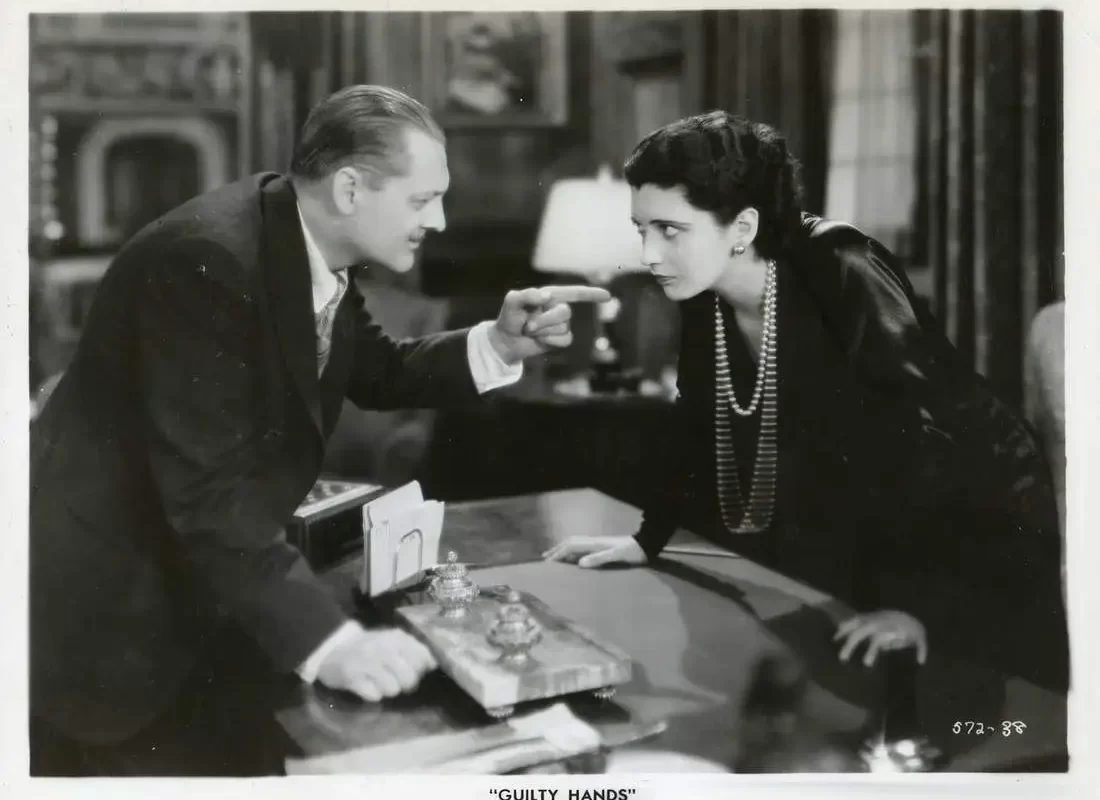
Before he even shows his face onscreen, lawyer Richard Grant (Lionel Barrymore) is talking about getting away with murder. The protagonist of Guilty Hands, released 95 years ago this week, is one of the most brazenly amoral characters of the pre-Code era, and he’s so bold and self-assured that it’s hard not to root for him to pull off his brutal crime.
At first, though, Grant is only speaking theoretically. On the train from New York City to visit his client Gordon Rich (Alan Mowbray), Grant tells a pair of fellow passengers about his nihilistic philosophy, gleaned from decades of experience as both a public prosecutor and a criminal defense attorney. “We haven’t morals anymore, just laws,” he says. “A man isn’t punished for committing a murder. We put him in jail for his mistakes, because he’s been caught.”
Grant delivers this speech while shrouded in darkness as the train travels through a tunnel, with director W.S. Van Dyke signaling the movie’s murky moral compass from the opening moments. Despite his seemingly grim thought process, Grant is a jovial fellow who shakes hands with his traveling companions before disembarking to meet his daughter Barbara (Madge Evans). He’s surprised to see her, but he’ll soon learn the reason that she’s there to escort him to Rich’s island compound: She’s fallen in love with Grant’s wealthy middle-aged client, and they’re set to be married the following day.
To Grant, that’s completely unacceptable, and the audience soon finds out why. This isn’t just a case of an overprotective father who disapproves of his young daughter marrying a man more than twice her age. One of Grant’s main duties as Rich’s lawyer is to pay off the many young women Rich beds and discards, and it’s alarming to hear the two men casually dismiss the struggles of these traumatized girls. One of them is a 16-year-old who isn’t alive to receive her payment, because she died after falling from the balcony of Rich’s apartment, in what Rich claims was an accident rather than suicide.
Grant callously laughs off his client’s behavior (even calling the dead teenager “Humpty Dumpty”) until he learns that Rich plans to marry Barbara. The condescending patriarchal tone of his subsequent threats is essentially the same as the tone of his earlier banter with Rich, only pointed in a different direction. This is a man who expects deference from everyone around him, and who considers himself the final authority on what’s acceptable. “The world would be much better off without you,” he tells Rich.
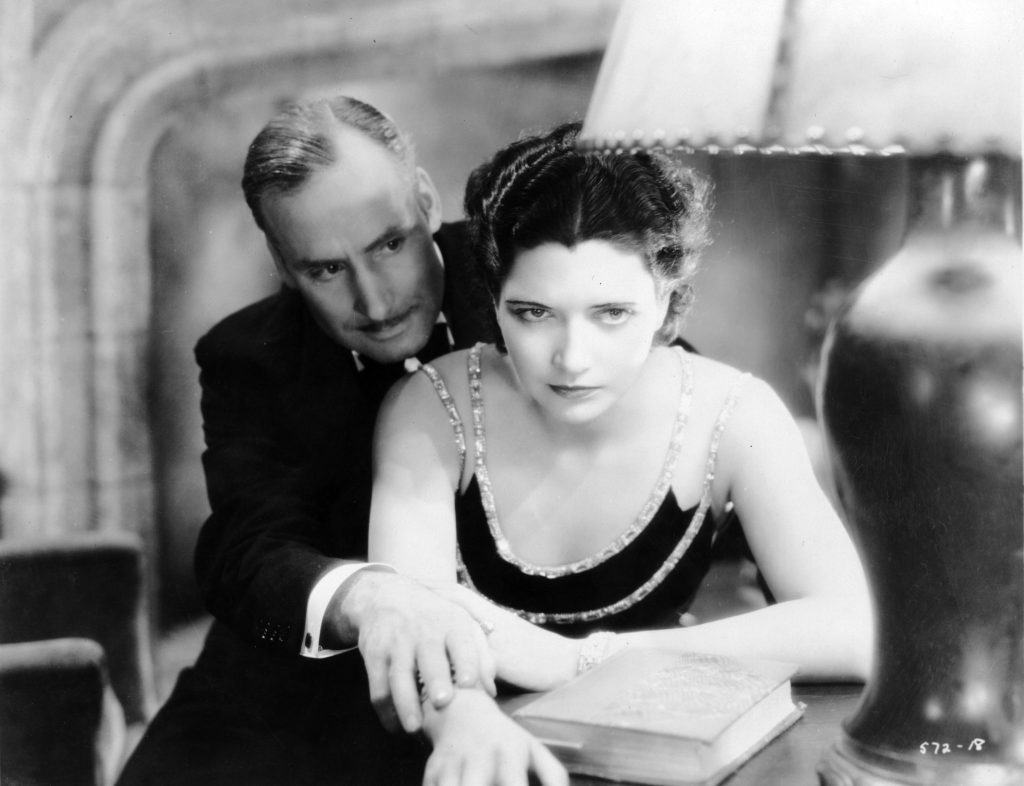
As smug as Grant may be, he’s also clearly correct in his assessment of Rich, and part of the fun of Guilty Hands is the way it puts the viewer on the side of the criminal mastermind. With only a short amount of time to put his plan in motion, Grant follows through on his deeply held beliefs, murdering Rich in the dead of night before the wedding can take place the next morning. The majority of Guilty Hands takes place on Rich’s lavish estate during a thunderstorm, like a cross between The Great Gatsby and The Old Dark House. Grant is both the villain and the hero, and thanks to his experience as a criminal lawyer, he’s the one that the other houseguests trust to conduct an investigation after Rich’s corpse is discovered.
Barrymore digs into his performance with infectious glee, especially as Grant grows more arrogant, calling all of the potential suspects together in the sitting room like he’s Hercule Poirot. He’s so confident in his own security that he encourages everyone else in attendance to look for clues. “Bring me the murderer of Rich!” he bellows, as thunder rumbles outside. Van Dyke plays with the conventions of the locked-door mystery, already a cinematic staple even in 1931, and Barrymore leans into the campiness.
Grant’s primary adversary is Rich’s former lover Marjorie West, a savvy flapper played with smoldering intensity by Kay Francis in one of her early roles. While she doesn’t match the delightful broadness of Barrymore’s performance, she’s just as expressive and just as devious. Marjorie’s eyes seethe with jealousy when Rich announces his engagement to Barbara at dinner, and when she comes to him later that night, he explains that he’s just marrying Barbara to get her in bed. “In her case, it’s got to be marriage,” he says, and she understands exactly what he means.
The story’s climax is a battle of wills between Grant and Marjorie, with Barrymore digging into Grant’s cruel destruction of the righteous scorned woman. As he details exactly how he would tear her apart on the witness stand in a potential trial, framing her for a crime he himself committed, it’s no longer about protecting his daughter or removing an evil man from the world. It’s about showing off his own superiority, the way his privileged position allows him to easily crush a woman like Marjorie.
That’s the kind of shocking societal perspective that would be mostly lost with the implementation of the Production Code, and Guilty Hands never pretends that Grant is wrong about how the world works. Men like him call the shots for the rest of us, and only an ironic twist of fate can stand in the way of him getting away with murder.