Sean Burns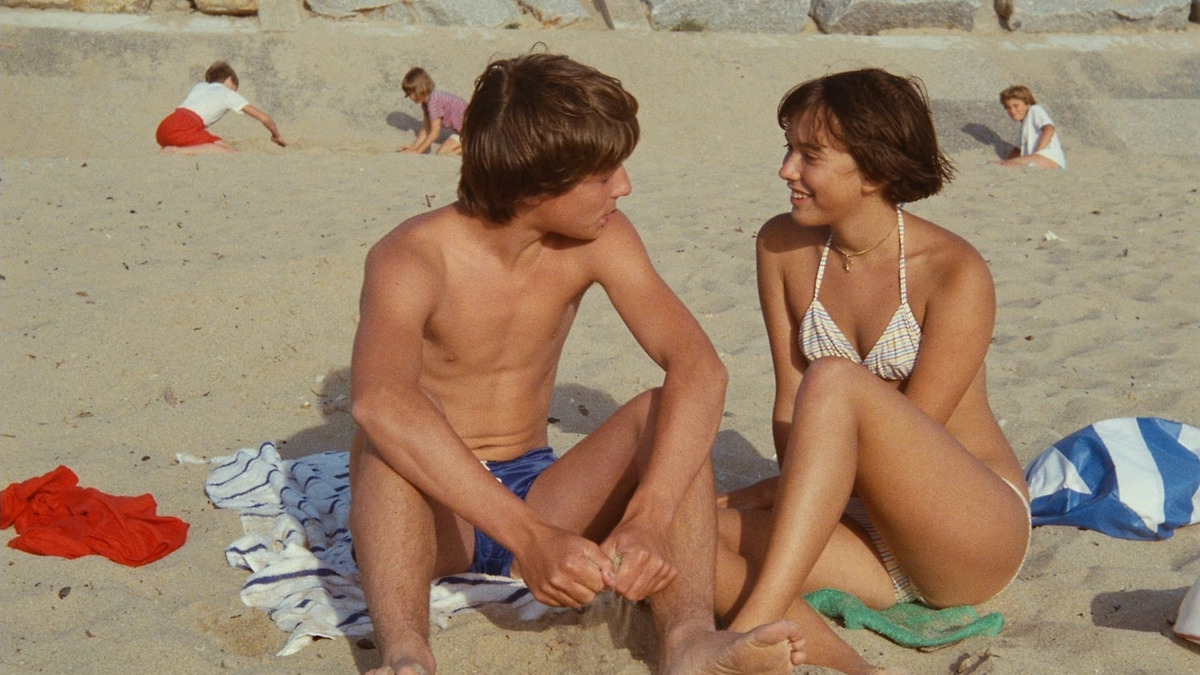
Anyone who rented VHS tapes in the ‘80s remembers the box for Pauline at the Beach. In an era of wet, hot American sex comedies that were flying off video store shelves, Eric Rohmer’s effervescent coming-of-age story was packaged with an iconic rear view of co-star Arielle Dombasle’s Barbie-blonde tresses and a damp swimsuit clinging to her exquisite derriere. I’ve often wondered about the dudes who must have rented it thinking they were getting another Hardbodies 2, and I’m sure that I wasn’t alone in assuming the movie probably contained extra nudity because it was French.
Much like when Bart Simpson and his friends went to see Naked Lunch, there’s no doubt that a number of randy young boys experienced their first Eric Rohmer film with unfair expectations. The mellowest of the Cahiers du Cinéma crew that included Jean Luc-Godard, François Truffaut and Jacques Rivette, Rohmer made wry, chatty comedies about characters who don’t realize they’re in comedies. These are classy, educated people who understand everything except love, talking themselves in endless circles, coming up with elaborate philosophical justifications for whatever it is they felt like doing in the first place. Boy, do they go on.
Pauline doesn’t talk much, though. Played by the then-15-year-old Amanda Langlet in a pageboy haircut, she’s just a kid tagging along with her older cousin Monica (Dombasle) on a late summer holiday to the Normandy coast. Monica’s going through a divorce and wastes no time finding herself in a love triangle with her needy former flame Pierre (Pascal Greggory) and older, balding Henri (Féodor Atkine), incongruously appealing because he’s a bit of a roué. Monica tries to push Pierre off on her younger cousin, asking him to give her windsurfing lessons, and maybe lessons in something else.
But Pauline already has thing for a boy (Simon de La Brosse) she’s met on the beach, while Henri is mixed up with local gal Louise (one-named wonder Rosette) and through a combination of poor timing, bad behavior and silly misunderstandings, pretty much everyone gets the wrong idea about who’s been sleeping with who. Pauline at the Beach has all the elements of a door-slamming bedroom farce, but Rohmer keeps the movie simmering in a wistfully funny minor key. Again, these characters don’t know they’re in a comedy.

Like so many of the director’s films, Pauline at the Beach was shot by the legendary cinematographer Nestor Alemendros and contains some of the most casually attractive people you’re ever seen. Borrowing windows and doorway framings from Matisse, the images don’t strain to be stunning. It’s like they just happened to find them that way. (Same goes for the costumes in these movies. I’ve spent way too much time scrolling through the “Rohmerfits” Instagram feed.) It’s an incredible degree of craftsmanship and nobody appears to be exerting themselves at all.
That gossamer touch is why the movie goes down so smoothly, the substance of it doesn’t sneak up on you until a little while later. Pauline at the Beach was part of the director’s 1980s Comedies and Proverbs cycle, this installment kicking off with the aphorism: “A wagging tongue bites itself.” There are plenty of tongues wagging in this picture. Hell, before anyone’s even hooked up yet, the characters are already sipping wine and vigorously debating their ideas of romance and what it means to them personally. (It’s the kind of conversation that only happens in French movies, and seemingly always over wine.) But Rohmer is too gentle a filmmaker to underline how quickly we see each of them contradict their own stated ideologies. It’s all just talk.
Pauline sees through them, wisely and quietly taking it all in. Langlet’s performance is extraordinary, teetering between girlishness and something more sophisticated. We watch as her naivety falls away, accompanied by her innocence. The trip serves as Pauline’s initiation into the foolish, messy ways of adulthood. She watches as her cousin and all the other lovers construct silly little fictions for themselves to believe in, the necessary self-deceptions we use to get by in the grown-up world.
In his typically breezy fashion, Rohmer doesn’t treat this as a tragedy, or anything seismic at all, but rather like the evening chill that heralds a summer slipping away, just another part of getting older. The film is gracefully bookended with a shot of a gate opening and closing, Pauline enters at the beginning and emerges at the end, a little wiser and sadder. It’s a trip she’ll probably look back on fondly in a few years, when she’s inevitably mired in romantic delusions of her own.
“Pauline at the Beach” is streaming on the Criterion Channel.