Sean Burns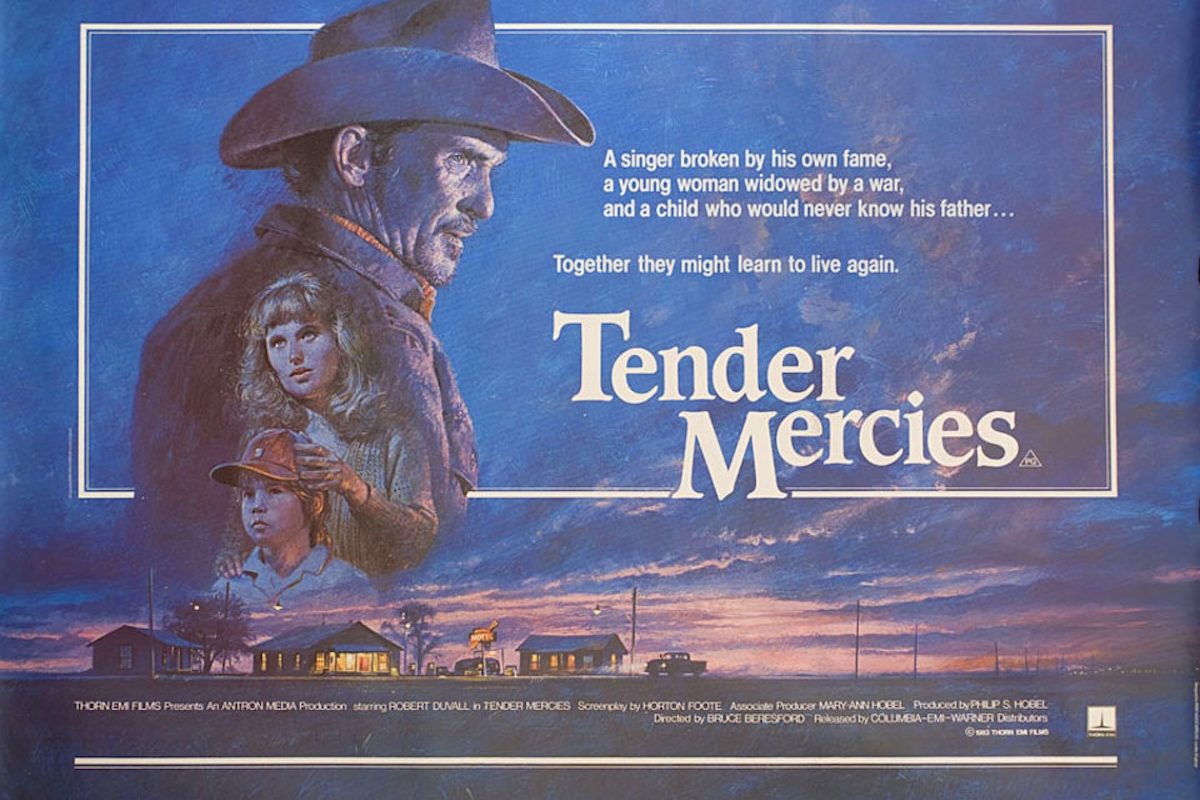
Like his former roommate Gene Hackman, Robert Duvall was a movie star in a character actor’s body. He had a gruff, commanding presence and an easily identifiable set of mannerisms that he put to work in a remarkable range of roles. Whether playing a cantankerous cowboy, a cool-headed mob lawyer or a madman colonel who loves the smell of napalm in the morning, an essential Duvall-ness shone through.
He didn’t play leading men very often, instead mostly showing up in supporting roles where he’d steal the movie out from under his flashier, more conventionally handsome co-stars. (John Travolta gives one of the best performances of his career in A Civil Action, and Duvall leaves him in the dust just by playing around with a pen.) I can think of a lot of bad movies Robert Duvall was in, but I can’t think of a movie Robert Duvall was bad in.
However, the role that won Duvall his Oscar was not just a lead but a rare romantic one. As one might surmise from its title, Bruce Beresford’s 1983 Tender Mercies shows a softer side of the ornery screen icon. We first meet his has-been country music star Mac Sledge at rock bottom. He’s been beaten up and abandoned after a bender at a run-down motel and filling station off the Waxahachie highway in the middle of nowhere. Mac wakes up a couple days later penniless and hungover as hell with no way to pay for his room. He asks the kindly motel owner (Tess Harper) if there’s any way he could work off his bill. She takes him up on it, providing room and board in exchange for Mac fixing screen doors and such.
Her name is Rosa Lee. Her husband was killed in Vietnam around the same time their young son (Allan Hubbard) was born. She’s a good woman, decent and true. Mac starts pulling his act together — somewhat for his own sake but mostly for her. She’s worth it. Their courtship goes largely unspoken. Most things in Tender Mercies go unspoken. Mac’s marriage proposal begins with the admission, “I guess it’s no secret how I feel about you…” The language in the film is as plain and striking as these vast, empty Texas vistas.
Tender Mercies was scripted by legendary playwright Horton Foote, a longtime friend of Duvall’s going back to the actor’s first role as Boo Radley in To Kill a Mockingbird, which was adapted for the screen by Foote. It’s very much a playwright’s picture, with all the big events of the story taking place offscreen. We see the characters’ reactions amid the aftermath of things. That’s where the drama is.
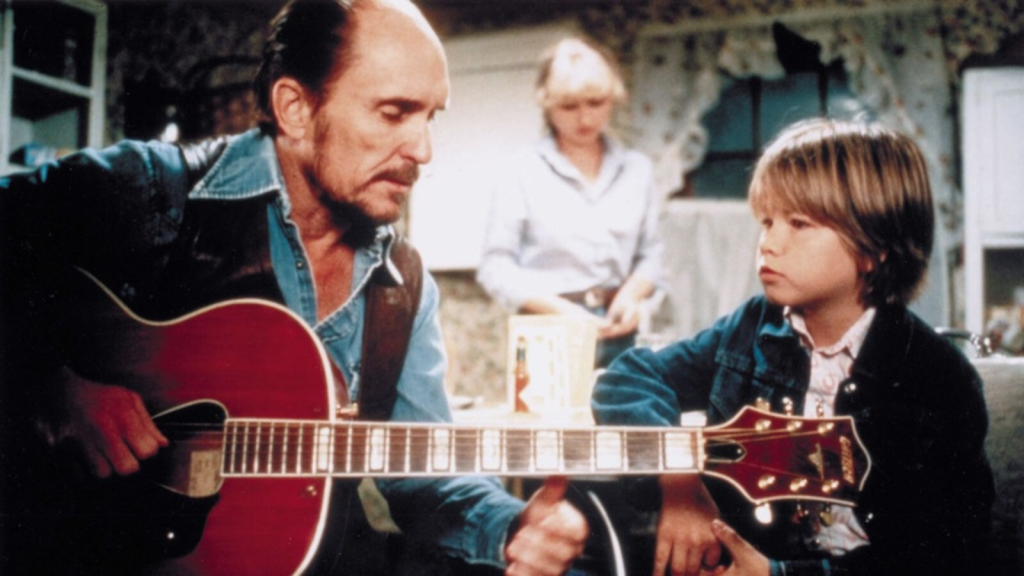
I don’t believe Rosa Lee has any idea at first that Mac used to be famous. Neither do we, until a reporter shows up sniffing around the motel, played by all-purpose ‘80s movie asshole Paul Gleason. Later on, we’ll meet a local band fronted by Twin Peaks’ agoraphobic greenhouse guy Lenny Von Dohlen. They grew up listening to Mac Sledge records and appear to be in dire need of a mentor. Mac’s new life with Rosa Lee and her boy little Sonny is so precious and idyllic, his sobriety so precarious, we can’t help but fret over every little intrusion of his past, knowing how easily all this could collapse.
But there must come a reckoning at some point. Mac’s ex-wife is a popular country star played enthusiastically, if not entirely convincingly, by Broadway diva Betty Buckley. (Tender Mercies was shot around the same time she originated the role of Grizabella in Cats.) The two had a daughter, now a teenager played by a young Ellen Barkin. (Hilariously, Barkin had just told her agent to turn down any more troubled teen roles “unless the movie starred Robert De Niro, Robert Duvall or Robert Redford.”) Their faltering reconciliation doesn’t go as expected. Not much in the movie does.
It is a gentle and humane film, keeping a respectful distance from its characters’ suffering. Australian director Beresford might seem an odd choice for a movie about American country music, but he connects with the loneliness of these landscapes, making Texas look like the Outback. He and Duvall frequently butted heads – the actor could be awfully tough on his directors – with Beresford at one point ending an argument by walking off the picture. Duvall had to fly to New York City and coax him back to Texas to finish the film. Beresford’s smartest move is to play the film’s emotional climax entirely in a faraway wide-shot. Any other director would have pushed in for some big, teary-eyed, Oscar-clip closeups. Instead, we’re allowed us to observe the smallness of these characters and their body language against the vast Texas sky.
Tender Mercies was not a hit at the box office, and never played in more than 37 theaters. But it found an audience on cable and home video. Anyone who grew up with HBO will tell you it was fairly inescapable. (Between Tender Mercies and The Great Santini I think Duvall was on TV every day afterschool when I was a kid.) 2009’s Crazy Heart, which won an Oscar for Jeff Bridges, was for all intents and purposes a more facile reworking of Tender Mercies, complete with Duvall in a supporting role as a sort of benediction. Tess Harper, who might have the trickiest part in Tender Mercies, basically reprised her role as the understanding wife to a haunted Tommy Lee Jones in No Country for Old Men.
Not a lot of performers can pull off straight-up, unadorned decency the way Harper does here without becoming a cliché. Rosa Lee is not a plaster saint but just a good person, and the most powerful dialogue exchanges in Tender Mercies are when people pause for a moment and really think before answering a question. The most moving lines in the picture are simple affirmations like “Yes, I do” or “Yes, he is.” Is that a lot harder than it sounds? Yes, it is.
“Tender Mercies” is streaming on Tubi, Plex, and Hoopla.