Sean Burns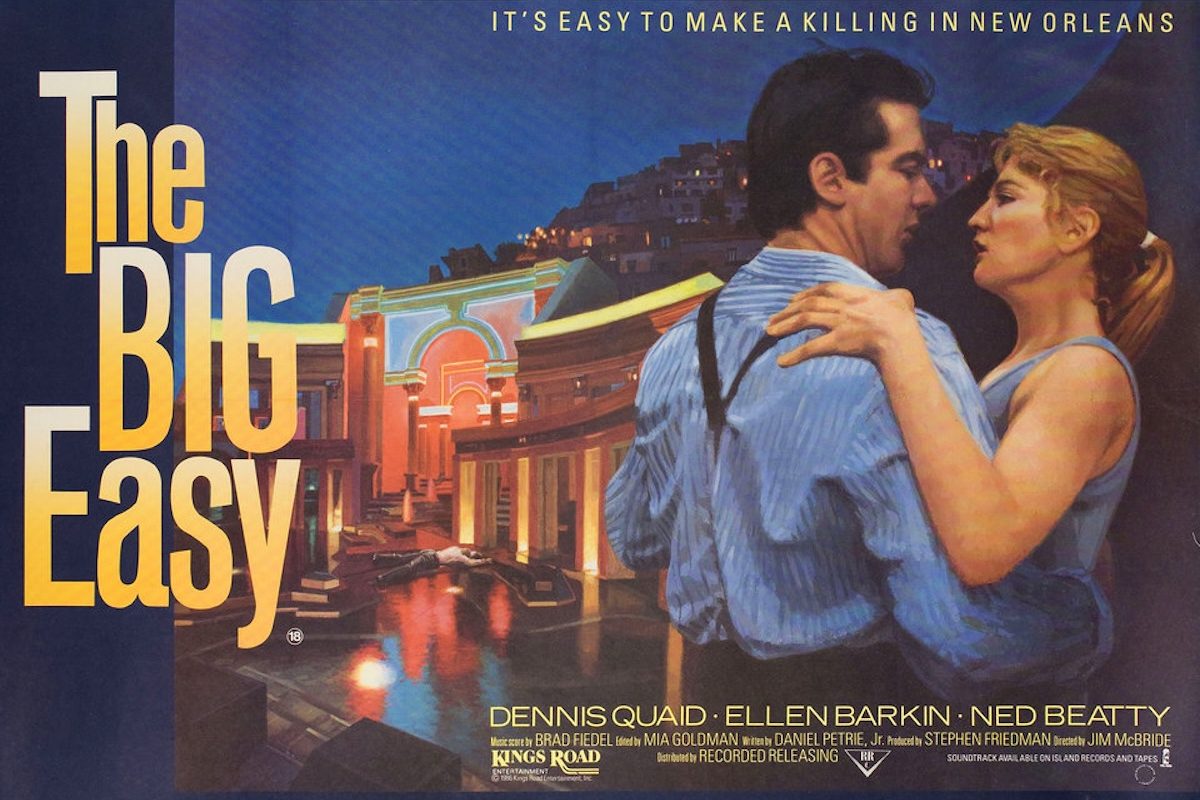
It’s tough to think of a film more defined by its setting than Jim McBride’s The Big Easy, which takes not only its title from New Orleans’ naughtiest nickname but also its steamy swagger and insouciant Cajun spice. How hilarious then that screenwriter Daniel Petrie Jr.’s original spec script was called Windy City and set in Chicago, presumably containing crummier weather and fewer crawfish boils. It was director McBride’s idea to add the gumbo, freshening up a familiar police corruption story with a ton of local flavor. Luckily, Petrie Jr. was already accustomed to radical rewrites, as his previous picture Beverly Hills Cop started out as a vehicle for Sylvester Stallone.
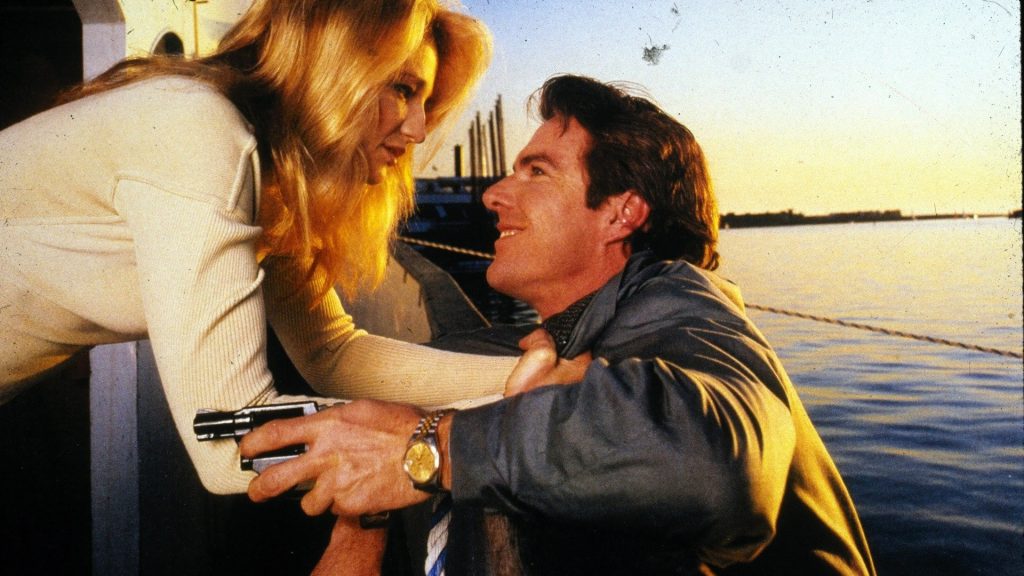
The plot is something of an annoyance anyway in The Big Easy, with nonsense about a mob war and stolen heroin continually interrupting the nuclear-grade chemistry between Dennis Quaid’s cheerfully bent cop Remy McSwain and Ellen Barkin’s uptight Assistant District Attorney Anne Osborne. Half-Irish and half-Cajun with one of the most ridiculous accents ever heard in an otherwise great performance, Remy’s a boyishly adorable peacock with an infectious, megawatt grin. He’s one of those guys who’s always having more fun than you, breezing through life as if the consequences of his actions never occurred to him.
The all-business Anne just arrived from “out of town.” She’s appalled by how flagrantly Remy and the rest of the force accept free meals and other such “perks” of the profession. The character would be a by-the-book buzzkill if she wasn’t played by Ellen Barkin, whose almost comically carnal screen presence helped kickstart puberty for an entire generation of latchkey kids watching cable when their parents weren’t home. It’s a good laugh casting such a natural born sexpot as a shrinking wallflower who wears big, clunky glasses, and Barkin plays the incongruity to fine comic effect. Anne stumbles into the furniture like trying to keep a lid on her libido is making her klutzy, spending scenes literally clutching her pearls.
“Nice neck,” appraises Remy the first time he lays eyes on her. The way Quaid and his dodgy accent chase Barkin around the office sometimes suggests we’re watching a cop drama starring Pepe Le Pew. McBride stages the police station scenes with screwball flair. Detectives banter exposition back-and-forth while playing keep-away with a fellow officer’s toupee, then a cop played by Lisa Jane Persky puts on her boss’ sunglasses and sidles up on his desk like someone out of a 1930s newspaper comedy.
The movie wastes no time getting Quaid and Barkin into the sack together, then interrupts them so we spend the rest of the film wanting to see these two finish what they started. Their first tryst is one of the most justifiably legendary from a decade of sexy thrillers. Unlike the strenuous aerobic exercises that were the norm, this one’s playful and funny. The lovers are hot, bothered and clumsily half-clothed. (What Barkin does for men’s button-down shirts in this film cannot be overstated.) It was exceedingly rare even then for an American movie to make sex look like this much fun.
There’s some typically fine work from Ned Beatty as Quaid’s crooked captain and mentor, who in an Oedipal twist also happens to be romancing Remy’s widowed mom (Grace Zabriskie, warming up the incomprehensible Cajun accent she’d use again in Wild at Heart). Beatty was never better than when playing avuncular men hiding secret shames, and he’s got a doozy of a scene here when all his misdeeds finally come to light. John Goodman has an early role as one of Remy’s wisecracking detectives, and in retrospect it seems like Beatty is passing him the torch for indispensable character actors who sweat a lot and are built like that.
Hambone Charles Ludlam has a grand old time as an amoral defense attorney, and watch for cameos by New Orleans royalty: soul legend Solomon Burke shows up as a Creole crime boss who goes by the exquisite name of Daddy Mentions, while real-life district attorney and conspiracy kook Jim Garrison appears as a judge, four years before he was played by Kevin Costner in Oliver Stone’s JFK.
The Big Easy was the first movie ever sold at the Sundance Film Festival. Robert Redford liked it so much he bragged about personally dragging Columbia Pictures head David Puttnam to a screening. The way Siskel and Ebert raved about The Big Easy you’d think it reinvented a genre, instead of just juicing up a boilerplate police story with sex appeal and local color. Truth be told, I’ve always been a little bored by the film’s third act descent into TV cop show cliches.
But there’s a delightful missing scene that McBride removed before the home video release, a frisky and more appropriate epilogue that clarifies the characters’ decisions instead of just slamming us straight into the happily-ever-after closing credits. It seems strange that someone looks at this movie and decided it should have less of Barkin and Quaid’s chemistry.
“The Big Easy” is streaming on Amazon Prime, Hoopla, and several ad-supported services.