Marshall Shaffer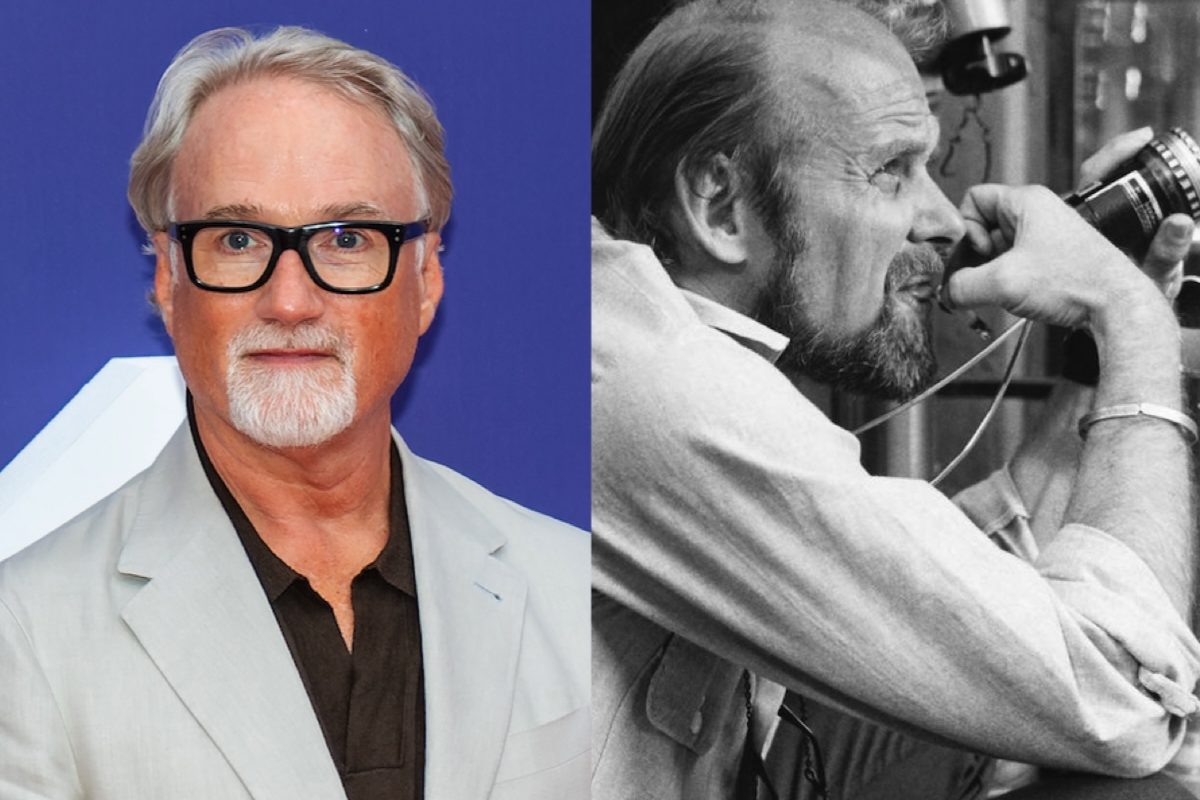
“Can SONY market a ONE MAN SHOW (?)” wrote David Fincher in an email uncovered by the 2014 Sony hack, regarding his excitement about Aaron Sorkin’s Steve Jobs script. “Can you guys make the LENNY of it all, the MUST SEE?” This reference to Bob Fosse’s 1974 film Lenny (whose restoration receives a spiffy 4K disc from the Criterion Collection this month) proves a revelatory window into Fincher’s mind.
The late multihyphenate has seen his legacy on the upswing even beyond the Criterion canonization. This reappreciation has recognized Fosse’s work, such as IndieWire naming his All That Jazz the best film of the 1970s last year. And it’s also shone a spotlight on the man, most notably through FX’s acclaimed miniseries about his up-and-down relationship with life and creative partner Gwen Verdon in Fosse/Verdon.
But Fincher’s been a consistent, continuous admirer in ways that are not always recognized. “I’m a big Fosse guy,” Fincher told a Film Independent event in 2014. “I don’t think the guy made a bad movie.” He backs that admiration up in his own work, most notably an extended homage to All That Jazz in his music video for Paula Abdul’s “Cold Hearted.”
Yet the ties run deeper than surface-level homage. As a teenager working in a movie theater projection booth, Fincher claims to have seen All That Jazz 175 times. Fosse is the only director who has multiple films in Fincher’s list of all-time favorites. And, it should be noted, Fincher was among the long list of directors approached to tackle bringing Fosse’s Chicago to the big screen during its long development process in the 1990s.
The kinship between Fosse and Fincher is as much a spiritual one as an overtly stylistic connection. Both men arrived in Hollywood through side doors, honing their craft through other media and disciplines that would form their distinctly calibrated sense of spectacle and rhythm alike. Fosse was a creature of the stage who excelled as an actor, choreographer, and director in the heyday of the American musical. Fincher, on the other hand, began his career in visual effects before cutting his teeth on the nascent form of music videos (as well as some slick commercials).
Having to break down movement into its discrete components forged a relentless perfectionism in both men. This exact and exacting compulsion recurs in everything from the craftsmanship to their characters. “He’s ruthless with his characters,” Fincher observed of Fosse in terms that could just as easily apply to the pitiless precision of his own filmography. “They’re amazing, and they’re watchable, and they’re disgusting.”
It’s unfortunate that in Fosse’s sixty years on earth, he only managed to make five films. One cannot help but sense that, with more time, he could have left as big a footprint on American filmmaking as he did on the theater. But in looking at this all-too-slender corpus in conjunction with how it might have inspired some of Fincher’s own work, tandem analyses reveal how Fosse’s influence has slyly percolated through contemporary cinema.

Sweet Charity (1968) / Gone Girl (2014)
It’d be hard to point to any film from the notoriously hard-edged Fincher that might be able to share the ending title card of Sweet Charity and declare a character “lived … hopefully … ever after.” Fosse’s directorial debut, adapted from the Broadway show he helped conceive for the stage, certainly sands down some of the more blinkered optimism of its source material, Nights of Cabiria. The world-weary titular prostitute of Federico Fellini’s melodrama becomes a happier-go-luckier New York dancer-for-hire in this movie musical.
But past the razzle-dazzle, there’s still a strong sense of streetwise wile in Shirley MacLaine’s Charity that recalls a clever operator in Fincher’s work. The master of manipulation in Gone Girl, Rosamund Pike’s Amy Dunne, offers an intriguing contrast to Sweet Charity. Her journey to settle tentatively into the confines of marriage operates in a more sinister and sardonic register than Fosse’s sincerity. Yet each illuminates their director’s clear-eyed view of how women must craftily evade and exploit the lusty male gaze to achieve the safety and security for which they will scrappily fight.
Cabaret (1972) / Fight Club (1999)
On their faces, Cabaret and Fight Club might seem like odd bedfellows. The former is a screen adaptation of a Broadway musical featuring the beloved queer anthem “Maybe This Time.” The latter is a satirical (an aspect its biggest fans often miss) primal scream of pent-up male aggression whose poster always adorned the dorm room walls of the worst guy you knew.
But Fincher and Fosse’s films each, in their way, convey the allure of liminal spaces to explore submerged desires. Be it the established Kit Kat Club or the impromptu Fight Clubs, denizens of an otherwise wealthy society escape to the shadows and explore still lingering tensions about identity and self-worth through garish displays of sexuality and violence. Prosperity can only go so far to paper over the emotional poverty of a population whose deeper psychological wounds are left to fester under the withering light of wealth.
As Liza Minelli’s Sally Bowles and Edward Norton’s unnamed narrator commit to total immersion in these totalizing environments, their films gradually reveal the destabilization of the world around them. Be it Berlin’s capitulation to Nazism or the demolition of a city’s skyline, Fosse and Fincher recognize the frightening ends of a culture that cannot work through its inner conflicts openly.
Lenny (1974) / Mank (2020)
Fincher didn’t get to make his Lenny with Steve Jobs after a fight over his fee, but he made sure to get it in on the next project. Mank chronicles the life of Citizen Kane screenwriter Herman J. Mankiewicz using the same non-linear approach of the author’s most famous work. More than just another biopic or behind-the-scenes saga, it’s a time-hopping psychodrama about an artist who pushed a form forward as personal demons pushed his own life backward.
Without Mankiewicz’s innovations to cinematic storytelling, a film like Lenny would not exist. Far from leaning on the Wikipedia summary-esque cradle-to-grave narrative that plagues most artist portraits, Fosse adopts a cubist approach to shaping his subject for an audience. Both directors embody the grand lesson of Citizen Kane in their work: the irreducibility of people and the impossibility of understanding them from a single perspective. Lenny and Mank chart similar trajectories for their iconoclastic artists, both of whom could see everything in the world with breathtaking clarity except themselves before succumbing to addiction.
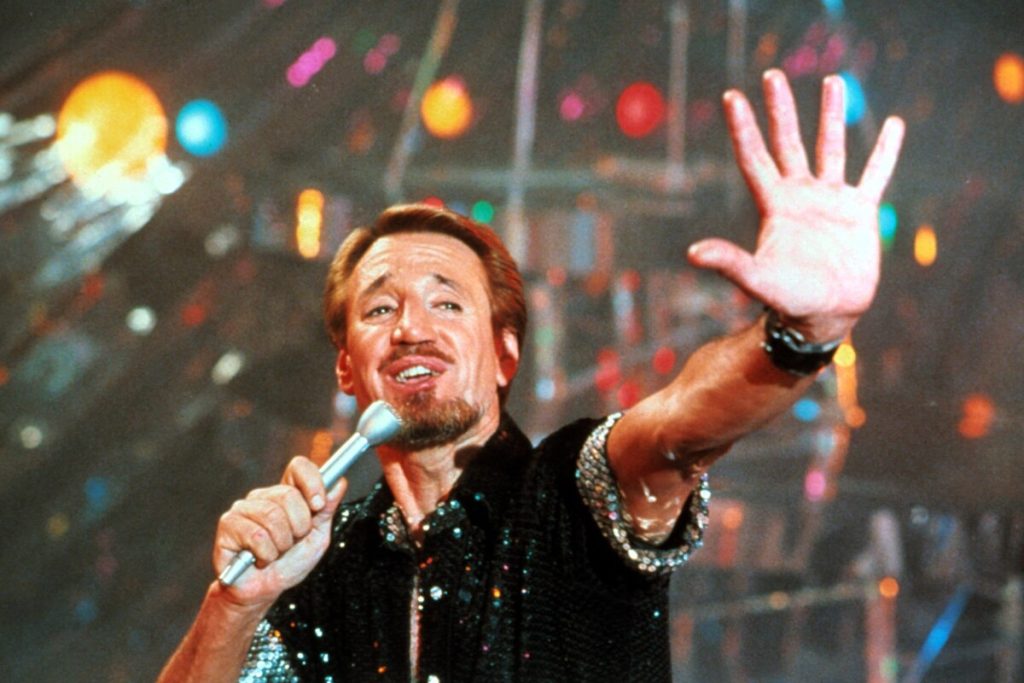
All That Jazz (1979) / The Killer (2023)
The one Fosse film that Fincher has spoken about with much detail is All That Jazz, Fosse’s auto-fictional tale of an overstretched artist whose failures to balance his personal and professional obligations exact a physical toll. “Bob Fosse never stops to debate why his doppelgänger Joe Gideon is driven to an early grave wrestling with a form of expression he is cursed to love,” Fincher wrote in an article for The Academy, “but he shows us everything through dance, and we cannot look away.”
Fincher performs a similarly styled self-autopsy in The Killer, albeit with a little bit more winkingly devilish humor. While Michael Fassbender’s titular hitman technically arises from a series of French graphic novels, the protagonist feels like a pure embodiment of the director’s mythologized public persona. Both are, in their own way, obsessed with getting one perfect shot. The Killer has an obsessive approach to his routines that he treats with the ascetic devotion of a monk.
But Fincher, like Fosse, can both recognize these demanding tendencies and step outside of them to critique their usefulness. The filmmaker’s irreverence has increased exponentially with age (ahem, taking shots when he lost during the COVID-era Golden Globes), and that impishness is on vibrant display in The Killer as he charts the character losing his touch and contemplating his failings. The film does with hilarity what All That Jazz does through heartbreak: reflects on what, if anything, all that slavish commitment to craft really does for a person.
Star 80 (1983) / The Social Network (2010)
“Star 80 is amazing,” Fincher professed back in 2014 – notably, before critical reappraisal had begun to turn the tide on the mixed-negative response to Fosse’s final feature upon its release. The film, which took a ripped-from-the-headlines tale of a murder-suicide involving Playmate Dorothy Stratton and her husband Paul Snider, feels like it has the most diffuse influence on Fincher’s work.
Squint, and you can see bits and pieces of it strewn throughout various works. For example, it’s easy to see some parallels to Zodiac, which also uses salacious murder as an epitaph for an era of mid-century sexual libertinism. The intense threat women face from societies built on their subjugation to men is a constant theme running through Fincher’s work, from Panic Room to The Girl with the Dragon Tattoo.
But the Fincher work that seems most directly in conversation with Star 80 is The Social Network, another dramatization of real-life events just a few years after they occurred. Facebook founder Mark Zuckerberg, at least in the film’s interpretation of history, lets his deep-seated sense of sexual inadequacy motivate his aggressive course of action in business. That’s not entirely dissimilar to Eric Roberts’ self-destructive Paul Snider, whose insecurity helps both make and undo Dorothy’s career. As each pursues an increasingly isolating path toward infamy, those observing their exploits function like a Greek chorus with their lamentations on how it all went wrong.
—
Many facets of David Fincher’s filmmaking – the fastidious compositions, the arch tonalities, the unsentimental direction of actors – have led cinephiles to see him as the second coming of Stanley Kubrick. But there’s just as much to be gained from thinking of him as a Bob Fosse disciple, despite how divergent their backgrounds and artistic output might appear. The curtain might have fallen too early on his brief career, but scrutinizing the work of his devotees demonstrates that the show has clearly gone on.