Kimber Myers
Queen at Sea begins with an aging couple shot from behind as they slowly ascend stairs on a walk. His left hand grips a cane, while her right grabs the handrail, but they hold hands in the middle. It’s a struggle, but they’re struggling together. We soon learn that this walk is a daily ritual for the husband and wife, but this is about as good as it gets for the spouses in this often grueling drama about the ethics and complexities of taking care of a family member with dementia.
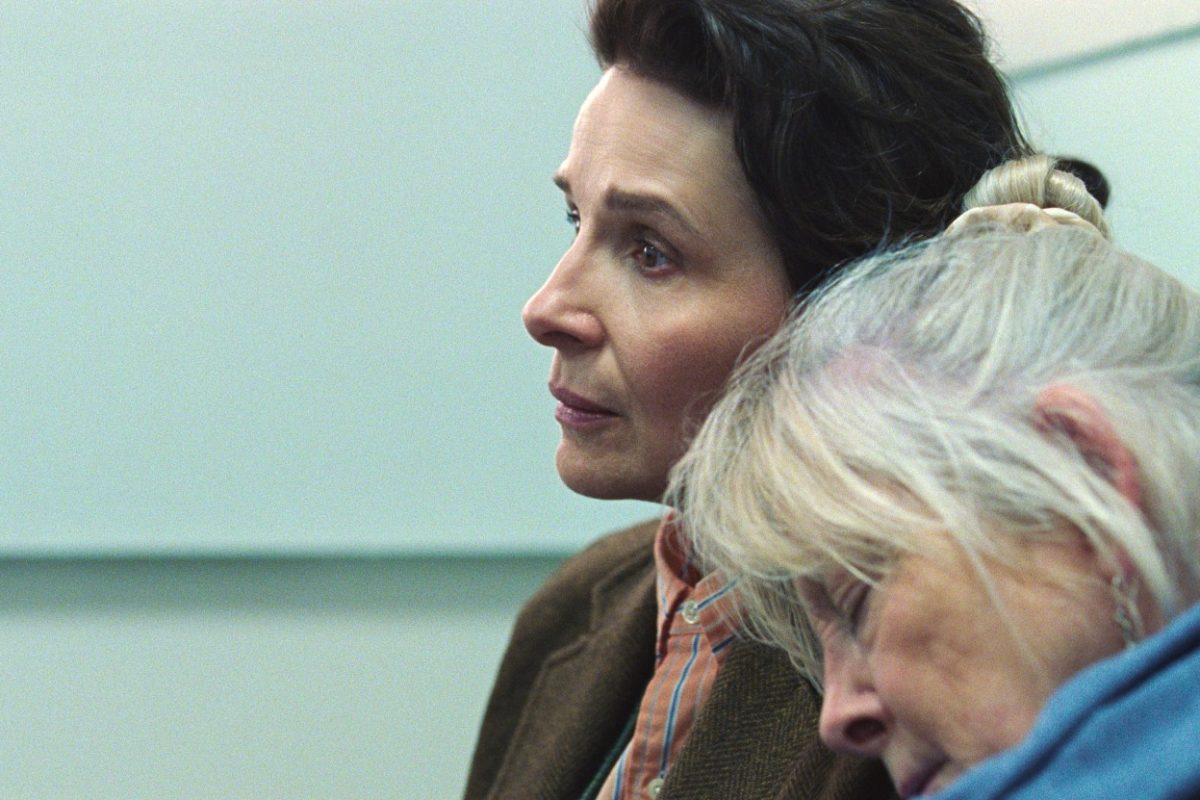
It’s a nightmare for all involved: Amanda (Juliette Binoche) sees her mother, Leslie (Anna Calder-Marshall), deteriorating and wants the best for her, especially since the aging woman cannot advocate for herself and bears only fleeting resemblance to the person she once was. Amanda finds herself at odds with her stepfather, Martin (Tom Courtenay), who is Leslie’s spouse and primary caregiver. Their marriage has changed as her condition has worsened, but Martin still sees intimacy as a key part of their relationship, particularly for his wife. It’s unclear to everyone who gets the final say in choices about Leslie’s life when she can no longer make them on her own. Writer/director Lance Hammer juxtaposes the challenges of Leslie’s dimming world with that of her teenage granddaughter, Sarah (Florence Hunt), who is experiencing the joys of her first love while her family is in turmoil.
Queen at Sea refuses to shy away from how incredibly shitty this is for families, but it also showcases striking moments of tenderness. It reveals all of the ugliness and sadness of what Leslie, Amanda, and Martin are going through, but there’s a profound sweetness in how Amanda and Martin each interact with Leslie. Sarah’s storyline of her burgeoning romance with James (Cody Molko) also brings balance to the film, as she is at the beginning of romance in her life while her grandmother is facing the end of hers.

Binoche is predictably great as the daughter who is torn over how to protect her mother, ostensibly reversing the roles they held in her childhood. Courtenay, who previously wowed audiences in a very different story of aging love in 45 Years, gives a heartbreaking performance as the husband trying to navigate this challenging stage of his relationship with his wife. I wasn’t familiar with Calder-Marshall before Queen at Sea, but she nails the role of a woman with dementia. Her looks of blankness, fear, confusion, and recognition are devastatingly precise, and they’ll feel familiar to anyone who has watched as a loved one fades away.
Cinematographer Adolpho Veloso earned an Academy Award nomination for capturing the expansive natural beauty of the Pacific Northwest in Train Dreams, but in Queen at Sea, he is limited to mostly interior shots of the family’s homes in England, while still relying on natural light. Train Dreams made beautiful use of golden hour, but the British light here is colder and grayer during the day, with lamps providing uneven illumination in night scenes. The approach adds to the sense of naturalism present throughout, and the gray tones reflect that none of the choices here are black and white. This is the reality for families every day, and the way Veloso shoots reflects the nuances of that experience.
This is Hammer’s first feature since his debut with 2008’s critically acclaimed Ballast, and it’s similarly affecting in its impact on the audience’s emotions. From a sample size of two, it’s clear that this director does not make movies that are easy to watch. Yet, Hammer has made a pair of films that reflect the difficult dilemmas of real life, with this one sitting alongside Amour and Vortex in its shattering depiction of how familial relationships shift toward the end of people’s lives, often in depressing ways.
B+
“Queen at Sea” opens Friday in New York and begins expanding nationwide on November 6.