Kimber Myers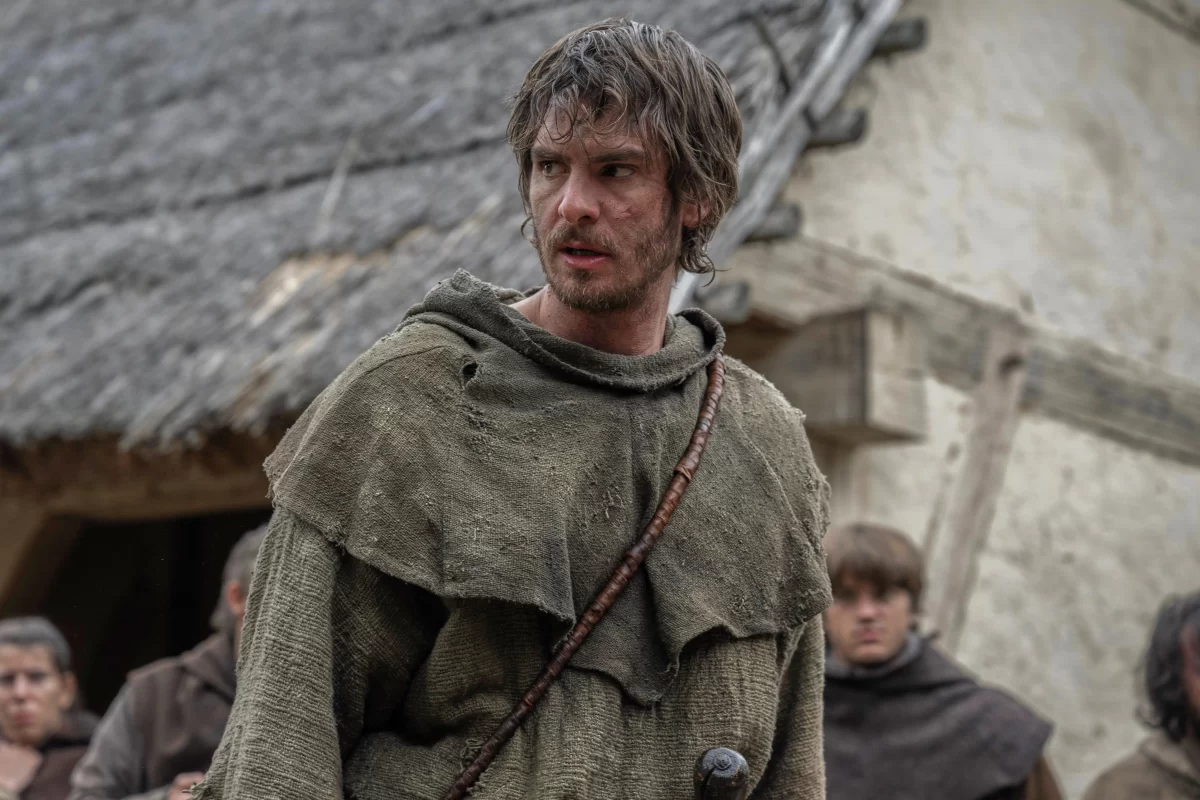
Is The Uprising an origin story for Robin Hood? It’s tempting to let this question—introduced recently into the movie’s marketing in the U.S., but pointedly not in the U.K.—override the text of the movie itself, which is ambiguous on the answer for most of its runtime. We don’t know for sure if our hero, played by Andrew Garfield, is Robin Hood because we never learn his name, but it is strongly implied by the end. “I am what I do,” he explains early on when questioned, asking to be called simply “Ploughman.”
Turning Paul Greengrass’s historical action epic into a Robin Hood movie might add interest to what is otherwise a pretty bleak story set in the 14th century, centering on a historical event that most American viewers probably don’t know that well. It also allows for a somewhat happier, more hopeful ending than whatever the real story behind the Peasants’ Revolt would’ve provided, given that it took more than a century after the film’s setting for serfdom to be abolished in England.
Yet even without the hook of the legendary hero, The Uprising is intended to feel relevant to contemporary audiences despite its setting in medieval England. After a plague upends life for the population, income equality is rampant. The people have had enough of the rich getting richer while they scrounge for scraps. The details might be different between 1381 and 2026, but the feelings of desperation and rage are the same.
With the country’s economy in peril, 14-year-old King Richard II (Woody Norman) is convinced by his corrupt council to tax the common people who are already struggling, rather than inconvenience either the rich merchants or the wealthy church. Between the tax and the indignities imposed upon these people (including public sexual assault under the guise of determining if young women are “of age” to be taxed), they rise up against their oppressors, with the spark lit by Ploughman. The cause is also led by the more famous Wat Tyler (Cosmo Jarvis) and priest John Ball (Jamie Bell)—who actually have names and are real historical figures—who begin a thousands-strong march to London so that the commoners can plead their case to their young king while taking a Fight Club approach to tearing down the system (aka burning all the records).
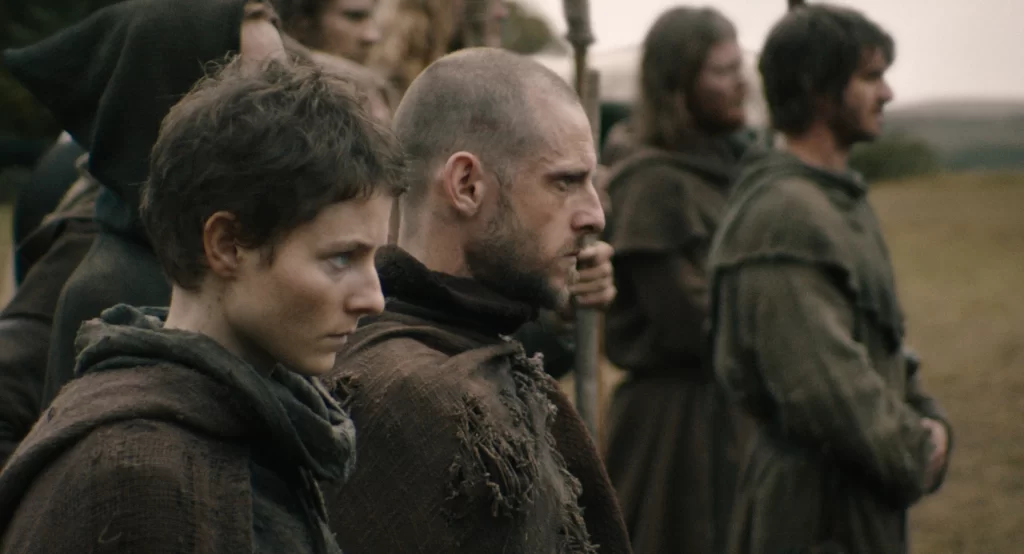
Whether you’re a British history buff, a Robin Hood completist, or simply someone who cares about economic inequality and feels like a revolt is the only answer at this point,The Uprising should have something to get you invested in its story. Yet outside of the battle scenes, it’s strangely difficult to be emotionally engaged. Greengrass employs his standard shaky cam, which should feel fresh in this medieval setting, where most movies have been shot more formally. Unsurprisingly from the director of the Jason Bourne movies, his style works best in the action set pieces, lending a sense of immediacy and urgency to the proceedings and matching the sense of chaos running rampant as the marchers turn into a mob. However, it’s distracting in dialogue-driven scenes, and it disconnects you from the pain and anger felt by these characters, which is based on real pain and anger felt by people centuries ago.
The Uprising grows more didactic and obvious as it goes along, with its approach toward its characters and their plight feeling more ham-fisted in its final moments. In an era where plenty of people don’t need to be convinced of the evils of economic inequality, The Uprising works too hard to establish the righteousness of the cause and its relevance to the 21st century. It almost winks at the camera when someone in the movie says, “no kings,” except that this is a very serious movie and there is no winking to be had. Like Michael Sarnoski’s The Death of Robin Hood from earlier this year, this take on the beloved figure removes the fun present in so many adaptations of the legend. This isn’t necessarily a bad thing—and likely more accurately reflects the reality of the era—but it feels like the same tired approach to classic characters where a writer takes a beloved hero and simply makes it dark.
There’s not much to most of these characters beyond that darkness. Garfield’s Ploughman is sad and angry, fueled by the death of his family in the plague. Bell’s John Ball is mostly just angry, driven by a desire to see not only a better world for the common man but also justice meted out for those responsible for their plight. Jarvis’s Wat Tyler is also angry, compelling others around him to be angry as well. Thomasin McKenzie has a supporting role as Alyce, another of the marchers, and she is extra angry and bloodthirsty. Those in power played by Stephen Dillane, Tom Hollander, and Jonny Lee Miller are appropriately villainous, but beyond some solid performances—and a good mustache on Miller—they’re not super distinguishable beyond their desire to keep their positions, their money, and their heads. As the king’s mother, Katherine Waterston gets perhaps the most nuanced, complex role as she struggles with watching how her young son handles leading his country.
The Uprising is not without its merits; it’s capably and competently made from almost every angle. I’d normally argue for seeing any halfway decent film that isn’t a standard adaptation, remake, or part of a franchise, simply because we need more original movies. Yet it plays like Greengrass is just taking a well-worn page out of the superhero playbook: refreshing a character by telling his origin story and applying it to something more serious, trusting neither the strength of his story nor the intelligence of his audience.
C+
“The Uprising” is in theaters this weekend.