Craig D. Lindsey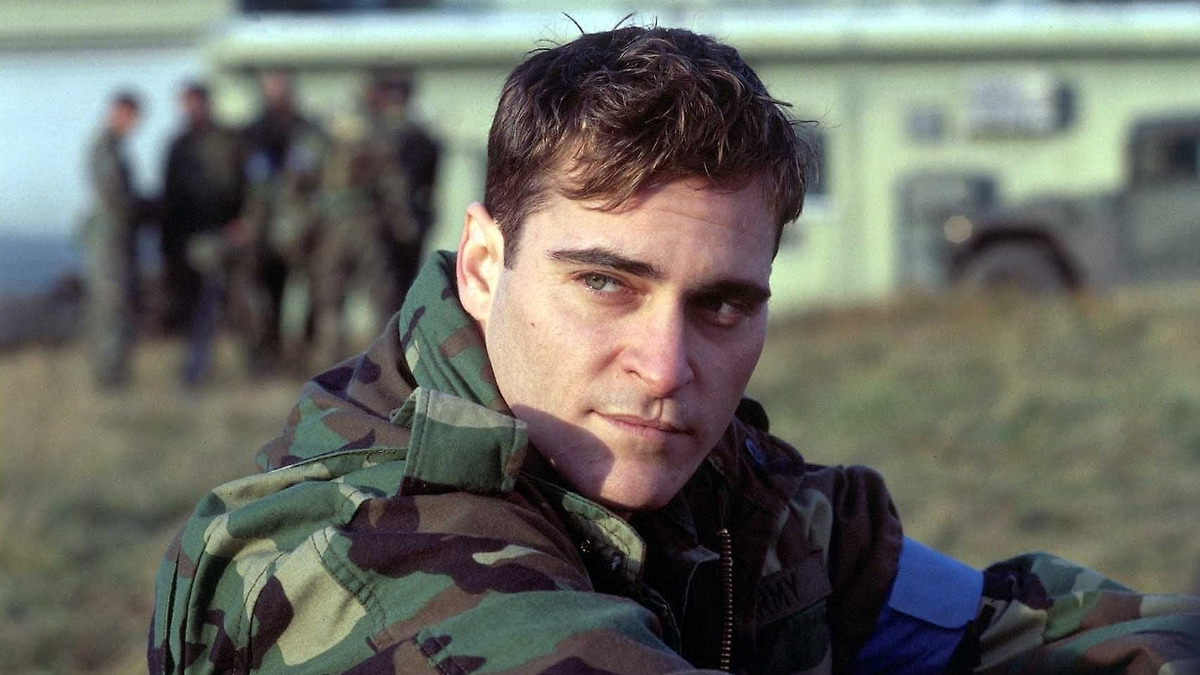
Welcome to Harvey’s Hellhole, a monthly column devoted to spotlighting the movies that were poorly marketed, mishandled, reshaped, neglected or just straight-up destroyed by Harvey Weinstein during his reign as one of the most powerful studio chiefs in Hollywood. As we commemorate the 25th anniversary of 9/11, let’s look back at how Harvey and them went into crisis mode when they had some ill-timed films on their schedule.
The terrorist-fueled decimation of the World Trade Center that took place on the morning of Tuesday, September 11, 2001, shook this country — and the world — to its core. For Harvey Weinstein, it fucked up his entire fall.
The day the Twin Towers fell, Harvey and his Miramax disciples were at the Toronto International Film Festival, showing several of the movies they had lined up for the next few months, including future Best Picture nominee In the Bedroom and Amelie, which won the fest’s People’s Choice Award that year. But, while New York was dealing with disaster on a nation-changing scale, Weinstein was stuck in Toronto with the last thing America needed at that time: a movie that made the U.S. military look like a bunch of assholes.
Three days before, the fest screened Buffalo Soldiers, a jet-black satire starring Joaquin Phoenix as a U.S. Army supply specialist in late-‘80s West Germany, engaging in black marketeering, drug cooking, and other amoral acts before the Berlin Wall fell. Australian co-writer/director Gregor Jordan’s chaotic-evil adaptation of Robert O’Connell’s 1993 novel became a military-slamming albatross for Weinstein once 9/11 happened. He knew its less-than-flattering portrayal of American soldiers (which includes Scott Glenn as as vicious, Vietnam-vet first sergeant and Idris Elba and Michael Peña — both baby-faced — as fellow military miscreants) would most likely rile up all the troop-supporters.
One of them certainly caused a ruckus when Soldiers screened Sundance a year and a half later. During the post-screening Q&A, an irate woman slammed the film for being “anti-American and anti-Army,” hurling a water bottle at the screen as she was escorted out. After several release-date delays, Miramax eventually dumped the $15 million Soldiers into theaters later that July, where it died a slow, quiet death at $2.3 million worldwide. (It made a pitiful $354,421 around these parts.) It would be just one of many films Harvey and them had trouble releasing post-9/11.
Back in New York, Weinstein decided he wasn’t gonna let some pesky terrorist attack stop him from debuting the latest Miramax crowd-pleaser. Just a few weeks after the tragedy, Weinstein held a hoity-toity premiere for Serendipity, a Big Apple-based rom-com (which I’ll thoroughly get into during the next New Christmas Canon run) that was supposed to premiere at Toronto. Director Peter Chelsom remembered how Weinstein got his patriotic bluster on for the audience: “I remember his speech, quoting Churchill and saying, the best defense is to live well, and that was a very, very different context.”
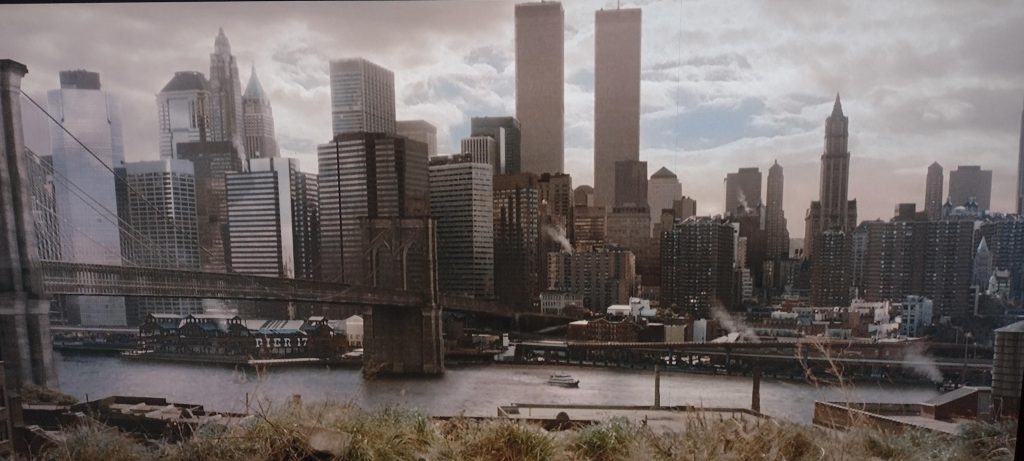
Weinstein went on a sanitizing tear after the attacks, scrubbing Miramax releases of anything WTC-related. He forced Chelsom to digitally remove the towers from the skyline shots in Serendipity, a move Chelsom eventually regretted. Weinstein tried doing the same thing with Martin Scorsese’s epic period piece Gangs of New York, which was postponed from its Christmas 2001 release due to its turbulent subject matter. He urged the director to remove the towers from its time-lapse closing shot. Thankfully, Scorsese wasn’t having it. “It had to end with [the modern skyline being built], or the movie shouldn’t have existed,” Scorsese once said. “The people in the film were part of the creation of that skyline, not the destruction of it.”
Weinstein’s funniest shelving was Bruno Barreto’s star-studded comedy dud View from the Top, starring prized Miramax possession Gwyneth Paltrow as an aspiring flight attendant. Scheduled for a December 2001 release, Weinstein held it back for fear it might upset the already-fragile airline industry. By the time it dropped in theaters a year and a half later, grossing a bit over half its $30 million budget, people barely gave it a second thought.
Weinstein also held on to The Quiet American, Phillip Noyce’s adaptation of Graham Greene’s 1955 novel, where a middle-aged British journalist (Michael Caine) and a young American idealist (Brendan Fraser) vie for the affection of a Vietnamese girl (Do Thi Hai Yen) in 1950s Saigon. Noyce and screenwriters Christopher Hampton and Robert Schenkkan stuck close to Greene’s novel, which stateside folk once deemed anti-American for its portrayal of U.S. agents orchestrating terrorist actions.
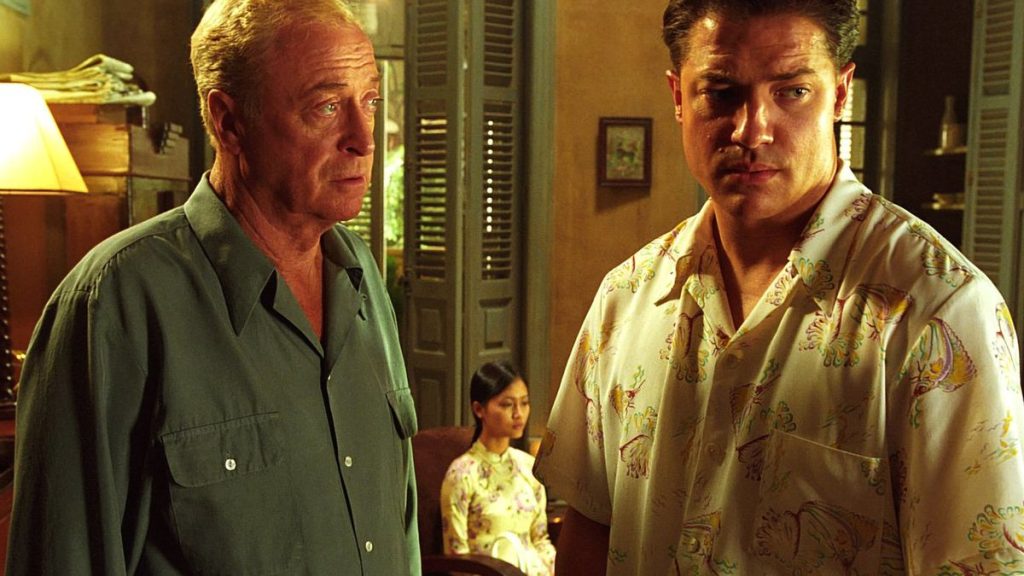
Miramax paid $5.5 million for the North American distribution rights, but put it in limbo when test screening audiences predictably found it unpatriotic. Interestingly enough, the film played the 2002 Toronto festival, where Caine hyped the film up to whoever was listening. ”He was a one-man band,” Noyce told the New York Times. ”I mean, I’d be sitting in a taxi with him and he’d be talking up the film to the driver.” American eventually received an Oscar-qualifying run (which got Caine an Best Actor nomination) before its limited release in January 2003.
But Weinstein’s most newsworthy post-9/11 mishandling was Fahrenheit 9/11, Michael Moore’s uber-critical 2004 documentary on the Iraq War the Bush Administration set off after the attacks. Even though the Weinsteins, who previously (and barely) released Moore’s 1997 doc The Big One, served as producers, picking up the film after Mel Gibson’s Icon Productions backed out, Disney forced them to drop the film.
Despite getting “through-the-roof” test-screening scores and the Palme d’Or when it debuted at the Cannes Film Festival, the Weinsteins eventually took the film over to Lionsgate Films (which previously released Dogma, another Miramax film Disney didn’t want). Since half the country was already in fuck-the-war mode, Fahrenheit went on to become one of the most successful documentaries of all time, hitting the number-one spot at the box office on opening weekend and ultimately grossing $222 million.
Taking a cue from his Disney boss Michael Eisner, Weinstein spent most of the early aughts making sure his Miramax film slate was stocked with safe, inoffensive fare, shelving films that might appear to be insensitive, problematic, or downright unpatriotic. Even when he and his brother moved on and formed The Weinstein Company, that pockmarked son of a bitch continued to traffic in films that garnered more awards than outrage.
All during this time, Harvey Weinstein thrived as not only a powerful Hollywood player, but a pillar of the New York community. However, out of all the tragic falls that brave city had to deal with in the first quarter of the 21st century, his was the most satisfying.
“Buffalo Soldiers,”“Serendipity,”and “The Quiet American” are available on Hoopla and Kanopy. “View from the Top” is over at Pluto TV. “Gangs of New York” and “Fahrenheit 9/11” are on Tubi.