Chelsea Spear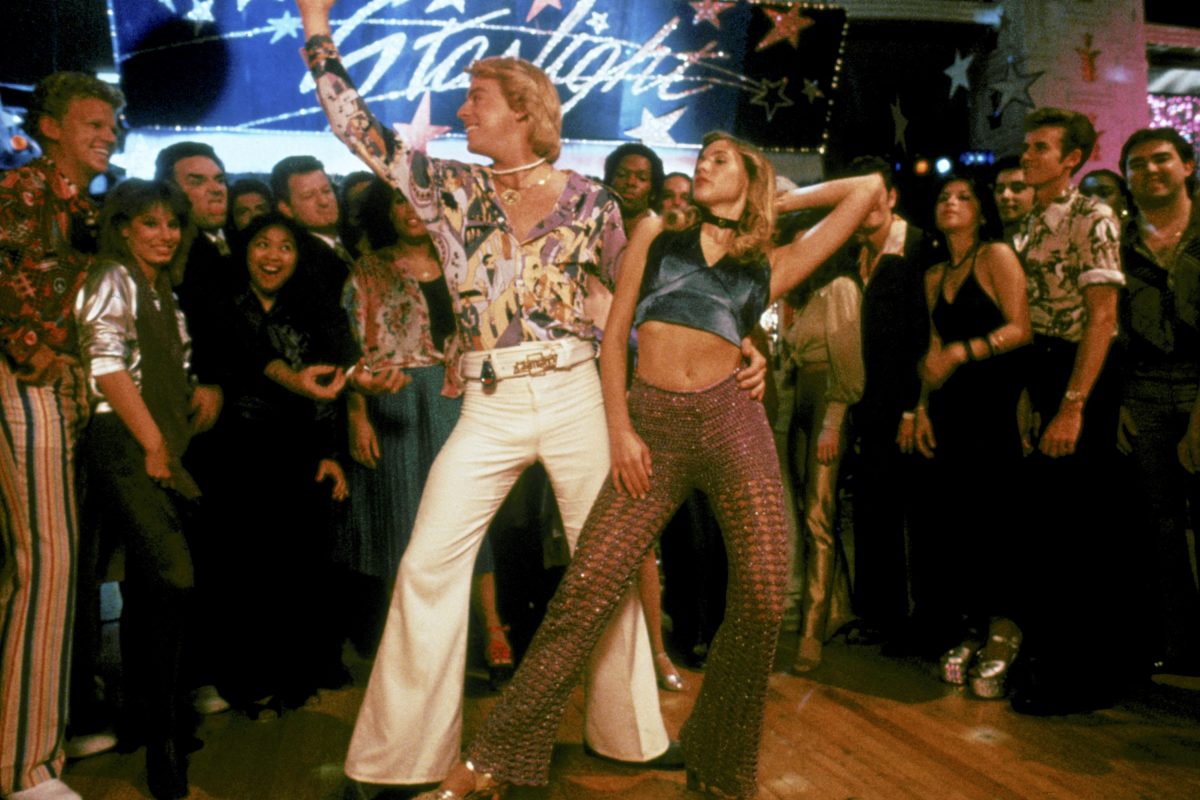
The year is 2176; the place, the United States. After a magnetic storm degaussed all recorded history, the US Constitution, the Bill of Rights, and even the National Anthem have been erased from national memory. An intrepid team of three mismatched time travelers are sent back to 1776 to retrieve the country’s founding documents. When the time machine runs out of fuel, however, the trio gets stuck in 1976, at the peak of Bicentennial fever.
And you thought Freedom 250 was a clusterfuck.
In the 1990 comedy The Spirit of ‘76, director Lucas Reiner and co-writer Roman Coppola attempted to kickstart the 1990s revival of 1970s kitsch culture. As a time capsule of a time capsule, the film has moments where you can see which nostalgic throwbacks to the Me Decade took root and which were discarded by the greater culture; as an early work by the children and siblings of New Hollywood royalty, it’s practically a home movie for the Gen-X nepo baby cohort, some of whom would develop stronger careers later in the decade. But does it work as a film?
Spirit of ‘76 opens in the gray dystopia of 22nd-century America. When the eldest member of the population (Carl Reiner, in a cameo that references The 2000YearOld Man) dies, the Ministry of Information (played by members of DEVO) send two of the government’s highest-ranking officials (Olivia d’Abo and Geoff Hoyle) back to 1776 with a wisecracking mechanic (David Cassidy), who is promised a lifetime supply of Tetrahydrozoline Hydrochloride so he can continue his mission. Unbeknownst to the crew, the time machine runs out of fuel in 1976, and the time travelers meet up with a pair of teenage stoners (Jeff and Steve McDonald of Redd Kross) to refuel, find the artifacts, and bring them back to their home time before the birth rate plummets.
In the late 1980s, American underground culture was at a bit of an impasse. New Wave had long since faded and college rock’s leading lights had graduated to major-label deals and theatre tours. While music was stagnating, independent film was starting to pick up speed with the box-office success of features like sex, lies and videotape and Slacker. While the 1970s revival hadn’t yet taken root in the public consciousness, some interest had begun to surface, with the release of Rhino Records’ Super Hits of the 70s: Have a Nice Day compilation series and with the long-running theatre series The Real Live Brady Bunch about to debut.
All the parts were in place for something like Spirit of ‘76 to become a cult hit. The film has about as period accurate a look as its small budget would allow; costume designer Sofia Coppola compiled a wardrobe of poorly fitting dacron and polyester clothing that viewers who survived the 1970s could probably feel… and smell. The production design worked best in smaller locations, where props like beanbag chairs, a Bicentennial Bong, and a wall of KISS posters that was probably sourced from the McDonald brothers’ collection can get their close-ups.
Reiner and Coppola’s screenplay gawks at 1970s phenomena like mood rings and streaking and expects audiences to say “Hey, remember this?” as though we’re all at the same run-down antiques mall. Plot points and characters wander into the film seemingly from different drafts of the script only to disappear with a shrug, and a subplot involving the teenage stoners’ rivalry with a science nerd (Liam O’Brien) seems like Reiner and Coppola’s attempt to make their own version of Bill and Ted’s Excellent Adventure.
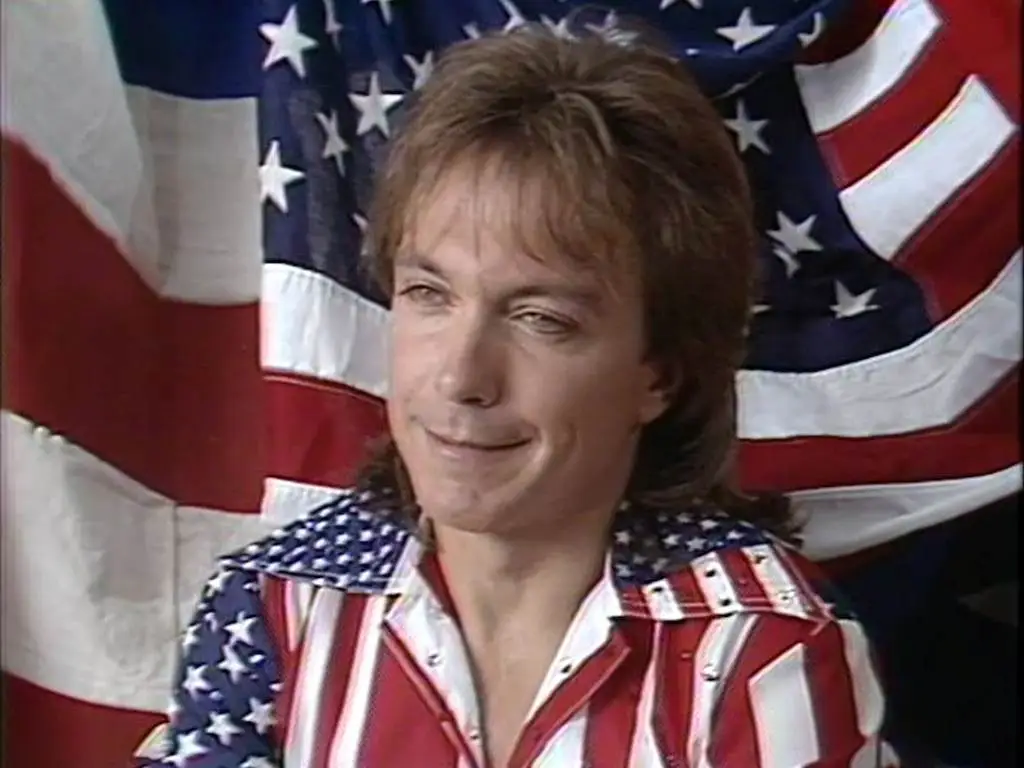
The film’s attitude towards 1970s curios extends to the casting, with era-appropriate icons like Moon Unit Zappa and Iron Eyes Cody making cameo appearances. Onetime teen idol David Cassidy is the biggest disappointment in the leading role. While he has flashes of bravado and moments of quick comic timing that suggest Jason Bateman, his more natural approach to the character doesn’t mesh well with the more stylized performances of the cast. (The fact that he’s frequently shot alone in close-ups, while everyone else appears in group shots, adds to this affect.) Jeff and Steve McDonald’s characters seem like the kind of kids who would listen to Redd Kross, and their wide-eyed facial expressions and thick San Fernando Valley accents are a comedic highlight.
In some ways, Spirit of ‘76 was a loss leader for the 1970s revivalism that would permeate the decade. It flopped on its initial release, and apart from a Rocky Horror-style run at the Nuart in Los Angeles, faded into basic cable obscurity as the decade progressed. The Brady Bunch Movie took Spirit of ‘76’s needle drop-driven celebration of 1970s kitsch culture and put it in a more coherent movie, while Dazed and Confused looked at the bicentennial from a more poignant perspective. Both Roman and Sofia Coppola would return to the New Hollywood-era well, Roman with the film-within-a-film CQ and Sofia with her dreamy debut feature, The Virgin Suicides.
Spirit of 76 is an interesting but mostly uneven snapshot of where late 1980s/early 1990s culture had been and where it was going. As a time capsule, it’s fun to see where some of this talent started, but as a movie…let’s just say that some time capsules don’t have to be reopened.
“The Spirit of ’76” is available for digital rental or purchase.