Kayleigh Donaldson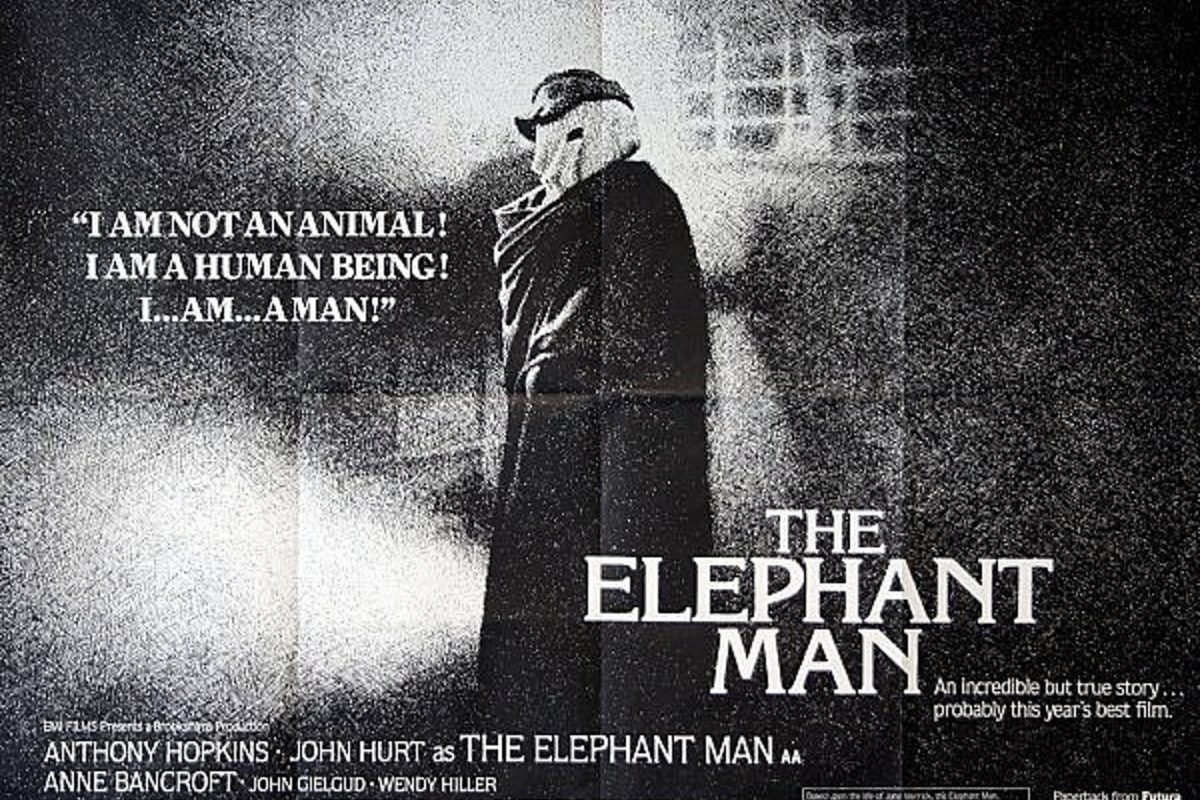
The passing of the legendary David Lynch in 2025 at the age of 78 elicited the kind of worldwide mourning that few artists could ever hope to inspire. The director’s work was so distinct, so uniquely the creation of one wild mind, that it birthed the entire concept of the Lynchian. Fans and critics, in their celebration of his legendary output, tended to (not unjustifiably) focus on those titles that most embodied the Lynchian philosophy: the suburban nightmares of Blue Velvet and Twin Peaks; the fevered surrealism of Eraserhead; the descent into an unreliable madness as embodied by Lost Highway and Mulholland Drive. The Elephant Man was viewed as an outlier, the most “normie” of the bunch, and an exception to the rule of Lynch. Now, as it receives a glorious 4K re-release from Criterion, there’s no better time to be reminded of the fact that this is a film thoroughly cut from the same cloth as the Lynchian dreamscape.
It is, admittedly, pretty nutty that Lynch was able to follow up Eraserhead with a studio movie, especially one as “respectable” as a biopic of Joseph Merrick, whose severe deformities led to him being exhibited in sideshows as the Elephant Man. But while this is structurally a familiar tale of overcoming adversity in the face of cruelty, Lynch’s take on this story is still imbued with the uncanny sense of the otherworldly that made Eraserhead so unique.
On its surface, this is a classy production: a Victorian-era period piece full of stalwart character actors in top hats. Anthony Hopkins plays Dr. Frederick Treves, a surgeon whose discovery of Merrick (John Hurt) in a “freak show” leads him to invite the man to his hospital for treatment and a chance to prove his autonomy. Certainly, it is one of Lynch’s more straightforward efforts, especially when compared to what came before and after. The lines between sleeping and awake are distinct, but there are still moments of the nightmarish that could have come straight out of Twin Peaks—from the openingimage of Merrick’s mother seemingly assaulted by a horde of elephants, a scene that plays as both surreal and sexually threatening.
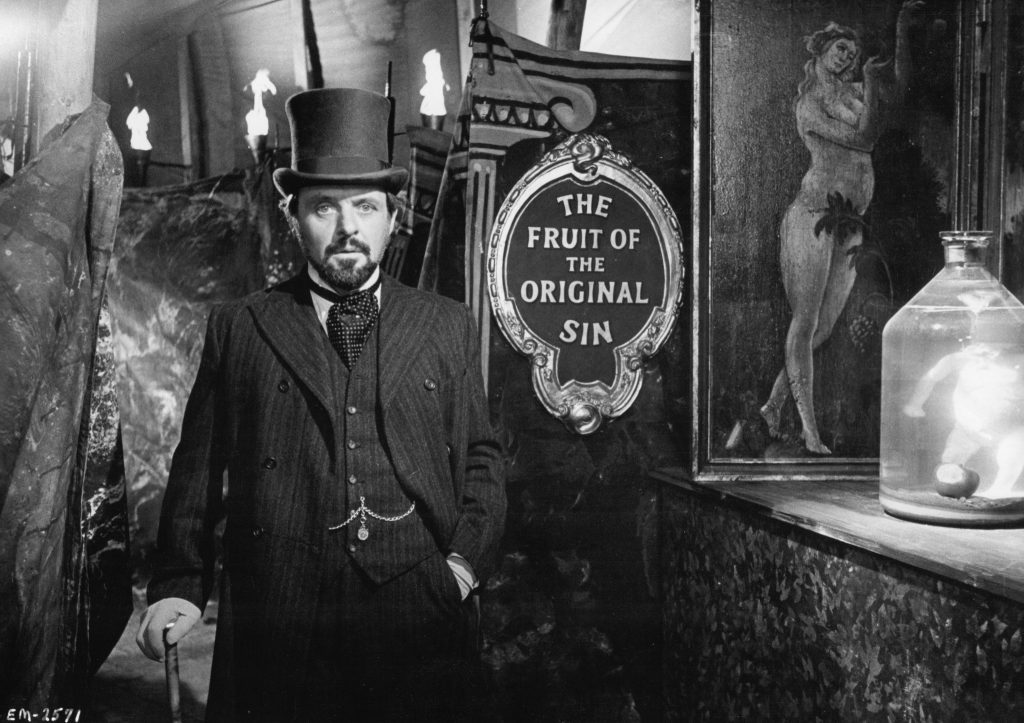
Within the circus, controlled by a drunken lout who berates him like a disobedient dog, Merrick is referred to as “it” and deemed to be dumb and intellectually disabled. Under Treves’s encouragement, he shows his ability to speak and read, expressing his creativity and eagerness to be integrated into polite society. But while he makes some friends among the supposed elites of society, he is no less gawked at or viewed as a biological mistake by the rich as he was by the poor. One hospital orderly charges cash for visitors to view Merrick in his supposed safe space. Even royalty comes to visit him for purposes of entertainment and curiosity. In that aspect, he’s a highly Lynchian protagonist: a man on the outside who realizes the “normals” are more rotten and monstrous than he.
Shot in stunning black and white by the legendary cinematographer Freddie Francis, The Elephant Man feels like a snapshot of Victorian London using a contemporary camera. It’s a grimy, grainy world on the verge of a new era, between past and future, and ready to progress by any means. This is the beginning of the Industrial Revolution, and with it has come bloody ramifications. Dr. Treves operates on workers who have been maimed by the machines that will change the way the world works, and he notes that these accidents have been happening more and more lately. “Abominable things, these machines,” he says. “But you can’t reason with them.” It makes for an unexpected twin to the industrial hellscape of Eraserhead, soulless and unreasoning. But it’s also the parallel to Merrick’s situation: that of a man trapped in a body that won’t stop evolving, even though it will eventually kill the inhabitant. The only film of Lynch’s not set in America (aside from Dune), The Elephant Man often feels like it’s unfolding in some alternate dimension, one of a nerve-shaking soundscape and foreboding threat.
Some skeptics viewed The Elephant Man as too sentimental, which overlooks just how earnest Lynch was. For all of his caustic takedowns of the suburban lies of white picket fences and rose gardens, he still unabashedly loved those things. He loved the coziness of Twin Peaks, even though it concealed undiluted evil. He believed in heroes like Dale Cooper, cornfed heroes who thought nothing of trying to do the right thing regardless of the cost. While there is an acidic aftertaste to Merrick’s declaration that he is happy to have experienced true joy and human interaction before he passes, it’s also a truth that Lynch wants to elevate. In the closing scene, as Merrick passes away, his mother returns to him in his dream to recite a Lord Tennyson poem. It is the send-off of a hero, devoid of irony and heralded by the ultimate cinematic outsider.
“The Elephant Man” is streaming on the Criterion Channel. Its Criterion 4K edition is out Tuesday.