Marshall Shaffer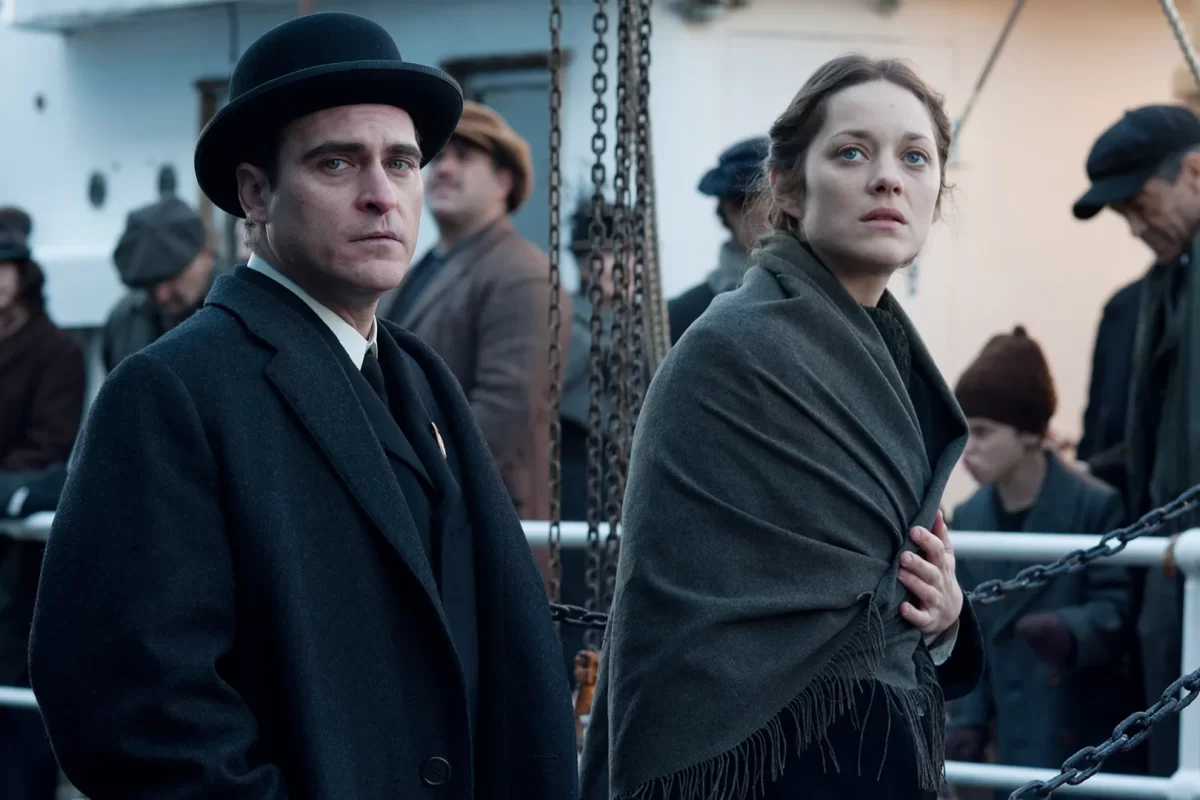
There are obvious factors that led to James Gray’s The Immigrant becoming something of a cult object and cause célèbre for those lucky enough to see the film during its all-too-brief original festival and theatrical run.
The reactions out of its Cannes premiere were polarized, with the British press in particular not responding to the naked emotionality of Polish immigrant Ewa Cybulska (Marion Cotillard) as she falls in with Jewish-American huckster Bruno Weiss (Joaquin Phoenix) upon arrival at Ellis Island. That was enough to convince Harvey Weinstein, who bought the film over Gray’s objections, to try and force a sentimental, Lifetime movie-style ending on this harrowing tale about the price exacted by the pursuit of the American Dream. In retaliation for the director sticking to his vision, a thwarted “Harvey Scissorhands” dumped The Immigrant with the barest of theatrical releases and shuffled it off to Netflix almost immediately after.
But there’s a less obvious vibe shift that has kept The Immigrant relegated to curio status despite the vociferous critical championing. Gray made a timeless period film about cycles of xenophobic marginalization at a time when the urgency of timeliness forced a lens of historicizing the contemporary upon his work. As the film bowed at Cannes, the dying embers of America’s last attempt at comprehensive immigration reform (led by Marco Rubio, what a time!) were emitting their last light. An age of isolationism and protectionism, channeled by Donald Trump’s billionaire populist rage, was on the way in.
The widespread adoption of “Immigrants, we get the job done!” from Lin-Manuel Miranda’s Hamilton as a rallying cry of the anti-Trump resistance speaks volumes about popular liberal attitudes. Pious platitudes took priority over seeing immigrants and refugees as people, reducing them to mere instruments of economic labor or worse: political point-scoring vessels. The rush for positive representation in recent years has ranged from perpetuating the “good immigrant” trope in Knives Out to valorizing their resilience in Minari.
But Gray refuses to flatten his characters with flattery in The Immigrant. There’s no inherent virtue in the title, which applies to both Ewa and Bruno. She’s just the one whose naivete shows more readily to the harsh world of 1921 Manhattan. As Ewa toils to save her sister from quarantine on Ellis Island, the access promised by Bruno leads her into a professional dependency that progresses to the point of prostitution. Despite Cotillard’s Falconetti-esque gaze that constantly turns wide-eyed toward heaven, Ewa is no one’s idea of a perfect, saintly victim. She’s actively complicit in the turn away from her fervently held Catholic values and toward whatever actions are necessary to reunite her family.
At an early encounter with some of the other performers in Bruno’s stable of women, Ewa hears of the three possible paths out of her situation. She could work for an exploitative but occasionally empathetic person like Bruno in exchange for the benefits he offers, find a white knight to rescue her, or steal. All of these present themselves in Ewa’s tenacious attempts to save her sister, yet The Immigrant never feels like some schematic disassembling of the American Dream. Gray gracefully balances a straightforward but sincere presentation of her plight with an unabashed melodrama, two modes that might mix like oil and water in the hands of a less assured filmmaker.

The portrait of America that emerges in The Immigrant is not entirely dissimilar from the cruel yet compassionate Bruno, the character whom Gray slyly elevates to the status of co-protagonist in the film’s final stretch. He’s the latest link in a chain of new arrivals to the country’s shores who might have acculturated but never fully assimilated. Like many frustrated characters in Gray’s filmography who feel boxed in by choices made in generations past, Bruno embodies how America’s broken promises of rugged individualism lead to painful choices and impossible moral compromises.
And yet rather than repeat the hollow chorus of those who came before her, Ewa eventually dares to sing a new tune for America – or just place its siren song in the proper key. By rejecting the conflict framing so often adopted by waves of immigrants forced to scrap for scarce resources, she comes to see Bruno as more than just her tormentor. He’s locked with her in a shared struggle for fulfillment in an unforgiving environment where the powerful benefit from keeping them in competition rather than cooperation.
It is only through recognizing that each must assume some responsibility and pain for the other’s mistakes that Ewa and Bruno can go their separate ways in the hope of salvation. After taking a beating from police officers on her behalf and metaphorically assuming her sins, Bruno releases Ewa from his tutelage so she can pursue a life out west with her sister. Despite his raw display of self-loathing being punishment, she takes the opportunity to lash out physically in anger once more – and then acknowledge his humanity in a blessing of forgiveness.
Gray crystallizes the spiritual connection between their respective journeys in a stunning final shot for the ages, visualizing the two characters leaving Ellis Island once more. They depart in diverging directions literally, yet a composited image captures something of an optical illusion similar to the film’s narrative sleight-of-hand. Ewa’s boat rows away through the window, while Bruno’s walk out gets captured in a mirror. Yet the eye sees what the soul recognizes by the conclusion of The Immigrant: these are two people whose journeys of salvation and redemption are moving in tandem.
Perhaps Paper Tiger, a Cannes premiere headed to theaters in November 2026, will be the film that finally renders moot a moniker given to James Gray by film critic Bilge Ebiri over a decade ago: “American cinema’s secret jewel.” But it’s not too late for cinephiles, as well as the American people at large, to heed the call of The Immigrant. This is more than just a mere masterpiece of tone and form. This clear-eyed look at the past can point a path toward a national future rooted in life, liberty, and the pursuit of happiness. The United States once declared these truths to be self-evident, but James Gray challenges the country to live up to the nation’s founding document and make its ideals of rebirth and renewal real.
“The Immigrant” is streaming on Kanopy, Hoopla, Fandango at Home, and The Roku Channel, and is available for digital rental or purchase.