Josh Bell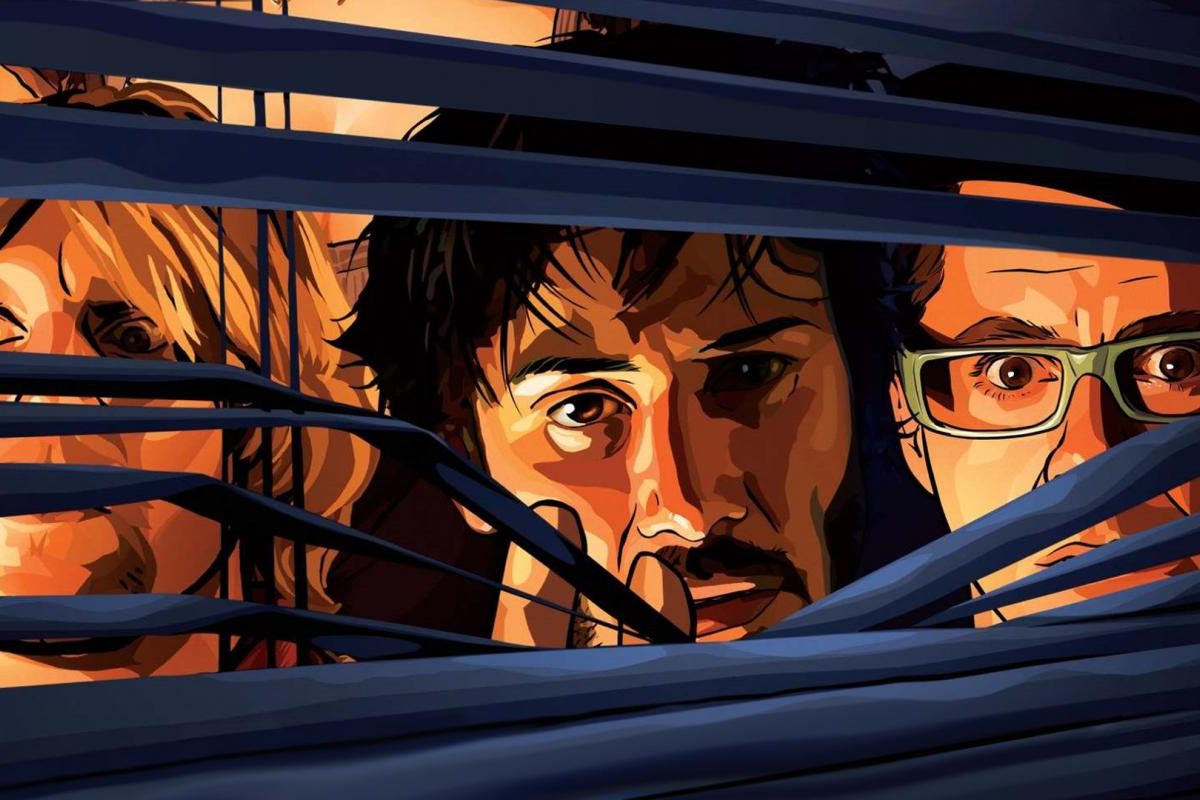
Anyone whose familiarity with the works of legendary sci-fi author Philip K. Dick is limited to cinematic adaptations of his stories would be forgiven for thinking that Dick wrote action-packed, large-scale futuristic adventures. Movies like Total Recall, Minority Report, Blade Runner, and Paycheck have turned Dick’s idiosyncratic prose into blockbuster entertainment, retaining only slight degrees of his haunted, existential perspective.
Richard Linklater took the opposite approach with his version of Dick’s 1977 novel A Scanner Darkly, released 20 years ago this week. There are no elaborate set pieces in Linklater’s film, no men of action racing to save the day. As in Dick’s novel, there are just a bunch of burned-out drug users, struggling to cope with their addiction to the fictional Substance D in the same way that Dick and his friends struggled to cope with their own addictions to nonfictional drugs in the real world. Set in Anaheim, California, “seven years from now,” A Scanner Darkly is science fiction, but only in the margins.
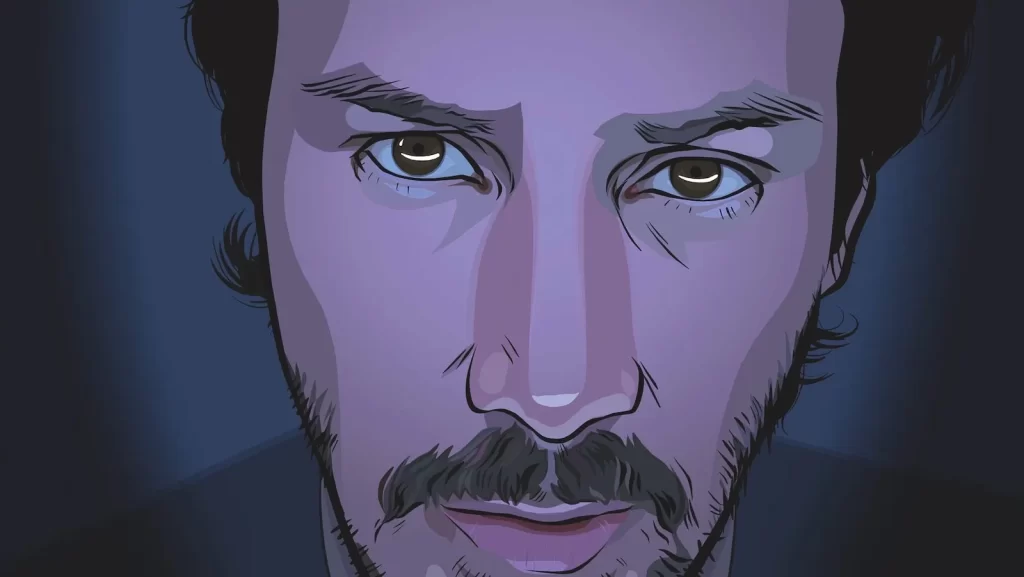
It’s also presented in the same jittery rotoscoped animation style as Linklater’s 2001 head trip Waking Life and his 2022 nostalgic reflection Apollo 10½: A Space Age Childhood. The fluid, rippling visuals fit perfectly with the off-kilter tone of Dick’s story, in which characters are never entirely certain of what’s real, or who they even are. That identity crisis is crucial for main character Bob Arctor (Keanu Reeves), who’s also known as Fred or Bruce depending on the circumstances. It’s tough to say which of those is his “true” self, since both Substance D and his own internal doubts have eroded his understanding of his own existence, both past and present.
Theoretically, Fred is an undercover cop working with the local sheriff’s department, posing as drug addict Bob Arctor in order to gather information on the Substance D supply chain. But he seems to be more himself when he’s Bob, crashing in a rundown house along with fellow addicts James Barris (Robert Downey Jr.) and Ernie Luckman (Woody Harrelson). Because Fred wears a “scramble suit” that distorts his image while he’s at work, none of his fellow officers actually know who he is, and he finds himself assigned to conduct surveillance on Bob, who’s a suspected drug dealer and terrorist.
That kind of irony, in which undercover officers are so embedded in the underground that all they can do is spy on themselves, reflects the justifiable paranoia that grew out of 1960s counterculture, but was just as relevant in 2006 when Linklater made the movie as it is now, two decades later. The government claims to be waging war on countries that supply the raw ingredients for Substance D, the same pretext that’s still used to authorize American military aggression. Surveillance has merely become more all-encompassing, and the ridiculous conspiracy theories spun by Bob’s associates sound entirely reasonable from a present-day point of view.
That doesn’t excuse the cameo from actual extremist ghoul Alex Jones (who made a similar appearance in Waking Life), but Jones’ street-corner ranting sounds mild compared to what he would later espouse in real life, and it contributes to the sense of the system closing in on people like Bob. Even being part of the system itself doesn’t exempt Bob from that persecution, and James’ attempts to become an informant are similarly futile. The truly powerful people exist so far above Bob and James that they will never even cross paths.
Dick and Linklater maintain a sense of humor about this bleak situation, and A Scanner Darkly is full of amusingly circular stoner logic, especially in a hilarious scene after James buys a bicycle of questionable origins. As Bob investigates his friends, himself, and his own investigation, the SoCal-set A Scanner Darkly fits in with the tradition of sunny dirtbag noirs, along with movies like The Big Lebowski, The Long Goodbye, and especially Paul Thomas Anderson’s take on Thomas Pynchon’s Inherent Vice.
Downey gives what made be his last truly uninhibited performance as the fast-talking, mean-spirited James, who doesn’t let his own drug dependence get in the way of taking advantage of his supposed friends’ addled states. Reeves and Winona Ryder bring wistfulness and melancholy to their portrayals of Bob and his love interest/surveillance target Donna Hawthorne, whose relationship is doomed on multiple levels.
“Don’t blame the drugs,” Ernie says when the group stops on the side of the freeway after Bob’s car has been sabotaged. Dick’s novel ends with a dedication to the friends he lost to addiction, and Linklater includes it at the end of the movie as well. This is a sympathetic portrayal of people on the fringes of society, in any past, present, or future moment.
“What does it say?” Bob asks his superior about the results of a test for the effects of Substance D on his psyche. “That you’re completely bonkers,” his boss responds, and Bob takes it in stride. That level of insanity turns out to be the only proper response to our continually insane world.
“A Scanner Darkly” is streaming on Kanopy and is available for digital rental or purchase.