Josh Bell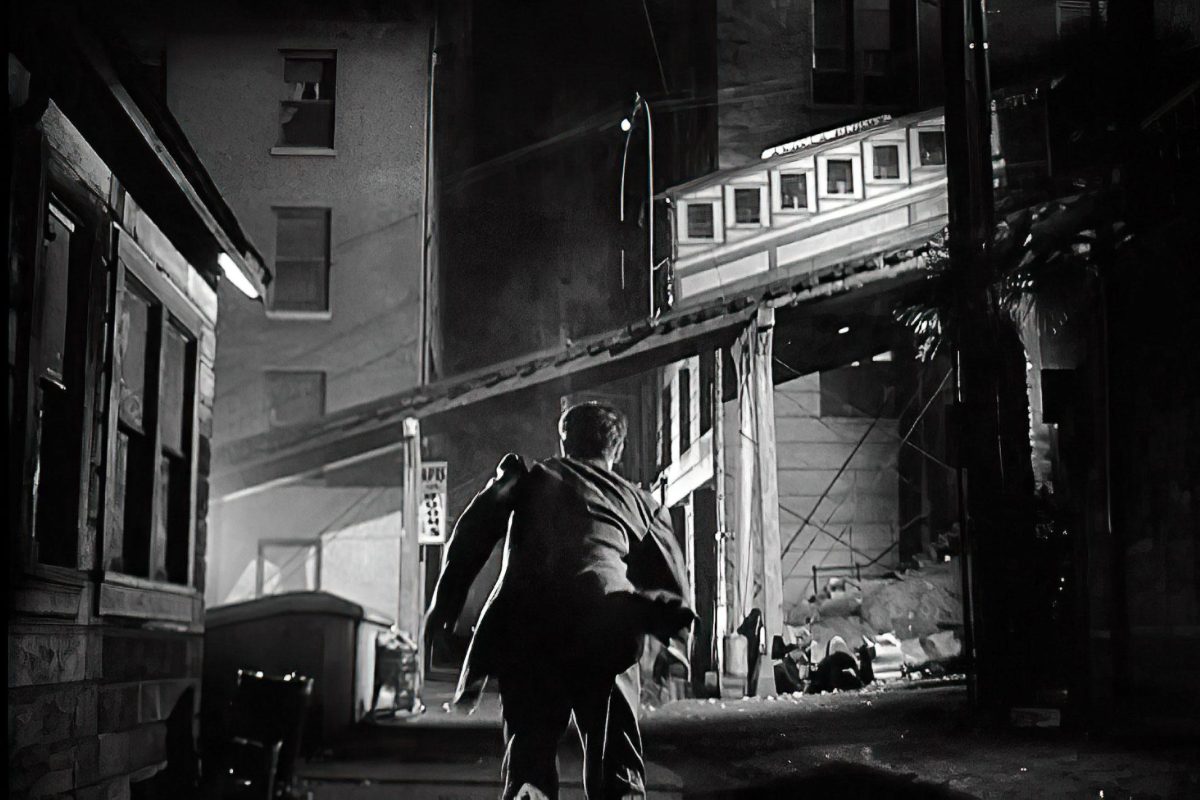
Although its roots stretch back earlier, film noir blossomed in the years following World War II, and its shadowy visuals and moral ambiguity capture the malaise of a generation of men returning home from a foreign war with physical and psychological scars. Both are on display in director Fred Zinnemann’s masterfully bleak 1949 noir Act of Violence, which deals directly with the trauma that veterans carried back to the U.S. and then attempted to bury within themselves. It’s a compact story of revenge that reckons with complex questions about wartime atrocities and the difficulty of readjusting to civilian life.
Those themes aren’t immediately apparent, though, as the movie begins in familiar noir fashion with a desperate man in a trench coat rushing across a cramped urban landscape to retrieve a hidden gun. Military veteran Joe Parkson (Robert Ryan) quickly leaves New York City behind for the sunny skies of sleepy California town Santa Lisa, where he targets fellow vet Frank Enley (Van Heflin). Zinnemann and screenwriter Robert L. Richards take their time in explaining why Joe is after Frank, or who these men even are, beyond their noir archetypes.
That’s part of what makes Act of Violence so powerful, because it plays on audience assumptions about this kind of movie, before upending those assumptions multiple times. Frank seems like an upstanding family man and small business owner, with his pretty, smiling wife Edith (Janet Leigh) and tow-headed toddler son. He’s introduced receiving accolades for his part in constructing a new housing development, and he looks every bit the picture of postwar prosperity.
By contrast, Joe looks sweaty and unhinged, and Zinnemann emphasizes the scraping sound of his damaged leg as he limps from one place to another. When Joe arrives at the Enley home while Frank is away on a fishing trip, he cocks his hidden pistol before Edith answers the door, and there’s an undercurrent of menace to his questions. This is the killer on the loose who could bring violence to placid suburbia.
Except Joe knows something about Frank that neither Edith nor the audience is initially aware of, and Frank isn’t inclined to share. Heflin and Zinnemann elegantly portray Frank’s transition from cheerful husband and father to frightened man on the run within a single moment, after Frank rushes home from his fishing trip because Joe has tracked him down. Still pretending that nothing is wrong, he scurries around the house pulling down the shades, and when Edith turns on a light, she illuminates his stricken, terrified face. The man she married has totally disappeared.
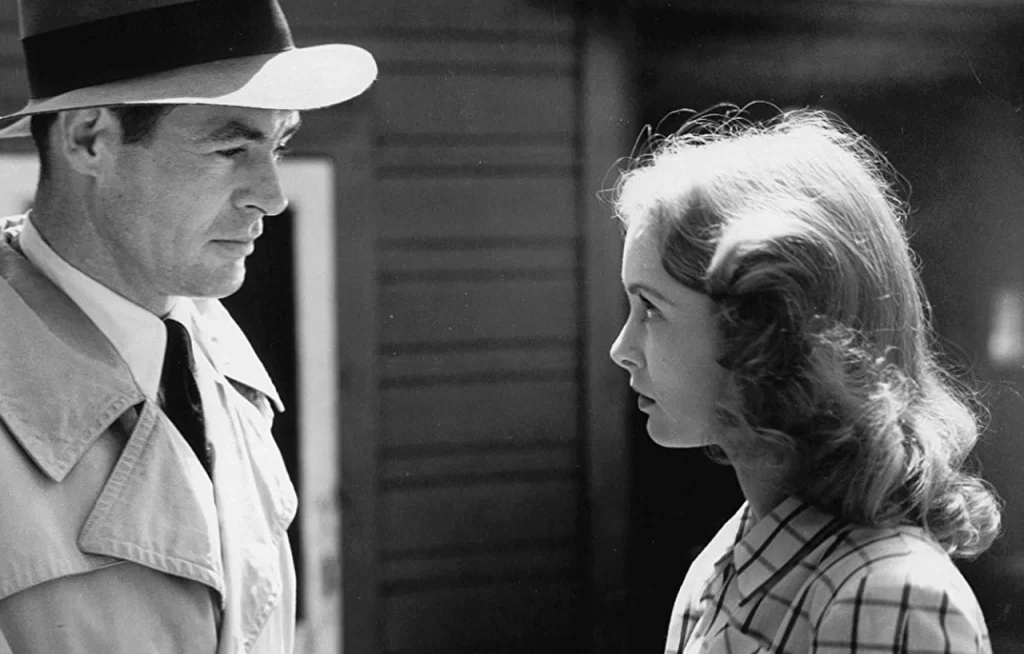
“A lot of things happened in the war that you wouldn’t understand,” Frank tells Edith. “Why should you? I don’t understand them myself.” Act of Violence is a story about the vendetta between Joe and Frank, but it’s also a story about the women who are forced to pick up the pieces of these shattered men when they return from overseas. The dialogue frequently emphasizes the age gap between Frank and Edith, and she admits her naïveté in regarding him as a hero. She’s not just a helpless, worrying wife, though — she longs to be part of her husband’s emotional life, but it takes multiple brushes with danger before he finally tells her the whole truth, at the movie’s halfway point.
Leigh is excellent as the devastated but pragmatic Edith, who is never content to sit back and let Frank surrender to a grim fate. She’s matched by Phyllis Thaxter as Joe’s girlfriend Ann Sturgess, who rushes across the country to stop him from making a fatal mistake. Left to their own devices, these men are resigned to re-enacting the horrors they experienced during the war, merely compounding empty death with more empty death. “Maybe I don’t love you enough,” Joe tells Ann when she pleads with him to give up his quest. No amount of nurturing or support can overcome the fixation on his wartime suffering.
“They’re both sick with it,” Ann says to Edith as they commiserate and strategize over what to do about the apparent death wishes of their significant others. Frank is so sick that he ends up wandering the back alleys of Los Angeles, where he encounters a less sympathetic woman, Mary Astor’s probable prostitute Pat, whose version of aid involves introducing him to underworld characters who can “take care” of his problem with Joe. At one point, Frank steps out of the way of an oncoming train just in the nick of time, but his deal with Pat’s associates is just another form of suicide.
Zinnemann is best known for a more rousing (if still melancholy) wartime drama, 1953 Best Picture winner From Here to Eternity, but Act of Violence is a psychologically thornier take on the toll that combat can take on fundamentally good-hearted men. Both Joe and Frank’s hearts have been blackened by what they did and saw during the war, and that sets them on the inevitable collision course of classic noir.
“Act of Violence” is streaming on HBO Max.