Sara Batkie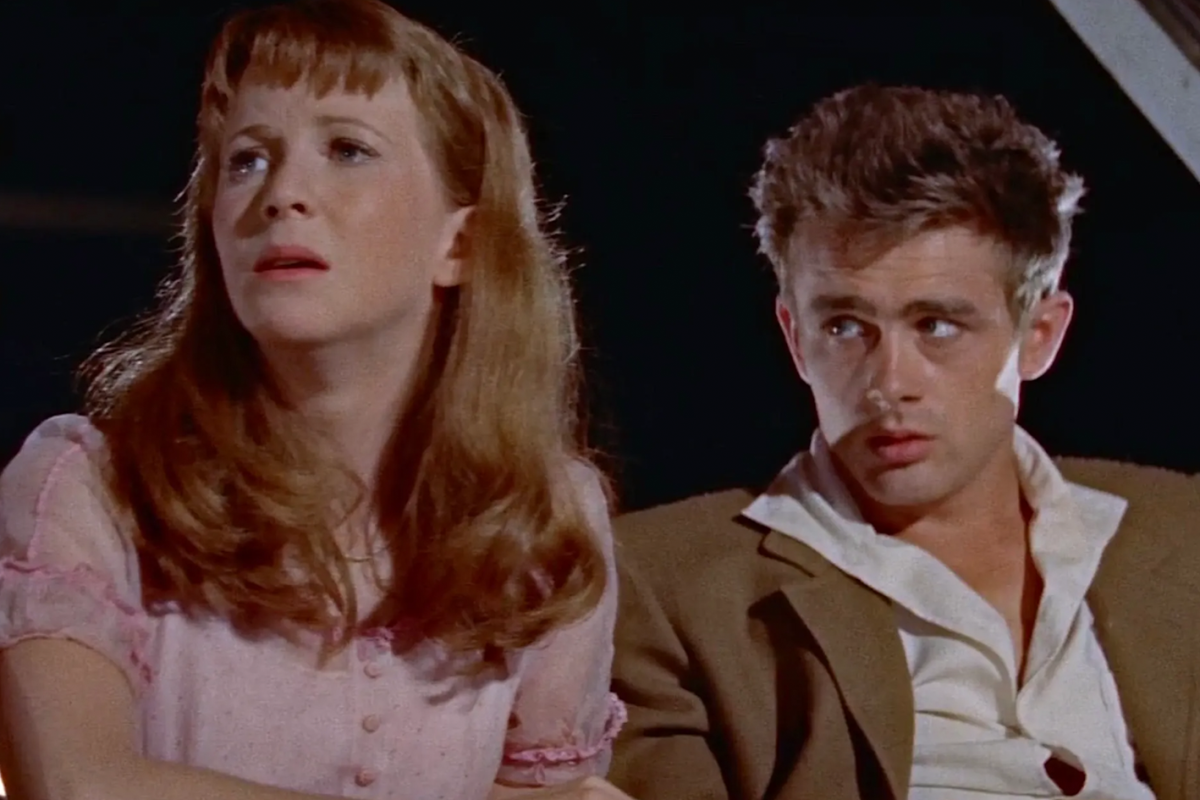
Bringing popular literature to the screen can be a tricky business, particularly if the book in question is a long one. That doesn’t usually stop filmmakers from trying. John Steinbeck’s 1952 epic East of Eden clocks in at a healthy six-hundred and fifty-six pages, at least in my edition. It was an instant bestseller with the public despite – or perhaps because of – some outcry over the novel’s violence and sexual content from critics; reportedly it still sells roughly 50,000 copies every year. A cinematic version was probably inevitable, and Elia Kazan’s melodramatic interpretation followed fairly quickly in 1955. That it only covers the final fourth of Steinbeck’s sprawling vision of the Trask family is its great strength as a film; as an adaptation, it leaves a significant gap that other subsequent directors have attempted to step into.
One of Steinbeck’s primary intents with his novel was to render California’s Salinas Valley in fulsome sensory detail; the landscape is introduced to readers before any of the characters are. Kazan’s CinemaScope production does an admirable job of transferring this descriptive splendor to the screen. The film’s opening text sets up a dichotomy between the agricultural Salinas area and the seedier port town of Monterey circa 1916, which is borne out in how Kazan shoots both locations. Salinas is all verdant hills and open fields as far as the eye can see. Monterey is rundown houses and cramped rooms. It’s a clear delineation between “good” and “bad” that Kazan and screenwriter Paul Osborn will continue to probe throughout their East of Eden.
While Steinbeck’s novel traces the cyclical repetition of the Cain and Abel story through several generations, Osborn’s script hones in on just one iteration of the conflict. Here the teenaged brothers are known as Cal (James Dean in his screen debut) and Aron (Richard Davalos). Their father Adam (Raymond Massey) has been raising the boys alone, having told them their mother died shortly after their birth. Cal has recently learned this is a lie: their mother Cathy Ames (Jo Van Fleet), now going by Kate, lives in Monterey where she runs a gambling house. He’s been following her around, though she’s none too happy to see him. When Cal confronts Adam, he begs Cal not to tell his brother the truth. The “good” son must be shielded from what the “bad” one knows, thus setting off a chain of tragic events that mimics their Biblical origins.
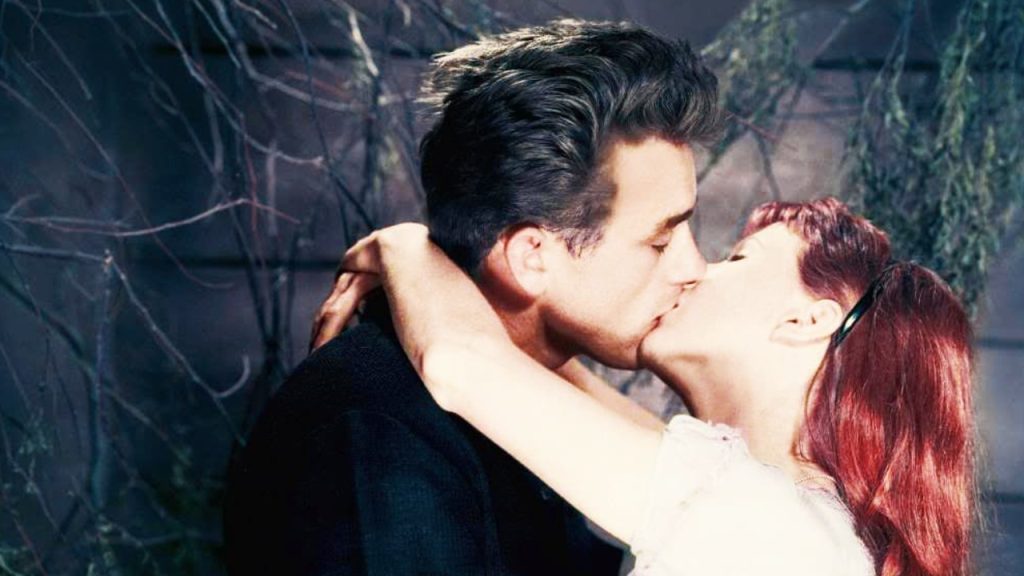
There are many inherent casualties in the screen version of the novel. An entire family – the Hamiltons – are excised, along with Adam Trask’s mercurial father, Cyrus, and half-brother, Charles, with whom he has a tempestuous relationship that mirrors Cal and Aron’s. Gone too is Chinese-American manservant Lee, possibly one of the earliest examples of racial code-switching in literature. But perhaps the character most ill-served by the winnowing of the plot is Cathy, though Van Fleet nonetheless won an Oscar for her efforts. The bowdlerized screen version is more talked about than seen; while on the page, she’s a brothel owner with a considerable body count (in the lethal sense), here the worst she offers is a perpetual sneer and some harsh words.
Whether that’s a capitulation to the Hays Code or merely expedient storytelling, the sanding down of the novel’s most complex, and blatantly unlikeable, character is a mark of Kazan’s overall simplification of Steinbeck’s grand themes. Regardless, it hardly seemed to bother audiences or critics at the time. Jack Moffitt of The Hollywood Reporter wrote that “it is bound to be one of the year’s important contributions to screen literature.” Pauline Kael noted its “high-strung, feverish” atmosphere in Kazan’s use of Dutch angles for the scenes where Cal and Adam lock horns, as if the family unit itself is tilting off its axis. It was also Dean’s only film to come out during his lifetime; he died in a car accident just six months after its release. He plays Cal in a perpetual hunch, as if the boy is constantly expecting a blow; it’s a performance that’s been cited by actors like Nicolas Cage and Leonardo DiCaprio as a major influence.
In the years since, there have been other attempts to adapt Steinbeck’s epic more fully. A 1981 three-episode miniseries from ABC starred Timothy Bottoms as Adam and Jane Seymour as Cathy. There have also been several theater productions. And while Universal Pictures has tried to get other film versions off the ground for decades, with directors like Tom Hooper and Gary Ross attached, none have made it past the development stage. Fittingly, it’s Kazan’s granddaughter Zoe who will take up the challenge next. Her Netflix limited series is said to make Cathy more central to the story, a feminist corrective to past interpretations. But Steinbeck’s source text is capacious enough that it’s easy to imagine an adaptation privileging almost any character’s point of view. Kazan Sr. showed us the good and the bad. Perhaps now it’s time to let some of the ugly in.
“East of Eden” is available for digital rental or purchase.