Jason Bailey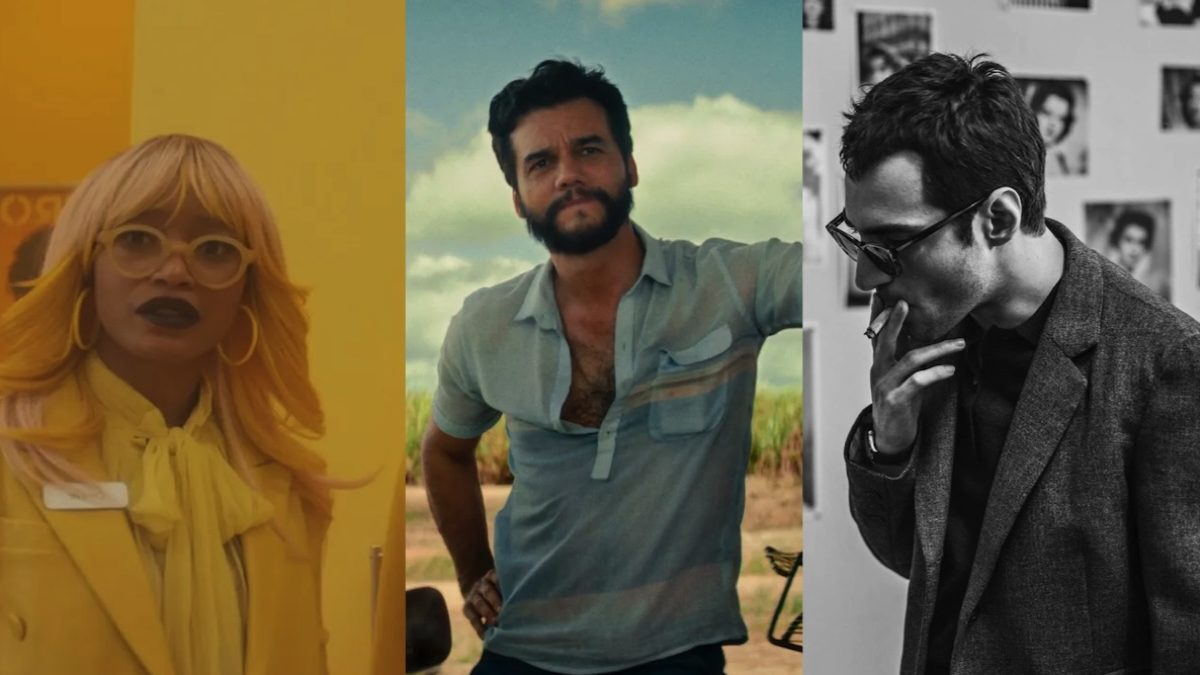
Every Tuesday, discriminating viewers are confronted with a flurry of choices: new releases on disc and on demand, vintage and original movies on any number of streaming platforms, catalogue titles making a splash on Blu-ray or 4K. This twice-monthly column sifts through all of those choices to pluck out the movies most worth your time, no matter how you’re watching.
PICK OF THE WEEK:
Jacknife: The latest release from Cinématographe plays like a mellower follow-up to The Deer Hunter, thanks to the presence of star Robert De Niro and its sensitive portrayals of working-class men who went to Vietnam and were never quite the same. De Niro stars as Megs, who reconnects with his combat pal Dave (Ed Harris) years after the war; both are suffering from PTSD, but Megs is trying to work through it, while Dave buries his pain in the bottle, and takes it out on his long-suffering sister Martha (Kathy Bates). But Megs takes a shine to her, and their sweet courtship is a reminder that once upon a time, they used to make romances about regular-ass grown-ups. Megs may be crude, but Dave is casually cruel, and Jacknife is as much about her as them, a three-hander grounded in lived-in authenticity and acted with force by its powerhouse leads. (Includes audio ommentary, interviews, and essays by Murtada Elfadi, Glenn Kenny, and Dan Mecca.)
ON NETFLIX
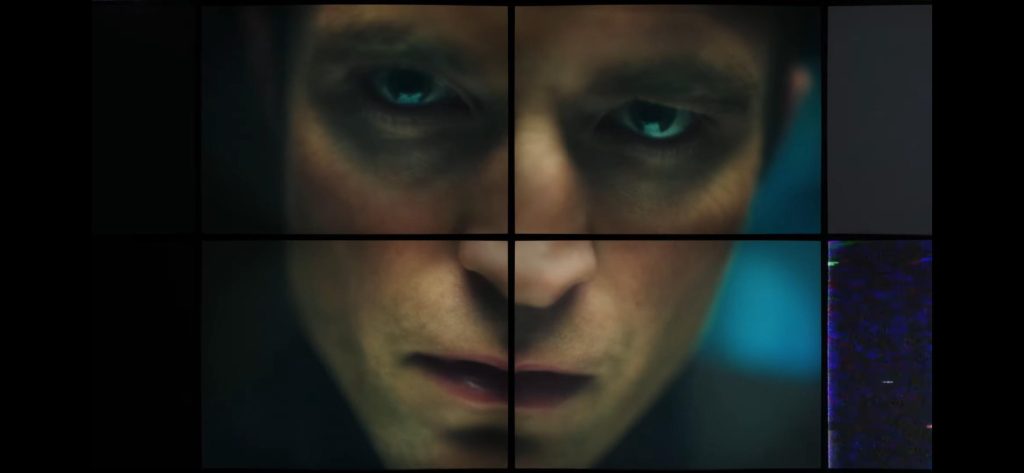
Knock at the Cabin: One must try not to give too much credit to the filmmaker who deftly uses the old-school studio logo, but the appearance of the ‘80s-era Universal planet at the beginning of M. Night Shyamalan’s latest is such an appropriate mood-setter, invoking as it does the likes of The Thing, Videodrome, Cat People, and They Live, genre exercises with potent allegorical and metaphorical framing. Tightly wound and visually terrifying, it finds a gay couple and their adopted daughter enjoying some downtime at a remote cabin when they’re approached by a quartet of strangers (led by a superb Dave Bautista), who claim that two of them must sacrifice the third to save humanity. The plot turns are effective (particularly the hints of Q-style shared delusion and online echo chambers), and Shyamalan harnesses some genuinely horrifying imagery to supplement the Twilight Zone simplicity it shares with his best work. And frankly, bonus points to the filmmaker for tempting fate by hinting at Happening territory.
ON PEACOCK:
The Phoenician Scheme: One day, we will look back at how Wes Anderson was taken for granted, how so many film critics and film fans saw his prolific output and distinctive style as a bug rather than a feature, and wonder what on earth they were collectively smoking. Yes, his latest features his signatures: a fussy yet enthralling sense of composition, marvelously intricate production design, jazzy camera movement, an expansive but impressive ensemble cast, and quotable dialogue. But as he always does, he’s also trying new things — and saying new things, subtly baking questions of legacy, family, and honesty into this wickedly funny globe-trotting adventure. Benicio del Toro is magnificent in the leading role, but newcomer Mia Threapleton steals the show with her bone-dry line readings and A+ comic timing.
ON 4K UHD / BLU-RAY / DVD / VOD:
I Love Boosters: Boots Riley’s follow-up to his out-of-its-goddamn-mind feature debut Sorry to Bother You is big, broad, and all over the place, which is both its blessing and its curse. Taking on everything from high fashion to contemporary capitalism — and some of the satire feels barely exaggerated — Riley deploys a top-notch cast (including such charisma machines as Keke Palmer, Taylour Paige, LaKeith Stanfield and Eiza Gonzalez) to tell a story of a crew of shoplifters who become the prime target of a fashion magnate (Demi Moore). The whole things gets out of the filmmaker’s control when it goes fully sci-fi in its second half, which ends up blunting the sharper edges of his commentary. But his ambition is admirable, as is the picture’s distinctive look; it is indeed refreshing, in this era of murky Netflix-friendly cinematography, to encounter a filmmaker who remembers what color saturation is. (Includes audio commentary, interviews, featurette, blooper, teaser, trailer, and TV spots.)
The Secret Agent: Bacarau director Kleber Mendonça Filho’s Oscar nominee (new to the Criterion Collection) seems, at first, like a more straightforward entertainment than that earlier gonzo social satire. But Filho could never make anything conventional, and the longer he goes, the more flourishes he sneaks in: unexpected time jumps, surrealist imagery, bizarre musical interludes. Wagner Maura proves himself a straight-up movie star in the title role, and much like One Battle After Another, the picture ultimately finds its power in its portraiture of activist communities, of the bonds that form between the outcasts and subversives who join in a common cause. And in the long-awaited big action sequence, and the material that follows, Filho summons up an heart-pounding intensity that should be studied in film schools. (Includes featurette, interviews, deleted scenes, archival material, trailer, and essay by Dennis Lim.)
Nouvelle Vague: Richard Linklater’s dramatization of the making of the French New Wave classic Breathless (a Netflix release, also joining the Criterion Collection) starts out shaky, too often turning into a collection of director Jean-Luc Godard’s Famous Quotes — “Art is not a pastime but a priesthood,” “All you need for a movie is a girl and a gun,” “The best way to criticize a movie is to make another movie,” they play all the hits. But once we get into the actual physical production of the picture, it’s easy to get caught up; Linklater, no doubt through a combination of research and personal experience, conjures the genuine electricity of the first-time filmmaker, and the excitement is infectious. The character of Godard — and therefore the try-as-he-might performance by Guillaume Marbeck — never quite penetrates the surface. Zoey Deutch, however, makes for a captivating Jean Seberg; she has that ethereal, pixieish, movie-star quality down cold, and her considerable spark helps keep things lively. (Also streaming on Netflix.) (Includes audio commentary, featurettes, interviews, trailers, and essays by Nick James and Vince Palmo.)
ON BLU-RAY / DVD / VOD:
Megadoc: The story of the making of Francis Ford Coppola’s Megalopolis — his passion project of decades, finally self-financed on a grand scale via his savings and profits from his vineyard — is, some might say, more compelling than what finally ended up on screen in 2024. Mike Figgis’s documentary account of the production is somewhat hobbled by access issues (stars Adam Driver and Nathalie Emmanuel chose not to actively participate, severely limiting what Figgis could shoot), but he captures a fascinating snapshot of an artist walking against the wind, trying to make the kind of intensely personal and commercially eccentric picture that just doesn’t get made anymore. Wherever you land on the final fruit of his labors (I’m a defender, but just barely), it’s exhilarating to watch this singular filmmaker take one last, big swing. (Also streaming on the Criterion Channel.) (Includes interview and essay by Nick Newman.)
40 Watts From Nowhere: Sue Carpenter broadcast WBLT on a pirate frequency from her one-bedroom apartment in Silver Lake from 1995 to 1998, a period when proper radio stations were perfecting “narrow-casting” and tightening their playlists. Her “micro radio station” — what a lovely, artisan phrase — was an anything-goes situation, from both a formatting and broadcasting perspective, and her entertaining documentary account draws on loads of old VHS footage and contemporary interviews to break down the nuts and bolts of pirate radio in general, and how they built theirs in particular, by hook or by crook. It’s a fleet-footed, nostalgic rise-to-fame story, and a fine reminder of why terrestrial radio all but died — and what it could have been. (Also streaming on Night Flight Plus.) (Includes extended scenes and interview.)
ON 4K UHD:
Days and Nights in the Forest: “Four young guys on a road trip” movies don’t usually wind up in the Criterion Collection (they’re more often found on Mill Creek multi-movie packs), but this is no ordinary one; this is a 1970 drama from the great Satyajit Ray, long difficult to see outside of shoddy dupes and rips until its 4K restoration last year by the Film Foundation. But it certainly has the DNA of such disreputable genres as the ‘80s sex comedy and the ‘90s guy-talk dramedy; our heroes engage in car chit-chat and drunken interrogations, grasping for meaning, looking to the future, and seeking out female companionship, no matter how loaded or empty. And then Ray keeps pushing, concluding with a series of duets that are thoughtful and satisfying, sending these boys (and, potentially, the viewer) away with a keener understanding of the human condition. (Includes Wes Anderson introduction, featurette, interviews, trailer, and essay by Devika Girish.)
Three Films by Leos Carax: Criterion collects the first three features in the eccentric French director’s filmography, all anchored by leading man Denis Lavant (playing three characters named Alex). Boy Meets Girl feels very much like a first film, in which a gifted director is still chewing up his influences and finding the balance between pastiche and homage; in its winking style and black-and-white photography it feels like a leftover of the French New Wave, in its playfulness and delight in the sheer act of making a movie. Mauvis Sang feels very much like the next step in his artistic evolution, plugging Lavant into what could have been a traditional French crime picture, but refusing to play by those rules. Its full of images that became iconography (the “Modern Love” street dance, tipping the VW Beetle, etc.), and features both Juliette Binoche and Julie Delpy in early roles, which seems like it should violate some rule about how much beauty a single film can contain (even Kieślowski put them in separate films). Levant and Binoche reunite, dirtied up but still incandescent, in The Lovers on the Bridge, which feels like the full flowering of Carax’s gifts, with wild visuals, an anything-goes spirit – there’s more force and energy in the duo’s late-night fireworks dance than in a full season of other movies – and poetic dialogue and echoes of City Lights to give it a lush romanticism. It’s a film of weightless joy, crushing heartache, and scary brutality, often in the same scene, even at the same time. (Includes interviews, video essays, retrospective documentaries, deleted scenes, rushes, screen tests, behind-the-scenes footage, trailers, and essay by Amina Cain.)
Interview With the Vampire: Neil Jordan’s 1994 adaptation of Anne Rice’s novel gets the 4K bump from Warner Bros., presumably on the back of the wild popularity of the AMC television series adaptation. It remains not quite successful as a film, due both to the episodic nature of the narrative (hence its current success on TV) and the central performance by Brad Pitt, a decidedly contemporary actor who had not yet figured out how to comport his gifts to this kind of ornate period piece. (It’s not quite on the same level, but it’s sort of giving Keanu in Dracula.) But Tom Cruise is an excellent Lestat, Antonio Banderas makes a meal of his late-film appearance, and tiny Kirsten Dunst’s work remains astonishing, even now that we’re fully aware of the scope of her gifts. (Includes audio commentary, featurettes, introduction, and deleted scenes.)
Johnny Handsome: Walter Hill’s 1989 neo-noir gets the 4K treatment from KL Studio Classics, and it’s a solid double in his filmography — he’s not working at The Warriors or 48 HRS. level, but he crafts a tight tale about the inevitability of the criminal instinct, loads up the ensemble cast with heavy hitters (even if some of the Bayou accents are a touch dodgy), pulls out one of the last great Mickey Rourke performances, and expertly dramatizes the narrative noose tightening around his neck. But what jumps out most, at this late date, is the deliciously dark supporting turn from Morgan Freeman, who plays an unapologetically cynical police detective with much of the edge he brought to his breakthrough turn in Street Smart. I miss this version of the actor, who did Driving Miss Daisy the same year, a fork in the career road if there ever was one; he absolutely shoplifts this thing, and his last turn is so beautifully executed that you end up wishing there’d been a whole series of movies about his character. (Includes audio commentaries, interviews, and trailer.)
Italo-Crime Collection: The three Italian crime pictures collected here by KL date from 1973 to 1977, and watching them in order proves an effective exercise in tracing the evolution of the genre. The first, Alberto De Martino’s The Counsellor, is a comically transparent rip-off of The Godfather, in which the smooth and smart godson of a Mafioso (Martin Balsam, having a ball slapping on a mustache and accent and going for the gusto) rethinks his plans to go straight after an attempt on his godfather’s life. If Godfather is the father of the genre, The French Connection is the mother, so this one also includes a metal-crunching, rough-and-tumble car chase. Lifts aside, this one’s a blast — and unlike Brando, Balsam gets to tote a machine gun and shoots some stuff up. De Martino’s 1976 effort Blazing Magnum is soured a bit by its trans- and homophobia, but it’s got a good cast, a great car chase, and some fine red herrings, and it offers Tisa Farrow a chance to ape her sister’s blind victim turn in See No Evil. Mario Caiano’s Weapons of Death closes out the set, with a properly menacing turn by Eurocrime mainstay Henry Silva and some of the truly assaultive violence — hard, tough, and mean — that was, by then, par for the course. All three pictures look and sound excellent, which matters for a genre that’s been subjected to so many subpar releases. (Includes audio commentaries, video essays, featurettes, and alternate cut of Blazing Magnum.)
The Saint: This 1997 adaptation of the long-forgotten Roger Moore television series (out in a new 4K Steelbook from Paramount) was intended to launch Val Kilmer on a franchise of his own after his unceremonious exit from the Batman movies. It did not accomplish that, nor did it much further the case (already questionable after the previous year’s Island of Dr. Moreau) that Kilmer was a bankable star; its main takeaway is that perhaps you don’t cast Kilmer as a master of disguise. But there are things to recommend here: Phillip Noyce’s direction is as sturdy and reliable as ever, the house-heavy soundtrack throws heater after heater, and above all, Elisabeth Shue is a delightful ingenue, generating more sexual chemistry with her co-star than anyone since Tom Cruise. (Includes audio commentary.)
Sweet Sixteen: This 1982 horror title from director Jim Sotos (new to 4K from Vinegar Syndrome) came near the end of the slasher cycle, so it’s somewhat surprising that it’s squarely in the tradition of the whodunits that kicked off the subgenre. Someone’s brutally killing people in a small town in Texas, and Sheriff Dan Burke (Bo Hopkins) is on the case, aided somewhat by his son Hank (Steve Antin) and daughter Marci (Dana Kimmell), who, wouldn’t ya know it, is a voracious reader of mystery novels. But it’s a good, sturdy whodunit, with fine twists and a satisfying resolution, and while some of the supporting performances are pretty thin, Hopkins brings all of his good ol’ boy charisma to the party, and Susan Strasberg goes for the gusto in the closing passages. (Includes new and archival audio commentaries, new and archival interviews, introduction, and trailer.)
Rad: There’s a tiny part of this cold, cynical heart that is absolutely delighted that the dumbest ‘80s trash is getting the lavish, 4K treatment, and you don’t get dumber or more ‘80s than this 1986 BMX biking drama from director Hal Needham, looking to “How do you do, fellow kids?” after his Smokey and the Bandit franchise sputtered and stalled a few years earlier. Between the endless bike stunts, hilarious dance sequences, and power rock soundtrack (with hilariously on-the-nose lyrics like “Takin’ a chance / riskin’ it all”), the kitsch value is off the charts, but damn if it isn’t a giggly good time – particularly Jack Weston’s scenery-chewing turn as the most durable of the era’s archetypes, the greedy, evil developer. (Includes audio commentaries, documentary, interviews, featurettes, music video, introduction, and podcast episodes.)
Go: When Doug Liman’s Swingers follow-up was released in 1999, too many critics dismissed it as yet another Pulp Fiction riff — an understandable assumption, based on its hip soundtrack, three-interlocking-story structure, and cast of young up-and-comers (including Sarah Polley, Taye Diggs, Katie Holmes, Timothy Olyphant, Scott Wolf, and a blink-and-you’ll-miss-her Melissa McCarthy). But it holds up, both as a time capsule and a stand-alone entertainment, thanks to the vigor of Liman’s direction, the endless charisma of its stars, the surprises of John August’s script (the ultimate reveal of William Fichtner and Jane Krakowski’s characters remains delicious), and the general pop pleasure of the enterprise. Arrow Video’s 4K presentation give the whole thing a slick, sleek sheen; it looks and sounds better than ever. (Includes audio commentaries, interviews, deleted scenes, short film, and trailer.)
ON BLU-RAY:
Hell’s Highway: The True Story of Highway Safety Films: This 2003 documentary from director and historian Bret Wood, newly restored and debuting on Blu-ray from Kino, spotlights an odd corner of postwar moviemaking: the highway safety film, grisly little educational shorts in which young drivers were warned of the potential outcomes of reckless, drunken, or even just inattentive driving, via gory footage of real accident scenes. The circumstances of their making and reception are peculiar enough, but the ins and outs of the primary organization behind them, the Highway Safety Foundation, are jaw-dropping in their oddity. A niche subject, to be sure, but fans of scare shorts and other educational ephemera will really take to this one. (Includes audio commentary, pre-restoration version, deleted scenes, full and excerpted highway safety films, and trailers.)
College Swing: As I’ve mentioned in this space before, there’s clearly a Bob Hope and Bing Crosby fan working at Universal Home Video, which has been quietly releasing their early, individual Paramount vehicles for the past several months. This was only Hope’s second feature film appearance, and it’s one of his pairings with Martha Raye, whom the studio tried mightily to make into a comedy team, with only mild success. But they’re decidedly supporting players here, while George Burns and Gracie Allen — typically cast in second-tier roles — are the leads, with Gracie in delightful form as a dingbat heiress who must finally graduate from the college her grandfather founded lest she lose her inheritance. That’s a good set-up, and the script is zippy and fun (Preston Sturges was one of its uncredited contributors); it’s all brought to life with pizzazz by the great Raoul Walsh, who displays a light, frothy touch you might not expect from the director of White Heat and The Roaring Twenties.
Nadine: I’m not sure how many folks were clamoring for a new Blu-ray release of this mostly-forgotten 1987 crime comedy from writer/director Robert Benton (still riding high off the likes of Kramer vs. Kramer and Places in the Heart). But it’s got a lot to offer: Kim Basinger at the peak of her movie-star charisma, Jeff Bridges bouncing off her nicely as the estranged husband she can’t quite let go off, a nicely worked out screwball comedy plot, sunny cinematography by the great Néstor Almendros, and giggly supporting turns by Rip Torn, Gwen Verdon, Glynne Headly, and Jerry Stiller. It’s not a great movie, but it’s a good hang.
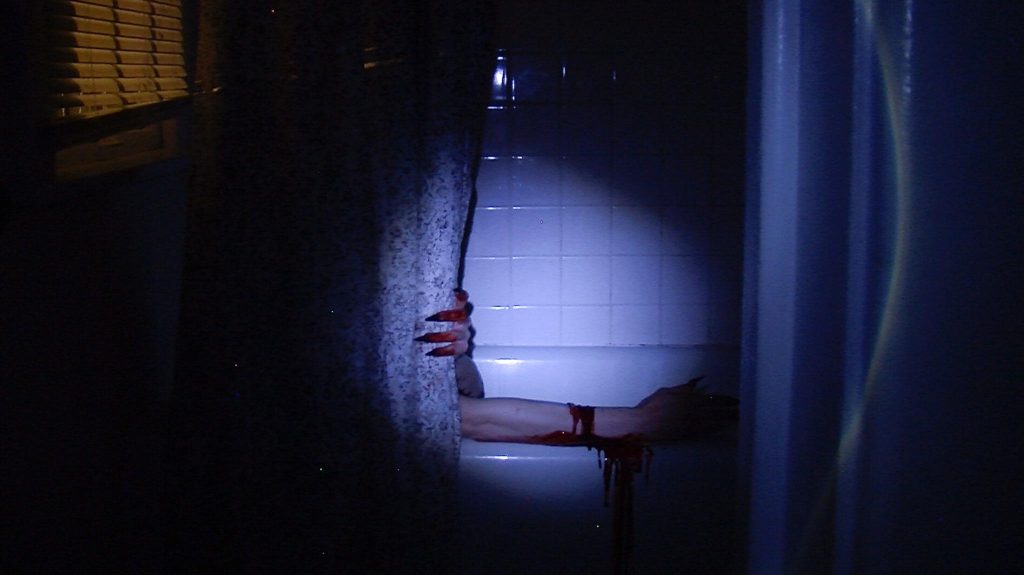
Scary Movie: No, not that Scary Movie. This re-release from our pals at the American Genre Film Archive is a barely-released, low-budget, 16mm effort from 1991, starring John Hawkes in one of his earliest roles. He’s unsurprisingly engaging as a Bob Hope/Lou Costello-style fraidy cat who encounters a serial killer, on the run on Halloween night, hiding out in a haunted house where our hero is trying to conquer his fears. No one will confuse the results with high art, but director Daniel Erickson takes advantage of the colorful characters native to the picture’s Austin, Texas locations to cook up a pot of hillbilly horror that is, frankly, a hoot. (Includes audio commentary, short films, and vintage trailer.)