Jason Bailey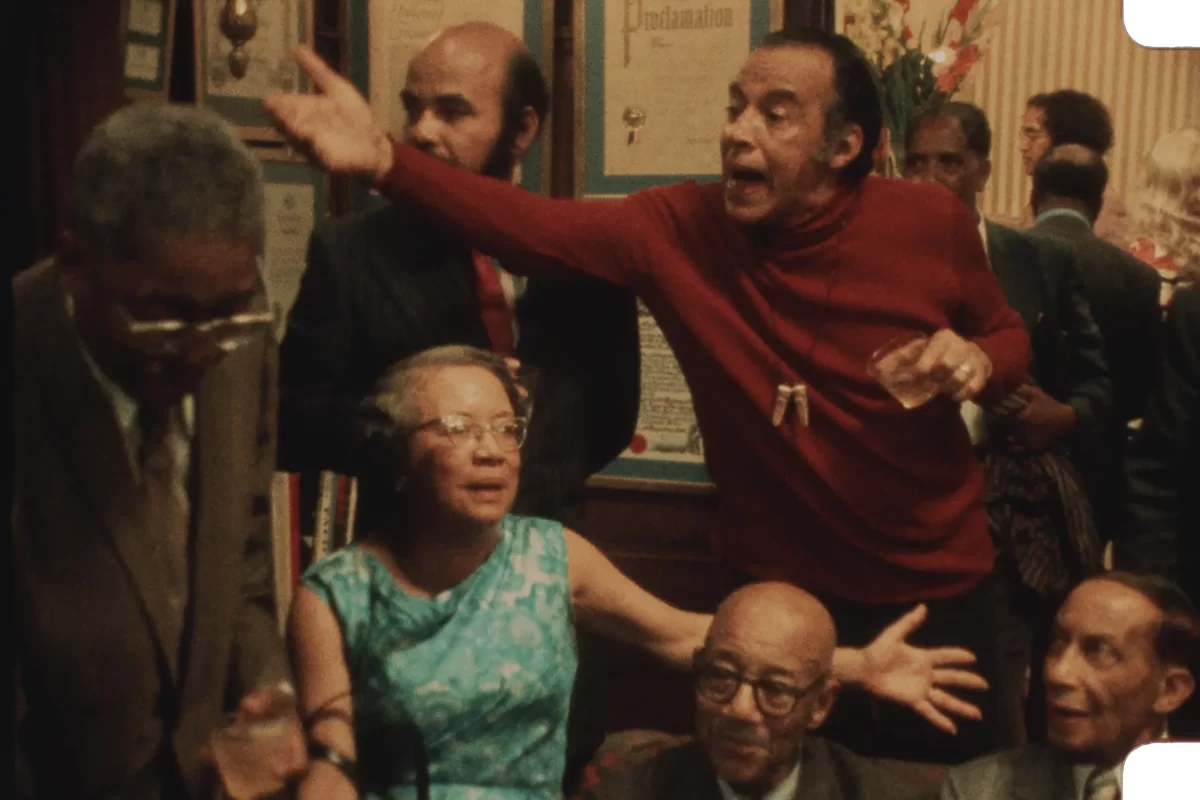
Once Upon a Time in Harlem begins with a handwritten note by the filmmaker William Greaves: “In an effort of co-creation, I propose to create a series of great films on great people all of whom are metaphors, creations of the Godhead.” He began that project here. Harlem, which most of us had not heard of before it was included in the Sundance lineup late last year, was shot (but never completed) well before his death in 2014. It seems that in August 1972, the great documentary filmmaker held a cocktail party, “a gathering of artists and intellectuals — the living luminaries of the Harlem Renaissance” at Duke Ellington’s apartment, and filmed what happened there.
The guests included Eubie Blake, Richard Bruce Nugent, Louise Thompson Patterson, George Schuyler, Leigh Whipper, Arna Bontemps, and countless more — names respected by those who know this history, and waiting to be discovered by those who do not. There was an astonishing accumulation of wisdom in those rooms, “miles and miles of memories,” as photographer James Van Der Zee puts it, vital for both their own contributions and their knowledge of the sacred names they invoke: Zora, Langston, Duke, Du Bois, Dunbar.
But Greaves doesn’t leave it there. The party is the framework, the main event, supplemented by individual interviews to provide a more complete oral history of the Harlem Renaissance — and the deeper it goes, the more the topic widens, into a fuller cultural and social history of Black America. What begins as a home movie, a scrapbook of a momentous event, soon reveals itself (ever so slyly) to be an impeccably structured, perpetually surprising delight.
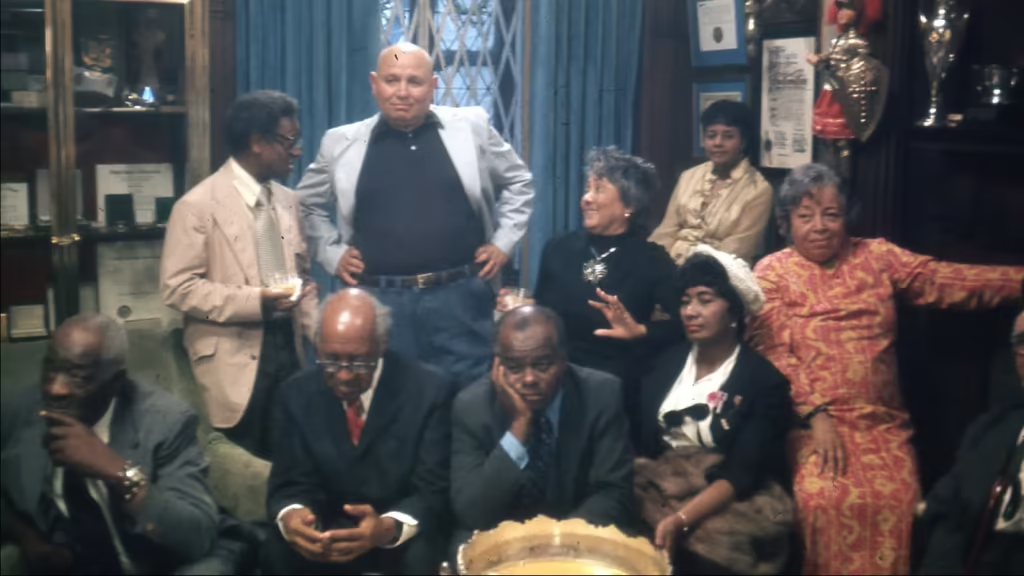
The conversations it captures are thoughtful, often spirited, and sometimes contentious discussions of the issues that caused friction at the time (integration vs. separatism, cultural vs. political, men vs. women, Democrats vs. Republicans), and still do; these wounds are easily reopened (“THAT is your OPINION”), and many of these these debates that had already raged for half a century have continued for a half-century more. Everyone is pleasant and respectful, even while interrupting and disagreeing — they all seem to understand that they are helping to write the history that they lived, and they want to get it right. Or, at the very least, they want this history to reflect how they saw and felt it, so when Schuyler insists “Well I was here, so I know who was supporting whom,” it seems less a matter of stubbornness or defiance than clarity.
It gets rowdier the more they talk (and drink), and there are heated moments, understandably, as they move from discussions of specifics into big, ongoing, existential questions; “Does the theatre reflect life?” is a provocative enough question, but it’s tossed here like a spear, and there is something invigorating about simply eavesdropping on brilliant people grappling with questions they’ve spent their long, full lives contemplating. Greaves asks questions and perhaps eggs them on a bit, aware of the importance everyone, on either side of the camera, has placed on this rare opportunity for documentation. There are things they want everyone to know — including, and not incidentally, their continued relevance and the respect they’ve earned.
The resultant, marvelous film is very much in the form of Greaves’s beloved Symbiopsychotaxiplasm: Take One — specifically, its inspired use of split screen, both to provide fuller coverage of group conversations and to offer up context in the form of archival photos, footage, and text. On one hand, this all took place a long time ago. On the other, Eubie Blake casually notes, “my mother and father were slaves,” a sharp reminder that we are not as far removed from the lowlights of our history as we’d like to think.
A-
“Once Upon a Time in Harlem” opens Friday in New York.