Zach Vasquez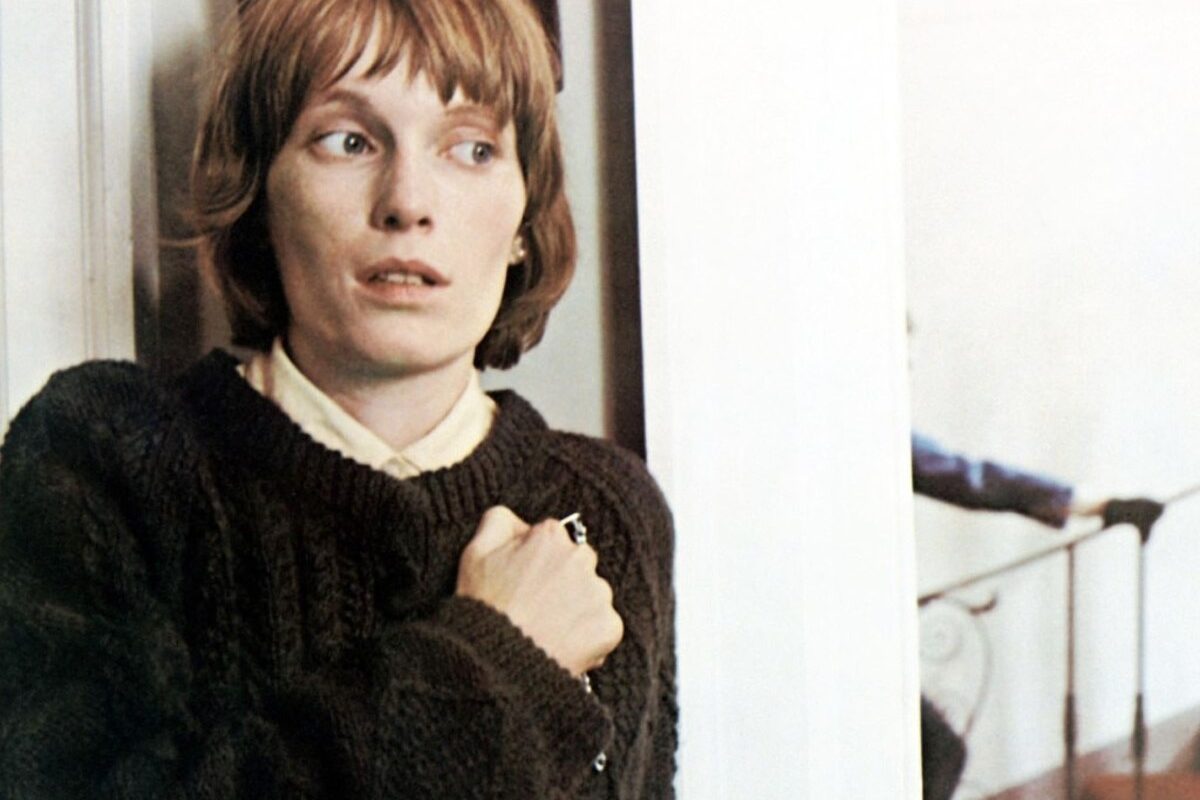
Richard Fleischer is having a moment. The son of animation pioneer and studio head Max Fleischer (who gave us the first cartoon versions of Superman, Betty Boop, and Popeye, amongst others), he would enjoy a career as a director that, if not as iconic as his father’s, was just as storied, spanning the Golden Age of Hollywood through to the 80s.
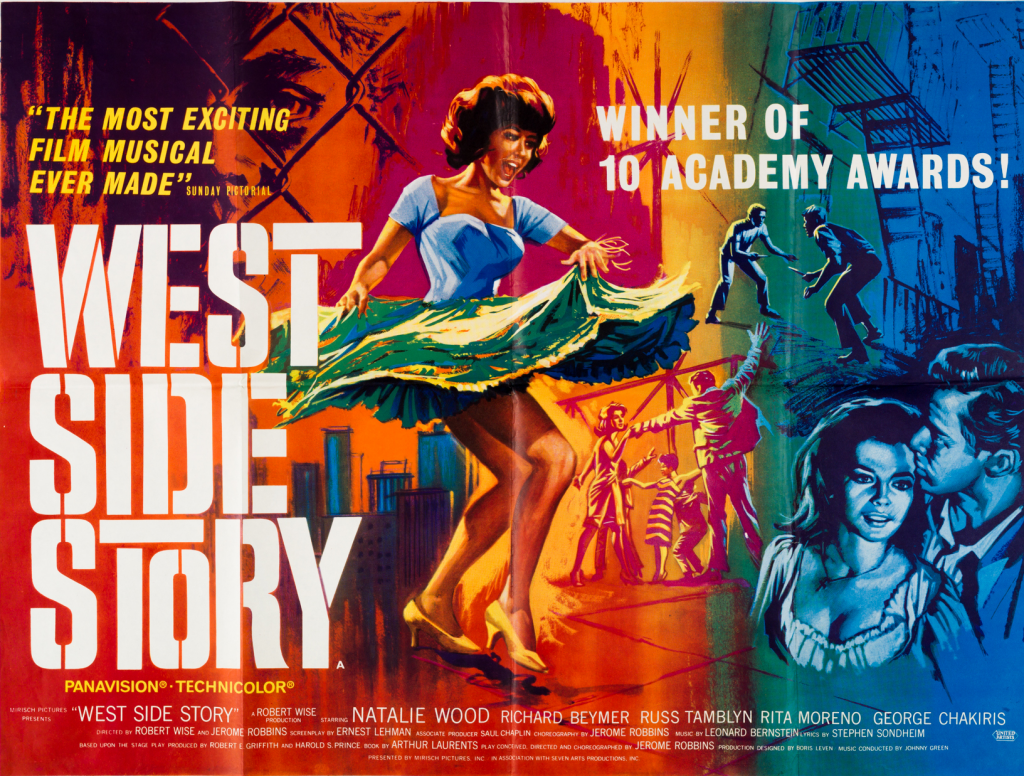
Once described by Pauline Kael (smarmy and wrong as usual) as a “glorified mechanic,” Fleischer was the journeyman’s journeyman. During his 40 year career, he tackled just about every major genre: noir (The Narrow Margin), melodrama (The Girl in the Red Velvet Swing), Biblical epic (Barabbas), war epic (Tora! Tora! Tora!, co-directed with Kinji Fukasaku), musical extravaganza (Doctor Doolittle), sci-fi (Fantastic Voyage), true crime (The Boston Strangler), political biopic (Che!), police procedural (The New Centurians), mob drama (The Don is Dead), action (Mr. Majestyk), dystopian satire (Soylent Green), historical drama (Mandingo), horror (Amityville 3-D), sword and sandal (Conan the Destroyer), and the uncategorizable (His Kind of Woman).
Fleischer is the subject of a new biography by Jason A. Ney, titled, appropriately, Richard Fleischer: Journeyman, the release of which kicked off retrospective screenings of his work, particularly in New York. One of the titles that screened was Fleischer’s psychological horror thriller See No Evil, released 55 years ago this September. Of all of his work, this might be the most deserving of rediscovery.
A British-American co-production, See No Evil marked the second of Fleischer’s UK-set films of 1971, following the true-life serial killer drama 10 Rillington Place (both made under Columbia Pictures’s Filmways banner). In contrast to that picture, in which a psychotic murderer lures victims into his home, See No Evil sees a faceless madman—the only glimpse we get of him until the climax are his star-spangled cowboy boots—invade a quiet home in the English countryside to wreak havoc.
Said home belongs to the Rextons, a well-to-do couple with a teenage daughter. Newly arrived is their American niece Sarah (Mia Farrow), recently blinded in a horse-riding accident. Sarah has spent the past several months in the hospital learning how to acclimate to her new life. She is determined to move back to America, despite the protestations of her boyfriend, stable manager Steve (Norman Eshley). While enjoying a ride in the woods with Steve, the rest of the family is slaughtered by the mysterious intruder. The measuredly-paced scenes of Sarah returning home and unknowingly moving through the carnage are knuckle-biters worthy of Hitchcock, although it is only a matter of time before she discovers the truth, setting off an unbearably tense game of cat-and-mouse between her and the killer.
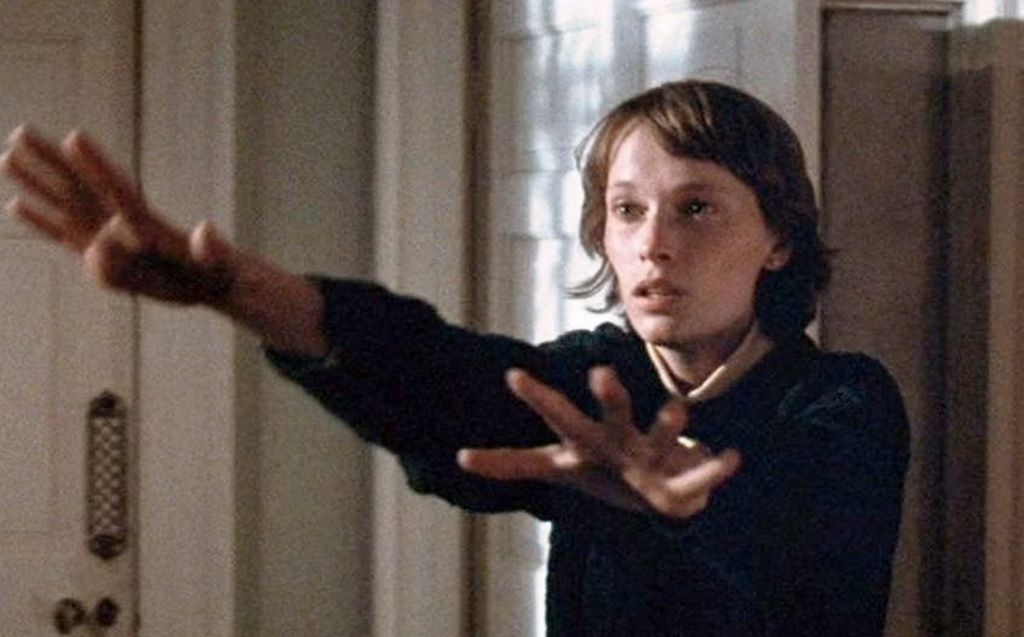
These ingeniously-staged scenes of suspense, combined with the Elmer Bernstein score, make it, again, reminiscent of Hitch at his best and most brutal (indeed, it shares a specific plot point with his ugly masterpiece from the following year, Frenzy), as well as the much more well-known Wait Until Dark from fours years earlier, which stars Audrey Hepburn as a blind woman terrorized by home invaders. But even more than those two touchpoints, See No Evil plays like a proto-slasher, an Anglicized Halloween that deploys flashy cowboy boots, rather than an unfinished William Shatner mask, to induce fear.
Between See No Evil and her star turn in Rosemary’s Baby a few years earlier, Farrow deserves classic Scream Queen status. She is the reason the movie was greenlit in the first place, and it is her performance that kicks things up another level. She is so believable in the role, not merely as a blind person (she spent time in a house for the blind for research), but as a survivor. Her character is a terrified victim, yes, but one whose innate intelligence and strength make you buy how she outsmarts her tormentor, even if the film ultimately drops the ball when it comes to their final showdown. Still, in this, she matches Audrey Hepburn’s Oscar-nominated turn in Wait Until Dark and between the two, it’s Farrow’s performance that feels more real.
See No Evil was penned by English screenwriter Brian Clemens, and for as sturdy as Fliescher’s directorial hand is here, it’s the writer’s voice that comes through strongest. Although best known for his television work—he created The Avengers (the British spy show, not the one with Jeremy Renner)—Clemens also penned 1970’s And Soon the Darkness, another excellent and underseen slow-burn chiller about young girls being stalked by an unseen killer in rural England. Between And Soon the Darkness, See No Evil, several episodes from his suspense anthology program Thriller (1973-1976), and Disney’s young adult cult classic Watcher in the Woods (1980), Clemens was an unheralded auteur whose best work examined the perils of young womanhood through the eerie mystery and primordial dangers of the English countryside.
Unfortunately, and somewhat surprisingly considering Farrow’s star power at the time, not many people saw See No Evil in America upon release. The recent screenings, combined with its anniversary, renewed interest in Fleischer, and horror movie fans’ never-ending hunger for new discoveries, should hopefully get it in front of lots of new eyeballs.
“See No Evil” is available for digital rental or purchase.