Chloe Walker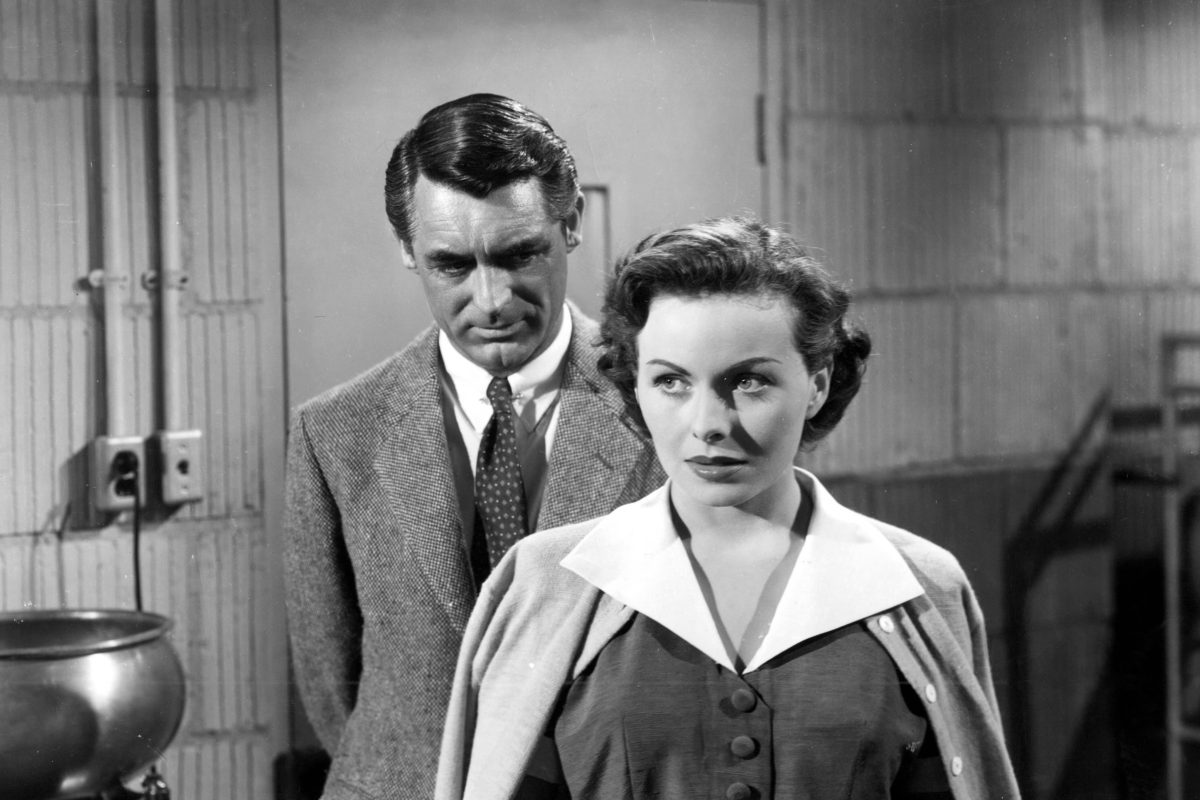
After the huge success of 1950’s All About Eve, writer-director Joseph L. Mankiewicz had the cinematic world at his feet. His next project was one of the lesser-known titles in a filmography that would also boast Cleopatra, Guys and Dolls, Suddenly Last Summer, and Sleuth. Nevertheless, for its wild tonal shifts and atypical turn from its legendary leading man, it’s remarkable.
People Will Talk is centered on Dr. Noah Praetorius (Cary Grant), a renowned medical doctor whose unconventional methods have inspired both fans and enemies, the latter group led by the snivelling Professor Elwell (Hume Cronyn). Elwell attempts to take him down by investigating Shunderson (Finlay Curray), the mysterious companion of whom he is fiercely protective. Meanwhile, Noah helps Deborah (Jeanne Crain), a suicidal student with an unwanted pregnancy.
By 1951, the forty-seven year old Cary Grant had long proved his genius at screwball comedy, and his ability to give surprisingly dark dramatic performances. Noah Praetorius gave him the chance to do both.
From the outset, there’s something a little bit magical about Dr. Praetorius. Before we even meet him, in a very funny opening scene between Hume Cronyn and Margaret Hamilton, we learn about his reported ability to work miracles – Hamilton’s character says of her grandmother, “four times she lay down to die, and four times he talked her off on her feet.”
When we meet Noah, however, there’s a heavy sadness to him. Sadness was an unusual mode for Grant. In his more serious movies, feelings of despair tended to manifest themselves as manful anger, as in Notorious or Only Angels Have Wings. Even in weepies like Penny Serenade, his tears were pitched in melodrama mode. Noah’s sorrow is quieter, weightier. Grant plays him as if he’s been able to miraculously cure the ills of all those patients by personally absorbing them. That creates an irresistible character, one with all Grant’s suave twinkle still very much intact, but who’s animated by a soul-deep empathy above anything else.
So it’s no surprise that Noah doesn’t pass judgement on Deborah for conceiving her baby out of wedlock. And because People Will Talk treats his non-judgemental way of living life as aspirational, the film follows suit. Considering that it was made under the moralizing Hays Code, it was startlingly progressive – Mankiewicz himself was surprised to get away with as much as he did.
Despite that almost utopian attitude for a movie of its era, People Will Talk is still a movie of its era. The central narrative involves Deborah attempting suicide out of desperation over her pregnancy. When she wakes, Noah lies that it was all a mistake and she was never pregnant in the first place; he hopes to stop her making another attempt, that by the time her condition becomes obvious she’ll be in a better place. He goes on to marry her, and for too long allows Deborah to think the baby she’s pregnant with is his. While Noah’s decisions come from good intentions, his willingness to lie about something so major and intimate often sits uncomfortably with the more progressive attitudes here.
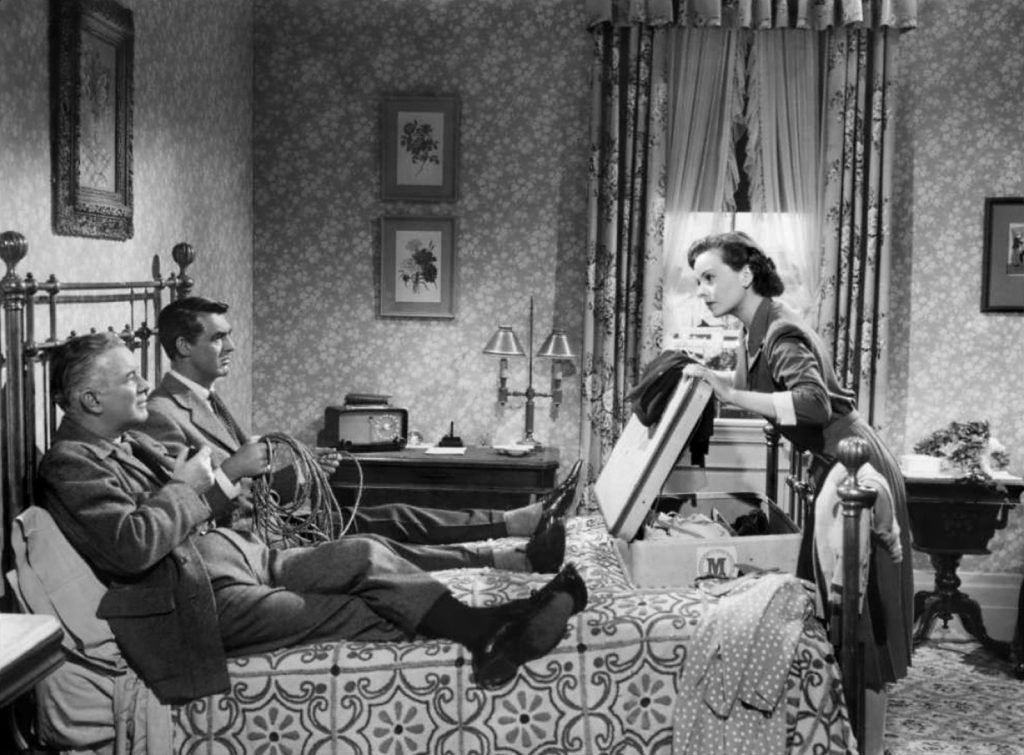
The discrepancy between progressiveness and paternalism is mirrored in the overall tonal shifts. People Will Talk contains both a pregnant woman’s suicide attempt, and a long sequence of Noah and two other middle-aged men going “Beep Beeep BEEP!” at each other as they argue over a train set. The spectres of death and despair hang over most scenes, yet there’s rampant silliness too; Grant may be more downbeat than usual, but his screwball energy is still allowed to fly free in some scenes, most of all when he’s passionately indulging in his hobby of orchestra conducting.
Joseph Mankiewicz didn’t originate People Will Talk. He adapted it from a German-language play by Curt Goetz, who starred in and directed a film version, Dr Praetorius, in 1950.Still, it’s clear why it would have appealed to Mankiewicz. He’d contended with a dramatic personal life, and at the time was embroiled in a long, complicated marriage with Rose, who suffered from schizophrenia, and would die by suicide in 1958. Always a writer first and foremost, he loved voluptuously lengthy dialogue scenes, and would expand the part of Deborah’s father (Sidney Blackmer) from Goetz’s play, so he and Noah could have long, warm, wry conversations about life’s disappointments.
Most of all, Mankiewicz was a journeyman. He wrote musicals, mysteries, historical epics, screwballs, noirs, westerns. His films, and his filmography, embraced the multifariousness of existence – and none embraced it as tightly as the tale of Dr Praetorius.
Because the divergent tones don’t always make for the smoothest viewing experience, and because Mankiewicz and Grant made many other classics that fit more neatly into genre boxes, their 1951 collaboration tends to get lost when talking about either of their careers. Yet really, it’s the messiness that makes it special. After all, life doesn’t fit neatly in a genre box – as with the ultimate reveal of Shunderson’s history, it’s ridiculous, tragic, funny, and strange. People Will Talk might not be literally realistic, but in many regards, it’s more emotionally so than a lot of its peers. And as you watch Noah conduct the orchestra with rousing gusto in the finale and all his friends sit in the audience beaming back, it’s hard not to find yourself beaming right along with them.
“People Will Talk” is streaming with ads on Plex and is available for digital rental or purchase elsewhere.