Jason Bailey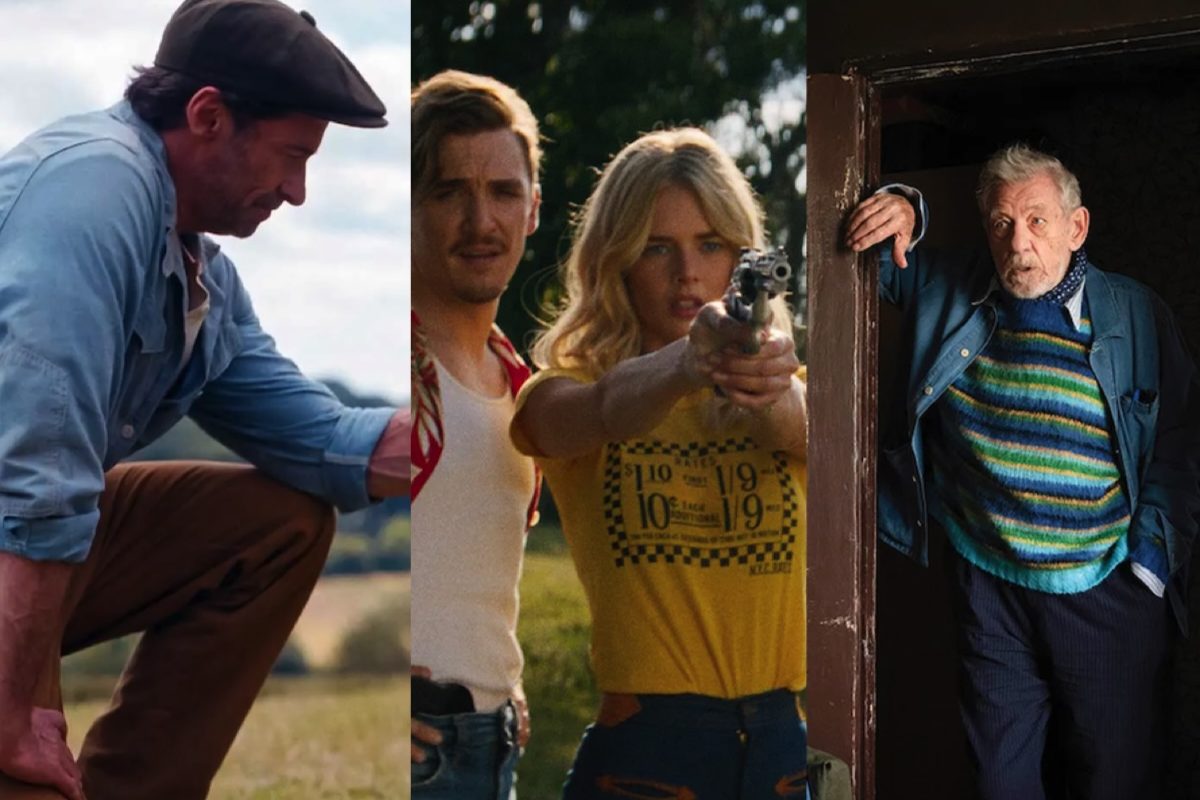
Every Tuesday, discriminating viewers are confronted with a flurry of choices: new releases on disc and on demand, vintage and original movies on any number of streaming platforms, catalogue titles making a splash on Blu-ray or 4K. This twice-monthly column sifts through all of those choices to pluck out the movies most worth your time, no matter how you’re watching.
PICK OF THE WEEK:
Harlan County USA: To spotlight the plight of 180 striking coal miners in Harlan County, Kentucky, director Barbara Kopple embedded herself with the striking miners and their families for over a year; she even put herself in danger of harm from the energy company’s armed goons, who fired at the strikers and physically assaulted not only the workers, but Kopple and her crew. Her film (a mainstay of the Criterion Collection, getting the 4K bump) is remarkable for its authenticity and presence, as well as the specificity of her voice—because it is from a female documentarian (in the 1970s, when they were even more scarce than now), it takes a keen interest in the sexual politics of the time and place. She’s as interested in the wives as the miners, in how they stand their ground and provide support (“I would hate to think that my wife could play this kind of role,” tsks tsks one of the coal company muckety-mucks), and in a key scene, elderly Florence Reese stands at a meeting and sings the song she wrote during an early Harlan County strike: “Which Side Are You On?”, which becomes both the film’s literal and figurative theme. (Includes audio commentary, featurette, outtakes, interviews, panel discussion, and essays by Michael Atkinson and Jon Weisberger.)
ON HULU:
The Christophers: I can’t think of a single item in Steven Soderbergh’s 30-plus feature filmography that resembles this two-hander, with Ian McKellan as a legendary but cantankerous artist and Michaela Coel as an art restorer who’s been hired by his children to “finish” (forge, basically) a series of his long-thought-lost paintings. He talks and talks and talks, complaining and pontificating and offending; she mostly listens, and Coel is a first-class reactor; she says more with her wide eyes and pursed lips than in paragraphs of dialogue. They have such contrasting energies as actors that they make quite a compelling pairing; it’s like watching two jazz soloists figure out how to play together, and when the characters finally connect, it’s sort of seismic. Ed Solomon’s script is smart and quotable, and Soderbergh directs with a warmth and coziness that contrasts the cool, sleekness of his recent work. The Christophers is so modest in the early scenes that it almost seems inert. But then it picks up steam as we get to know these two people, and to understand them. It barely feels like a Soderbergh movie, save for the fact that it’s elegant and intelligent and very, very good.
Nirvanna the Band the Show the Movie: Those of us in the States likely know Matt Johnson for his films Operation Avalanche and Blackberry, but before those, he and pal Jay McCarrol created and starred (as fictionalized versions of themselves) in the Canadian and web series Nirvanna the Band the Show. This exceedingly clever big-screen adaptation uses footage from those earlier shows to tell an ingenious new narrative in which the duo travels back to 2008 (an era defined by the mind-boggling number of subsequently cancelled men in the culture) via methods suspiciously similar to Back to the Future (“This is gonna be a copyright nightmare!” Johnson despairs at one point). Throw in a couple of hidden-camera pranks and stunts (I legitimately gasped at the payoff of the first) and you’ve got a delightful stew of offbeat comedy.
ON BLU-RAY / DVD / VOD:
The Sheep Detectives: Every once in a while we get an example of what used to be a common moviegoing occurrence — the word-of-mouth hit — and it’s just as glorious as it used to be. Take this spring’s film adaptation of Leonie Swann’s novel Three Bags Full, which sounded like a joke movie on its face; wait, this is a real movie about a barnyard of sheep that investigate the death of their shepherd? (Its proximity to that unfortunate new Animal Farm didn’t help matters any.) But as people started seeing it, word got around, and the word was right. This is a delightful little charmer, smart and sly and charmingly acted by both its impressive voice cast and their human counterparts. And it’s ultimately an example of yet another endangered cinematic species: the family movie that everyone can enjoy without feeling talked down to. (Also streaming on Amazon Prime.)
Carolina Caroline: The lovers-on-the-run flick was one of the staples of ‘90s indie cinema, and I, for one, would welcome its comeback. A persuasive case is made here by director Adam Carter Rehmeier (Snack Shack, Dinner in America), who displays real confidence and swagger in both his style and his patience as a filmmaker. The opening sections are the best, reveling in small town America Badlands vibes, as Caroline (Samara Weaving, further staking her claim as the B-movie Margot Robbie, complimentary) connects with Oliver (Kyle Gallner, fast becoming one of the most reliable actors in indie film) after catching him pulling the old making-change con at the counter of the gas station where she works. Their chemistry (and Weaving and Gallner’s) is electric, and Rehmeier beautifully bottles the hazy, half-drunk, horny energy of a brand-new relationship. You can feel the narrative gears grinding in the back half, which blows the picture’s considerable spontaneity, but Rehmeier (and his camera) push in tight and intimate as the walls close in, and the Guncrazy energy of the last climax is awe-inspiring.
Sword of Trust: If Mel, the cranky pawnshop owner played by Marc Maron in Lynn Shelton’s seriocomic drama, wasn’t created specifically for the comic/actor/podcaster, it was certainly reconfigured for him: his backstory includes moving from New Mexico to New York City, flirting with music, and going from chaotic and addicted to mellow and sober. He wears this guy as comfortably as the cowboy boots he acquires in its opening scene, and his lived-in performance is the main draw of this light but affable item – though Jillian Bell, Jon Bass, and Michaela Watkins all have their moments, and Shelton’s direction is (as ever) detailed and economical. Long overdue on Blu-ray, this was, tragically, Shelton’s final film, and a fine reminder of her kind, empathetic voice. (Includes audio commentary, featurette, and essay by Marya E. Gates.)
ON 4K UHD:
Little Odessa: Criterion primes the pump for this fall’s release of James Gray’s Paper Tiger by adding this, his 1994 feature debut, to the Collection. And it’s a worthy addition, with Tim Roth (right in his early Tarantino pocket) doing tip-top work as a Mob killer whose work takes him back to the Brooklyn neighborhood of his youth, where a slow-motion familial tragedy is unfolding. Gray was only 25 when this one was released (and when he won the Silver Lion at Venice), but his trademarks were already firmly entrenched: a clear sense of time and place, an ear for street-poetic dialogue, and a sure hand with actors old and new (he gets some of the best late-period work of either Vanessa Redgrave or Maximillian Schell’s careers). A great debut, a great New York movie, and a picture that reveals more of itself with every subsequent viewing. (Includes audio commentary, featurette, interview, and essay by Glenn Kenny.)
Of Unknown Origin: “There’s no mice here, there’s no rat in my house,” he insists early on, and hew boy, he has no idea. This early effort from director George P. Cosmatos (Rambo, Tombstone) stars Robocop’s Peter Weller (in his first leading role) as a Manhattan executive who finds himself battling a giant, bloodthirsty rodent bent on destroying his ritzy townhouse. It amounts to an urban Duel, a battle of wills, ingenuity, and (eventually) sanity between man and beast, and Cosmatos builds that slow, steady escalation with aplomb, finding terror and humor in equal measure. Vinegar Syndrome’s 4K presentation highlights the excellence of the creature effects, while Cosmatos savvily uses tight close-ups, POV camerawork, and squirm-inducing sound effects to bring the rodent to harrowing life. It’s a dark, nasty, funny treat. (Includes audio commentaries, new and archival interviews, video essay, featurette, and trailer.)
The War Wagon: There’s no denying that this 1967 hit (new to 4K from KL Studio Classics) is a Western: it stars John Wayne, for goodness’ sake, and it’s helmed by one of the genre’s ‘60s masters, Burt Kennedy. But much of that is cover; it’s more of a heist movie in Western garb, as Duke teams up with fellow outlaw Kurt Douglas (and the tension between these two immovable objects of screen acting makes for a fascinating onscreen dynamic) to put together a crew for the big job of robbing a common enemy. In other words, it’s Ocean’s 11 with horses and stagecoaches, and about as fun as that logline promises. (Includes audio commentaries and trailer.)
Identity: It’s easy to look at James Mangold’s career now and see an old-school journeyman filmmaker (whatever you think of the work, it’s certainly varied). It was a bit more challenging, while the work was in progress, to figure out what his deal was, why he was following Heavy (prototypical Sundance debut), Cop Land (ensemble Miramax sophomore effort), and Girl Interrupted (Oscar bait lit adaptation) with what looked like a late-to-the-party post-Tarantino riff of the Usual Suspects ilk. But Mangold puts it all together with verve, piling on the dark-and-stormy-night mood, enjoyably hysterical acting (everyone from John Cusack to John Hawkes shows up), and impossible plot twists with winking verve. (Includes extended cut, audio commentaries, interviews, featurette, deleted scenes, storyboard comparisons, trailer, and essay by Andrew Cardno.)
ON BLU-RAY:
American Dream: Barbara Kopple’s follow-up to Harlan County USA (new to the Criterion Collection) plays like a bummer sequel — and an of-the-moment dispatch of how throughly and effectively Ronald Reagan disemboweled the labor movement (and how much damage that did to the working class). She embeds in the 1986 strike at an Hormel plant in Austin, Minnesota, in which workers (sensibly) objected to the company cutting their wages in the same year it showed a $30 million profit. But it becomes a stand-off not only between the union and corporate, but within the union itself, where firm philosophies about how to organize and protest come to a sharp head. Dream is somewhat slicker and undeniably thornier than Harlan County; the conflict here is less black and white, and the longer the strike goes, the bleaker it becomes. From this vantage point, American Dream stands alongside the contemporaneous Roger & Me as a grim reflection of an apparently irrevocable shift in America’s corporate culture, and the unrepentant greed that powers it. (Includes interviews, trailer, and essay by Thom Powers.)
Macao: Robert Mitchum and Jane Russell were one of the hottest couples to ever scorch the silver screen, and while this 1952 noir from director Josef von Sternberg (new on Blu from Warner Archive) doesn’t quite match their previous team-up His Kind of Woman, it’s a damned fine time nevertheless. Their chemistry is as combustible as ever, from the memorable meet-cute (he catches her flying shoe) forward; it’s nearly as much fun to watch Russell and co-star Gloria Grahame trying to out-glower each other (no disrespect to Russell, but Grahame wins that one in a walk). Its only real flaw is villain Brad Dexter, who makes the fatal mistake of trying to underplay against Mitchum, and comes out all but inert as a result. (Includes audio commentary, “Private Screenings” episode with Mitchum and Russell, and trailer.)
I’ll Do Anything: I usually mention the bonus features at the end of these capsules, but it’s probably worth leading with the fact that Sony’s new Blu-ray of James L. Brooks’s notorious 1994 Broadcast News follow-up only includes a trailer — lest anyone hold out hope that it includes any hint of the picture’s initial iteration, as a movie musical with songs by (among others) Prince, Sinéad O’Connor, and Carole King. Those numbers were so poorly received by preview audiences that they were all removed before its release — ironic, for a movie about movies where test audiences play a vital role — leaving what feels, unsurprisingly, more like a patchwork assemblage of spare scenes and ideas than a coherent whole. (Plus, Joely Richardson’s heel-turn doesn’t make a lick of sense.) But it has some pleasures, particularly the B-plot romance between Albert Brooks and Julie Kavner, which doesn’t get nearly as much screen time as it warrants. (Includes trailer.)
Not Quite Hollywood: Director Mark Hartley specializes in wickedly entertaining examinations of the peripheries of exploitation cinema like Electric Boogaloo: The Wild, Untold Story of Cannon Films and Machete Maidens Unleashed! But he first came on my radar with this raucous, joyous history and celebration of so-called “Ozploitation” cinema, low-budget genre pictures made in the 1970s and early 80s by the then-thriving Australian film industry. Some never made it off the continent, while others were repackaged for U.S. exploitation markets, unspooling in the same grindhouses and drive-in theaters as their American counterparts—where their infectious energy and low-budget charm inspired would-be filmmakers like Quentin Tarantino (who appears in this documentary, of course). It’s the best kind of cinema-savvy documentary, dazzling you with the “good parts” while fattening up your watchlist. (Includes audio commentaries, deleted and extended scenes, extended interviews, panels, featurettes, Ozploitation trailer reel, and original trailers.)
The First Deadly Sin: This 1980 adaptation of Lawrence Sanders’s novel (new on Blu from Vinegar Syndrome Labs) is mostly remembered today, if at all, as Frank Sinatra’s final starring role. But it’s a rather mind-boggling relic, a fascinating fusion of the Sinatra cop/detective movie of the ‘60s and ‘70s with the encroaching sleaze of ‘80s neo-noir — a tension most clearly manifested by the jaw-on-the-floor image of Sinatra sharing scenes with NYC grindhouse mainstay Joe Spinell. The rest of the supporting cast is surprisingly classy; James Whitmore and Brenda Vaccaro have good, juicy turns, and though Faye Dunaway doesn’t have much to do as Sinatra’s dying wife, the two old pros work well together. And villain David Dukes is genuinely chilling, crafting a character that feels like the embryonic version of Patrick Bateman. (Includes audio commentaries, interviews, featurettes, and trailer.)
Fatal Flying Guillotine: This 1977 kung-fu extravaganza arrived in theaters a year after the sensation of Master of the Flying Guillotine, and it’s understandable to presume it’s a rip-off; even distributor Visual Vengeance describes it as “off-brand Taiwanese entry” in the flying guillotine boom. But the film itself feels less like a full-on riff than like they grafted a hot weapon onto an existing story — which ends up a net benefit, as the flying guillotines are used sparingly, and therefore more effectively. Nitpickers can snicker at the obvious shortcuts (that cliffside fight is pretty impressive until the comically obvious dummy launches into the valley), but director Raymond Lui hits the expected beats with enthusiasm and skill, the fights are well-staged and crisply executed, and at 88 minutes, it doesn’t overstay its welcome. (Includes audio commentary, video essays, interview, ‘Dirty VHS’ version, trailers, and essay by C.J. Lines.)
The Hot Spot: Dennis Hopper’s 1990 adaptation of Charles Williams’ novel Hell Hath No Fury (a new addition to the Radiance Films library) is a near-perfect pastiche of neo-noir and late-‘80s sleaze, with Don Johnson as the sap, Virginia Madsen as the femme fatale, and Jennifer Connelly as the ingénue. The trio smolders convincingly at each other, playing the archetypes and turning them in on themselves; Williams and Nona Tyson’s script is loaded with arched eyebrows and double entendres, and Hopper’s direction is delightfully horny. It’s entirely too long at a full two hours (the noir guys got this kind of thing done in a tight 80 minutes), but it’s plotted with clockwork precision, and the score – by Jack Nitzsche, and performed by Miles Davis, John Lee Hooker, and Taj Mahal, among others – is an all-timer. (Includes new and archival interviews and trailer.)