Chloe Walker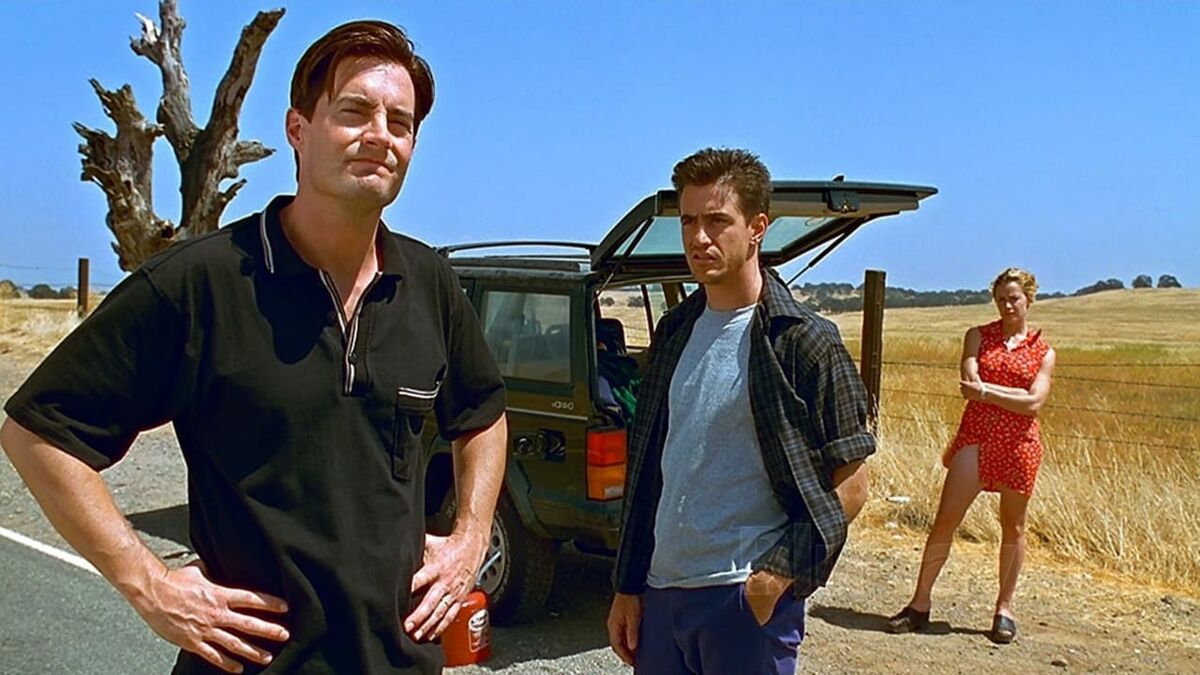
David Koepp is one of Steven Spielberg’s favourite collaborators, and has writing credits in many of the biggest franchises of the last thirty years – Jurassic Park, Mission: Impossible, Spiderman, Indiana Jones, The Da Vinci Code. Yet between working as a writer-for-hire on various blockbuster behemoths, he’s also produced a continuous stream of smaller, more characterful movies, sometimes stepping behind the camera as well as penning the screenplays.
In 1996’s The Trigger Effect, the first feature he both wrote and directed, a blackout hits a sweltering Southern California, sending a precarious populace teetering over the edge. We follow events through young couple Matthew (Kyle MacLachlan) and Annie (Elisabeth Shue), their sickly infant, and their visiting friend Joe (Dermot Mulroney), who soon find themselves on the run for their lives.
There’s a number in the 1932 musical Love Me Tonight where we follow the song, ‘Isn’t It Romantic?’ being passed dreamily from one citizen of Paris to another. The Trigger Effect starts with the dark mirror of that famous sequence. Instead of a cheerful song, we find anger and resentment being passed along on the way into a movie theater, as one patron accidentally spills a drink on another, and a third jumps the concessions queue. The irritations of public life that are usually easy enough to brush aside are simmering to a boil; these people are on the brink, even before the power goes out.
The Trigger Effect found Kyle MacLachlan in that awkward post-Twin Peaks era, still smarting from the notorious debacle of Showgirls the previous year. Koepp’s film placed him back in the Lynchian rot-of-suburbia territory that made his name, albeit in a more straight-laced, PG-13 iteration. Probably the most oft-quoted description of MacLachlan came from Rich Cohen in a 1994 Rolling Stone article: “The boy next door, if that boy spent lots of time alone in the basement.” That rings true of his performance here too, except that boy is a man now, and he has a family to protect.
One of the most compelling sequences happens early on, as Matthew heads to the pharmacy to pick up medicine for his ill baby. Unable to provide it without a prescription, which is not possible due to the power outage, the pharmacist shoos him away. Matthew returns out of necessity, receives the same answer, and then steals the medication anyway. While the mission starts from desperation, by the time he’s home and reporting his misdeeds to an aroused Annie, it’s clear the formerly law-abiding man has enjoyed his first real foray with criminality.
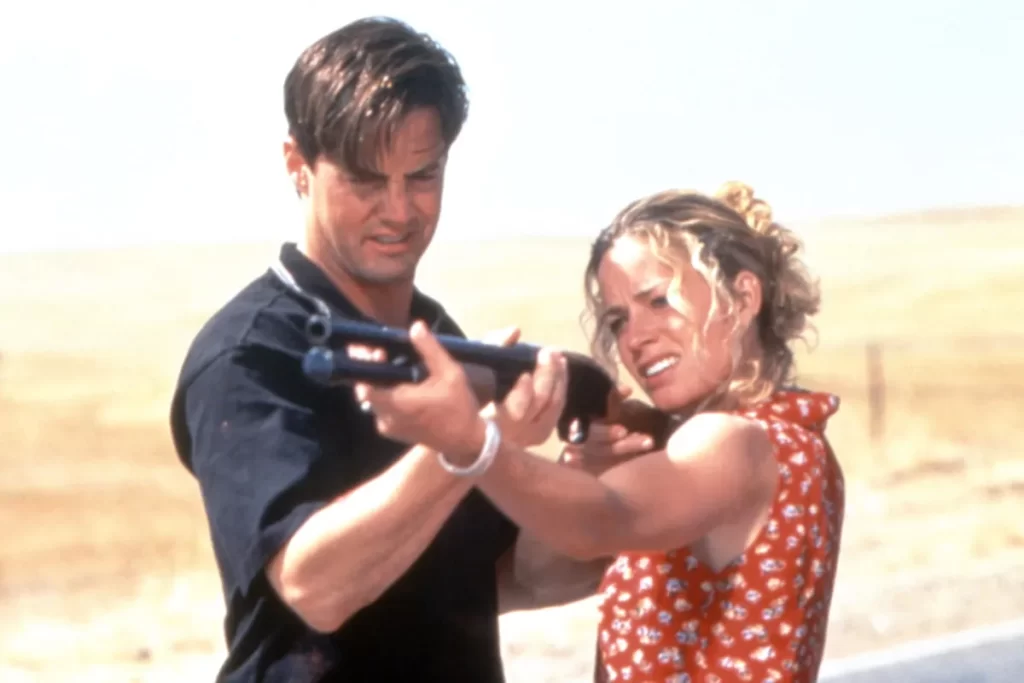
Events continue to escalate. There are only rumours as to why the blackout has happened, or how far it extends – we are none the wiser by the closing credits. As he would a decade later in War of The Worlds, Koepp keeps his lens tightly on the central group and uses the vast frightening environmental unknowns to stoke the flames of tensions already within them. Many of Koepp’s best smaller movies – Stir of Echoes, Panic Room, Presence – could be classed as domestic dramas with a genre bent, and it is notable how long Koepp keeps the action close to home before the dramatic final act on a long stretch of desert road.
The Trigger Effect was received with mild but general warmth by critics. One bone of contention lay in the finale, where Matthew winds up at the house where Raymond (Richard T. Jones), with whom he’d had an angry encounter at that earlier movie theater, is staying, in desperate need of his help. A gun is drawn, and it looks like it’s all going to go horribly awry – and then Raymond’s young daughter appears, and suddenly the balloon of nihilism that’s been inflating throughout is punctured with a Spielbergian shaped pin.
Presumably due to this last minute turn of events, in an interview with Bobbie Wygant, Koepp said he considered The Trigger Effect “an ultimately hopeful film.” But there’s been nothing at all up to that point to suggest anything hopeful about humanity; what lingers isn’t the way Raymond’s daughter was able to prevent further disaster, but how near to the surface disaster was in the first place. After all, the action here takes place over just one weekend – the power goes out late Friday, Matthew and Joe already feel the need to buy a gun by Saturday afternoon, a man is needlessly dead by that night, and another grievously injured the next day. All because of a blackout.
Thirty years later, as we’ve only become more societally fractured and reliant on the firehose of information that comes from our constant access to technology, The Trigger Effect feels perhaps even more potent than it did at the time of release. David Koepp has made many of his biggest films with cinema’s most renowned optimist; just this year, his screenplay for Spielberg’s Disclosure Day was panned by many for being naively hopeful as to how the world would react to the existence of extraterrestrials. Yet in the first movie where Koepp was in total creative control, pessimism reigned.
“The Trigger Effect” is available for digital rental or purchase.